Camping Gear Guide
Long camping trips deliver deep satisfaction and a handful of practical headaches: shifting weather, heavy packs, restless nights, and the reality that a week outdoors can expose every gear weakness. This Camping Gear Guide puts comfort first so your multi‑day adventure feels restorative, not relentless.
We’ll focus on the kit that matters most for long stays: shelters that live like tiny rooms, sleep systems that restore energy, cooking and climate tools that simplify routines, and bug and hygiene solutions that keep morale high. Expect clear, consumer‑focused guidance on what to buy, what to skip, and where to invest for the biggest comfort gains.
If you value sleep, easy setup, and fewer compromises, this guide is for you. Read on for straightforward recommendations, packing priorities, and practical tradeoffs that make longer trips smoother, cozier, and more fun.
Camping Gear Guide: Tents and Sleeping Comfort
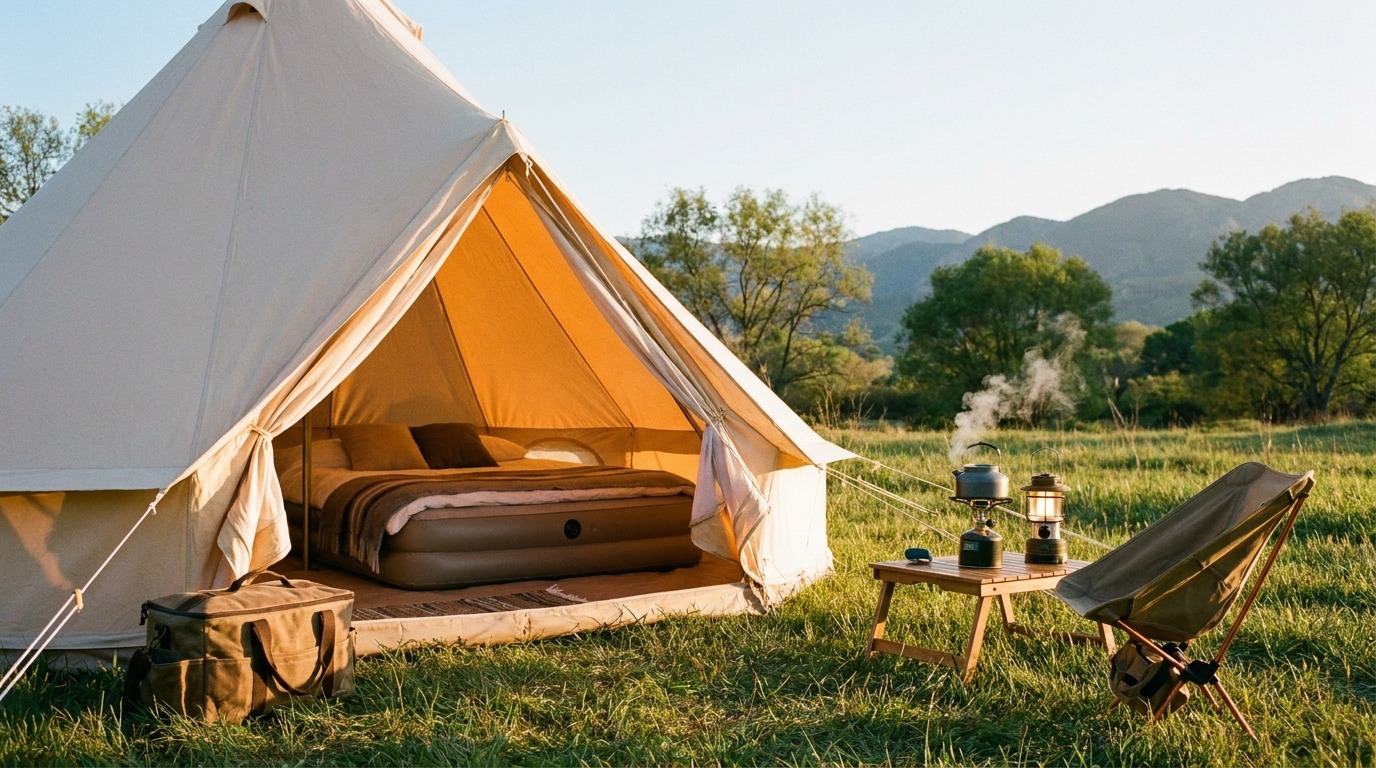
Comfort on long trips starts with the right shelter and sleep support. Choose camping tents with roomy floorplans, vertical walls, and reliable ventilation to create a livable interior. For car or festival camping, the Teton Sports Canvas tent offers cabin-like volume; pair it with breathable liners for temperature control. If setup speed matters but you still want roomy living space, the Gazelle T4 tent balances quick assembly and internal headroom. For solo or small-group campers who value stand-up room without excess bulk, the Coleman Skydome Tent provides generous interior height while staying packable.
Sleeping supports deserve equal attention. An insulated pad or air mattress transforms nights. The Exped MegaMat is a top pick when prioritizing cushioning and heat retention. Consider R-value for colder nights and pad thickness for long-term comfort. Combine a firm pad with a sprung cot for airflow, or choose a wide air mattress to mimic home sleeping. Small upgrades — a compressible pillow, a cotton sheet, and a folded blanket under the pad — reduce pressure points and condensation.
Tradeoffs are weight and setup complexity. Prioritize what restores your sleep. Comfortable sleep equals better days on the trail.
| Product | Type | Capacity | Setup time | Peak height | Comfort level | Best use case |
|---|---|---|---|---|---|---|
| Teton Sports Canvas tent | Canvas tent | Up to 10 people | Long — multi‑step setup | Full standing interior | Very high (cabin‑like) | Car camping, festivals, family basecamp |
| Gazelle T4 tent | Pop‑up family tent | 4 people | ~90 seconds | High headroom | High — roomy & fast | Quick car camps, weekend trips, festivals |
| Coleman Skydome Tent | Dome tent | 2–4 people (common) | Moderate | 6 ft peak | Moderate‑High | Budget car camping, couples/small families |
| Exped MegaMat | Inflatable sleeping mat | 1 person (wide models available) | Minutes to inflate | Thickness varies (model‑dependent) | Very high — excellent cushioning | Comfort‑focused sleep, cold nights, basecamp |
Cooking and Lighting Gear for Longer Trips
Long trips demand cooking and lighting gear that saves time and raises comfort. A reliable camp stove makes mornings and dinners effortless. The Jetboil Flash Camping Stove boils water in under two minutes, great for coffee and quick meals. For evenings when ambiance matters, the UCO Flatpack Smokeless Firepit creates a compact campfire without the mess. It’s ideal where open fires are limited or for low-smoke cooking.
Choose multi-fuel or efficient stoves if you’ll stay off-grid. The Biolite Range 400 steps up for basecamp cooks who want oven-style performance and a built-in fan. It runs clean, cooks well, and can power small devices via USB.
Lighting gear should be hands-free and bright. LED flashlight gloves combine task lighting with dexterity for tent setup, cooking, and late-night chores. Pair headlamps with a soft lantern for table light and communal comfort.
Think about fuel logistics, noise, and smoke. Prioritize devices that simplify routines: fast-boil stoves, smokeless firepits, and resilient lighting. These choices reduce hassle and keep evenings relaxed. Small upgrades in cooking and lighting deliver big comfort returns on long trips.
Conclusion
This comfort first approach to the Camping Gear Guide centers on one idea: prioritize rest and ease so long trips feel restorative. Choose shelters that act like small rooms, invest in sleep systems that actually replenish you, and pick cooking and lighting gear that removes friction from routines. Small additions — a quality pad, a fast boil stove, a smokeless firepit, reliable lighting — compound into better days and happier evenings.
LeisureQuest’s mission is to curate trustworthy, tested gear and clear advice that helps people make the most of their leisure time. Visit LeisureQuest to explore our hands-on reviews, buying guides, and seasonal deal roundups. Keep learning: test what matters for your style, adjust priorities, and upgrade selectively where comfort returns are highest.
If comfort matters to you, use this guide as a practical starting point. Return to LeisureQuest as your ongoing resource for curated recommendations and real-world tips that keep camping simple, cozy, and fun.
Frequently Asked Questions (FAQs)
How do I prioritize comfort without turning camping into heavy car camping?
Pick one or two major comfort upgrades to carry. Share bulk items with your group. Choose multi‑use gear that pulls double duty. Match your comfort level to the trip type: basecamp allows more weight; on-the-move trips need compact solutions.
What’s the simplest way to improve sleep quality on long trips?
Focus on the sleep system, not just a sleeping bag. A high‑quality pad with the right R‑value, a compressible pillow, and a small breathable sheet make a big difference. Pre‑test your setup at home to dial inflation and layering before you leave.
Are smokeless firepits and larger stoves allowed at most campsites?
Regulations vary. Check park or campground rules before you buy. Use smokeless, contained devices where open fires are restricted. Always maintain clearance, use approved fuel, and pack out ash or cold coals.
How should I plan lighting for comfort and tasks?
Combine task and ambient lighting: headlamps for work, a soft lantern for the table, and LED glove lights for fiddly tasks. Carry spare batteries or a power bank. Use warm or dimmed light in the evening to preserve atmosphere.
What small extras give the biggest comfort gains?
A proper camp chair with lumbar support, a quality pillow, an insulated mug, a compact repair kit, and reliable insect protection drastically raise comfort. Add a portable power bank and a compact espresso maker if morning rituals matter.