
Lego Smart Play Pokémon: New interactive sets that change the game
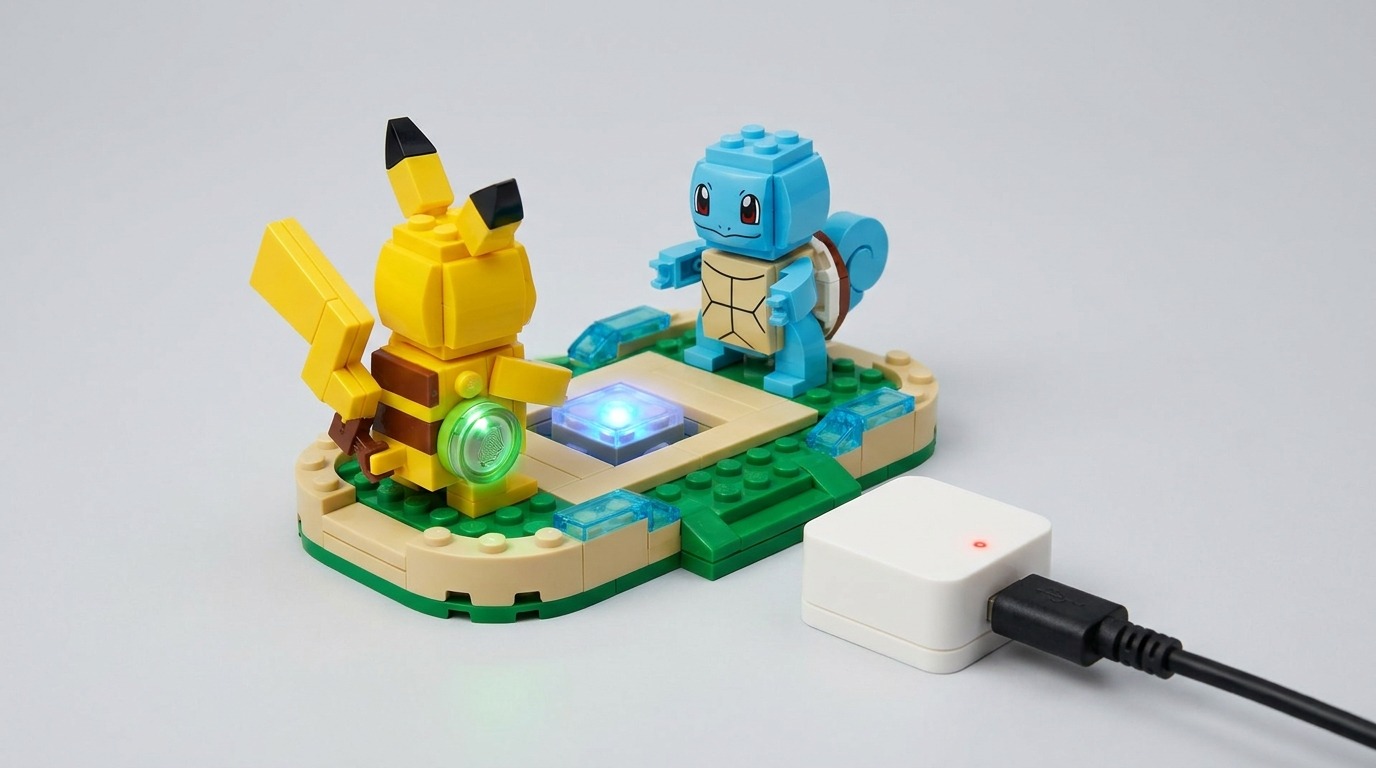
Lego Smart Play Pokémon brings sensor-driven bricks and NFC tags to classic build-and-battle play. These new sets blend physical Lego pieces with smart components to create responsive, portable Pokémon encounters.
At first glance, the promise is simple: brick-built Pokémon that react, train, and compete. The innovation lies in two core systems:
- Smart Bricks: modular bricks with sensors and charging, enabling detection and in-set interactions.
- Smart Tags: small, compatible tags that add electronic features to more affordable sets.
- Training mode: temporary stat boosts that change battle dynamics.
- Portable play: interactions work across sets and locations.
- Simple battle mechanics: designed for kids aged 6–10 while supporting open-ended play.
This article will examine how Smart Bricks and Smart Tags work, evaluate their limits, and assess their impact on gameplay, collectibility, and long-term fun. Expect hands-on descriptions, practical use cases, and an analytical look at whether these sets actually deepen imaginative play or simply add tech for tech’s sake.
Lego Smart Play Pokémon Smart Features
This section breaks down the hardware and behavior that make Lego Smart Play Pokémon feel “alive.” Focus is on how Smart Bricks, Smart Tags, and the charger work together to create responsive battles and sustained interactive play.
Smart Bricks: sensors, states, and limits
Smart Bricks are the core interactive modules. They house motion and proximity sensors, an LED status ring, and a rechargeable battery. In play they:
- Detect physical actions such as shakes, taps, and placement changes.
- Register arena-based triggers (entering/exiting zones) and signal other bricks.
- Provide ambient audio cues and non-specific effect sounds to mark events.
Analytical notes: the bricks intentionally avoid producing character-specific vocalizations. That design choice trades licensed sound fidelity for lower cost and broader reuse across sets. The bricks act as authoritative battle arbiters rather than full character simulators.
Smart Tags: affordable identity and portability
Smart Tags attach to figures or small builds. They store a compact digital ID and minimal stat data. When a tag comes into a brick’s read range, the system reads species and baseline abilities. Practical effects:
- Lower-cost sets can participate in the same battles as premium sets.
- Players swap tags to change lineups quickly without moving whole builds.
- Tags enable cross-set portability: a tag read at home behaves the same at a friend’s house.
Tags are deliberately lightweight in functionality; advanced behaviors remain with Smart Bricks.
Charger and power management
Only two of the twelve sets include Smart Bricks and a dedicated charger. The charger docks Smart Bricks for faster top-offs and stores enough energy for multiple sessions. Expected workflow:
- Dock bricks between sessions for a full recharge.
- Leave tags attached to figures; tags require no active charging.
From a usability view, the charger reduces friction. However, limited availability means players with tag-only sets must rely on others’ bricks for advanced interactions.
How these parts integrate in battle and interactive play
Integration is a mix of local sensing and simple state-sharing. Typical sequence:
- A shake or placement activates a Smart Brick and starts a match timer.
- Nearby Smart Tags broadcast IDs; the brick assigns combat roles and base stats.
- Bricks detect hits, trigger LEDs and generic sound cues, and apply ephemeral training-mode boosts.
The combined system emphasizes tactile actions and quick, rules-light battles. It extends collectibility by letting basic sets plug into richer interactions, but it also channels much of the game logic into the brick hardware—creating a central point of control that can limit purely imaginative, unscripted play.
Comparison: the 12 Lego Smart Play Pokémon sets
The table below summarizes price, age range, smart components, sound support, and standout features for each of the twelve summer sets.
| Set name | Price | Age | Smart component | Sound effects | Key features |
|---|---|---|---|---|---|
| Champion’s Hub (Smart Brick Set) | $89.99 | 10+ | Smart Bricks (includes charger) | Generic sound effects (non-character-specific) | Arena, training mode, multi-tag support |
| Dual-Brick Battle Pack (Smart Brick Set) | $74.99 | 8+ | Smart Bricks (includes charger) | Generic sound effects (non-character-specific) | Two-brick play, training boosts, arena obstacles |
| Pikachu Training Camp | $14.99 | 6+ | Smart Tag compatible | No onboard sound; relies on bricks for audio | Starter Pokémon, quick battle mode, portable tag |
| Squirtle Surf Battle | $19.99 | 6+ | Smart Tag compatible | No onboard sound; relies on bricks | Water-themed build, battle mode |
| Eevee Evolution Den | $24.99 | 7+ | Smart Tag compatible | No onboard sound | Evolution attachments, training mode available |
| Gym Leader Showdown | $39.99 | 8+ | Smart Tag compatible | No onboard sound | Arena pieces, ranked battle mode |
| Mystery Cave Encounter | $29.99 | 7+ | Smart Tag compatible | No onboard sound | Hidden-tag mechanics, exploration play |
| Sky Drift Challenge | $34.99 | 8+ | Smart Tag compatible | No onboard sound | Movement triggers, dodge mechanics |
| Forest Ambush Set | $24.99 | 6+ | Smart Tag compatible | No onboard sound | Camouflage mechanics, simple skirmish |
| Raid Boss Encounter | $49.99 | 9+ | Smart Tag compatible | No onboard sound | Boss tag, multi-tag co-op battle |
| Collector’s Mini Figures Pack | $14.99 | 6+ | Smart Tag compatible | No onboard sound | Extra tags for swapping and collecting |
| Deluxe Trainer Collection | $59.99 | 10+ | Smart Tag compatible | No onboard sound | Multiple figures, expanded battle modes |
Gameplay mechanics and Pokémon battle features
The Lego Smart Play Pokémon sets use a small ruleset that keeps play fast, physical, and adaptive. The result is a system that favors quick decision loops over deep simulation.
Federico Begher captures the design intent well: “The four basic mechanics — shake to start a fight, two types of attack, and dodging — are ‘the sweet spot’ in a type of open-ended play.” That compact rule set does several things for gameplay:
- Low barrier to entry: children pick up the core loop in minutes, which helps mixed-age groups play together.
- Physicality as input: shaking, tapping, and moving pieces become both signals and ritual, reinforcing tactile engagement.
- Fast resolution: short encounters encourage rematches and experimentation rather than long planning.
Two attack types plus a dodge mechanic create simple rock-paper-scissors moments without complex menus. That minimalism opens space for creative, player-driven rules—house rules, improvised arenas, or cooperative challenges—rather than locking players into one official meta.
Training mode adds a temporal layer to strategy. Temporary boosts change match tempo and reward short-term risk-taking. Practically:
- Players time training-mode activations to swing close matches.
- Boosts reward deliberate physical actions (a well-timed shake or placement).
- Because boosts are ephemeral, they promote repeat plays instead of permanent power creep.
Character identity remains playful and locally contextual. As one insight puts it, “Pikachu may be Pikachu wherever you go, but Squirtle is Zenigame in Japan.” That observation underlines how tags and builds act as cultural and collectible markers rather than exhaustive character simulators.
Social dynamics benefit from the system’s constraints. Matches are short, so more players stay involved. Tag swapping and portable tags support trading and cooperative team-ups.
Limitations to note:
- The hardware-centric logic centralizes rules in Smart Bricks, which can restrict freeform, unsanctioned interactions.
- Absence of character-specific sounds reduces narrative flavor compared with full digital titles.
Overall, the mechanics favor accessible, repeatable, and social play while leaving room for emergent player creativity.
AR interactions and sound in Lego Smart Play Pokémon
Lego Smart Play Pokémon pairs tactile bricks with immersive sensory cues to deepen play. While Smart Bricks intentionally avoid character-specific Pokémon voices, the line leans on ambient audio and visual augmentation to make battles feel bigger than the physical build alone.
Augmented reality (AR) possibilities
- AR can project battle effects, damage numbers, and arena hazards onto a phone or tablet screen layered over your physical set.
- In sets like Champion’s Hub or Raid Boss Encounter, AR overlays could emphasize arena obstacles and boss telegraphs, making short matches more cinematic.
- For smaller, portable sets such as Pikachu Training Camp, AR visual cues let a single tag-driven skirmish feel like part of a larger world without adding electronics to every toy.
How sound and AR work together
- Generic sound effects from Smart Bricks supply immediate feedback: hits, boosts, and match starts.
- AR visual layers add narrative clarity: a training-mode glow, a special-attack animation, or a dodge trail that the brick can’t show alone.
- Combined, they reduce cognitive load. Players instantly understand outcomes and can focus on fun and strategy.
Why this matters for interactive toys
- Sensory pairing is a common trend: physical toys offer tactile input while low-cost electronics and AR deliver spectacle.
- This split keeps unit prices lower (fewer licensed vocal assets) while still delivering high perceived value.
- For group play, AR makes battles shareable on social feeds and adds replay value through visual unlocks.
In short, AR and immersive audio amplify the tactile Lego experience, turning short, rules-light matches into visually satisfying moments without relying on licensed character voices.
Conclusion
Lego Smart Play Pokémon represents a measured step toward smarter, more social physical play. Its combination of sensor-rich Smart Bricks, portable Smart Tags, and targeted audio/AR cues keeps gameplay tactile and immediate while opening space for learning through experimentation.
These sets encourage pattern recognition, timing, and cooperative problem‑solving. Training mode and the compact battle rules promote short cycles of play that reward practice and iteration. For parents and group hosts, that translates into easier onboarding, repeatable engagement, and shared moments that scale across ages.
LeisureQuest’s mission is to inspire people to explore, play, and keep learning through quality leisure activities. Toys like these align with that aim by blending construction, strategy, and social interaction into a single experience.
Want more curated guides, play ideas, and event-ready recommendations? Visit LeisureQuest to discover practical tips, product roundups, and inspiration for better play.
Frequently Asked Questions (FAQs)
What ages are Lego Smart Play Pokémon sets best for?
These sets target younger players while still offering cross-age appeal. Official packaging lists recommended ages from 6+ up to 10+ depending on the set.
Practical guidance:
- Ages 6–8 get the most value from tactile rules and short matches.
- Ages 9–10 enjoy strategic use of training mode and multi-tag lineups.
- Adult supervision is helpful for charging Smart Bricks and for mixed-age tournaments.
Are all 12 sets compatible with each other?
Yes, but not all include the same hardware. Two premium sets include Smart Bricks and a charger; the remaining ten use Smart Tags.
What that means in practice:
- Tags let lightweight sets join battles across collections.
- Smart Bricks host richer interactions (match arbitration, advanced triggers). If you only own tag-only sets, you’ll need access to a Smart Brick to run full-featured battles.
- Sharing a Smart Brick among players or choosing a set with a brick is the simplest way to unlock everything.
How do Smart Bricks and Smart Tags work in Lego Smart Play Pokémon?
Short answer: Bricks provide sensing and control; tags provide identity.
Key points:
- Smart Bricks detect motion, proximity, and hits, and enforce match rules.
- Smart Tags hold a compact ID and baseline stats for individual figures.
- Together they let a physical build behave like a participant in a quick, rules-light game.
My Smart Brick won’t turn on or respond. What should I try?
Step-by-step troubleshooting:
- Dock the brick on the charger for at least 30 minutes; the first full recharge can take longer.
- Check the LED ring pattern when docked and when removed — a steady glow indicates charge, pulsing may indicate low power.
- If the brick still won’t power on, perform a soft reset: hold the main button for 10–12 seconds and try again.
- Avoid metal contacts; wipe charging pads with a dry cloth to remove dust.
Tags aren’t being read reliably. Any tips?
Common causes and fixes:
- Proximity: ensure the tag passes within the brick’s read zone (try slower movements).
- Orientation: attach tags firmly and flat against the build; loose clips reduce read range.
- Dirt: gently clean tag surfaces — do not use water or alcohol on electronics.
- Overcrowding: too many tags in a small area can cause read collisions; space them out.
Why does audio feel generic or quiet?
Design note: bricks emit non-character-specific cues to keep costs down and reuse audio across sets. If volume is low:
- Check distance and background noise; bricks are optimized for close, tabletop play.
- Verify the brick is sufficiently charged; low batteries can reduce audio output.
Battery drain and storage advice
- Charge bricks between heavy play sessions; avoid leaving bricks at 0% for long periods.
- Store tags attached to builds in a dry box; they don’t require charging but benefit from stable temperatures.
Lost or damaged tags
- Treat tags like mini-collectibles: keep duplicates (Collector’s Mini Figures Pack helps) and label storage.
- For broken tags, contact the seller or manufacturer for replacement parts or warranty support.
Running group play or tournaments
Practical tips:
- Rotate a single Smart Brick between matches to reduce hardware needs.
- Use clearly marked arenas and a simple match timer to keep rounds moving.
- Encourage house rules (e.g., tag swaps between rounds) to keep newer players involved.
If you hit persistent hardware or warranty issues, contact the manufacturer’s customer support with your set number and purchase information for the fastest resolution.