
Indoor Summer Preparation and Decor should be more than a seasonal checklist — it should be a thoughtful refresh that makes your home cooler, brighter, and more inviting.
As temperatures rise, our focus shifts from cozy layers to light, breathable spaces. This article walks you through practical steps and easy decor ideas to transform indoor rooms for summer comfort. Expect tips on airflow, lighting, scent, furnishings, and small styling swaps that deliver big visual impact.
Think of this as a friendly guide for people who want their homes to feel fresh and purposeful all season. You’ll learn how to prioritize simple maintenance, tweak layouts for better breeze, and choose textures and accessories that reflect warm-weather living. The approach favors doable changes over costly renovations.
Whether you’re preparing for movie nights, tabletop game evenings, or relaxed afternoons with a cold drink, these suggestions will help your indoor spaces stay comfortable and visually appealing. Read on to find actionable steps and creative touches that make summer living at home more enjoyable and effortlessly stylish.
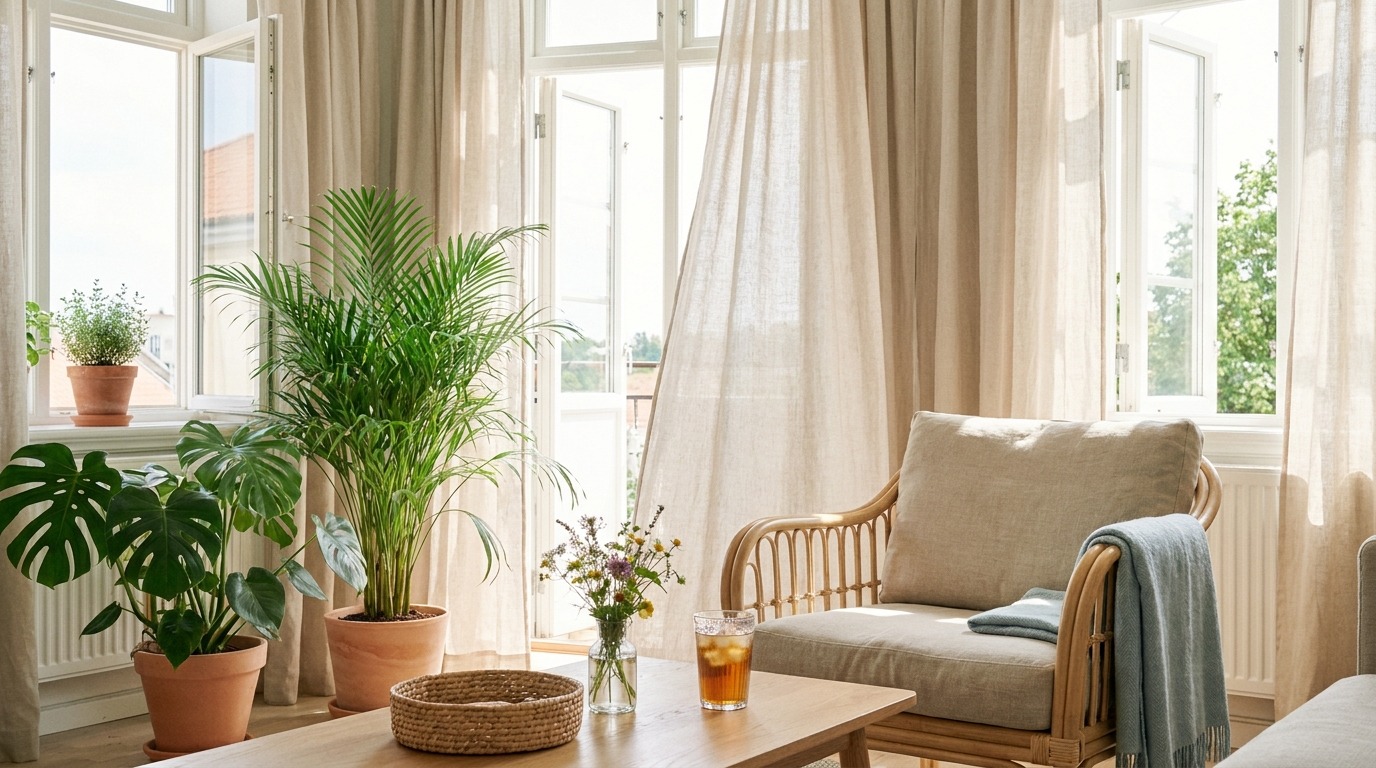
A bright, warm scene to inspire Indoor Summer Preparation and Decor: natural light through linen curtains, potted palms and herbs, rattan seating, pale textiles, and a chilled drink on the coffee table.
Air Conditioner and Cooling Solutions
Keeping your air conditioner in top shape is one of the best steps for Indoor Summer Preparation and Decor. Servicing and simple cleaning extend unit life and improve comfort. Aim for a professional service at least once a year, and do basic upkeep yourself every 1–3 months.
Maintenance and cleaning tips:
- Turn power off before any work.
- Clean or replace the filter every 1–3 months. Wash reusable filters with warm soapy water; dry fully.
- Vacuum dust from vents and fins with a soft brush attachment.
- Wipe condenser coils with a soft cloth and mild cleaner if accessible.
- Check and clear the condensate drain to prevent clogs and mold.
- Inspect seals around window units and add weatherstripping to stop warm air leaks.
- For portable air conditioners, clean intake screens and ensure the exhaust hose is sealed.
- Keep surrounding areas clear for airflow; avoid blocking returns.
Choosing the right type:
- Smart air conditioners: offer scheduling, remote control, and energy modes. Great if you want automation and efficiency.
- Window air conditioners: efficient for single rooms. Size correctly and seal installation to prevent drafts.
- Portable air conditioners: flexible for renters and temporary cooling. Expect more noise and hose management.
Pair any air conditioner with fans, blackout curtains, and thermostat adjustments. These small additions lower runtime and improve comfort.
| Option | Key features | Energy efficiency | Price range (USD) | Best use cases |
|---|---|---|---|---|
| Smart air conditioners | Wi‑Fi control, scheduling, occupancy sensors, app/voice integration | High (energy‑saving modes reduce runtime) | $250–$1,200+ | Smart homes, automated room or whole‑home control |
| Window air conditioners | Mounted in window, compact, effective single‑room cooling | Moderate to high (select high EER models) | $150–$600 | Apartments, single rooms, budget‑friendly permanent install |
| Portable air conditioners | Freestanding units with exhaust hose; mobile and easy to set up | Lower than window units; Energy Star models improve efficiency | $200–$700 | Renters, temporary cooling, supplemental room cooling |
Summer Scents, Decor, and Atmosphere Enhancement
Scent and small styling choices set a room’s mood faster than any major renovation. Focus on light, fresh aromas and breathable materials to make indoor spaces feel like summer.
Summer fragrance and scent strategy
Choose summer scent profiles that read bright and coastal rather than heavy. “Look for notes like sea salt, tropical florals or fruits, or subtle coconut to bring the sun-kissed seaside straight to your space.” Use one primary fragrance method per room to avoid clashes.
- Scented candles: pick coconut scent candles or citrus blends for daytime. Burn them safely on stable surfaces and never leave unattended. “The warmth will gently diffuse the scent throughout the room.”
- Reed diffusers and sprays: low-maintenance options that maintain a steady fragrance without open flame.
- Essential oil diffusers: control intensity and switch notes by time of day (citrus in morning; soft florals in evening).
Blackout curtains and light control
Blackout curtains do more than darken a room. Choose breathable blackout fabrics to reduce heat and glare while maintaining airflow when windows are open. Lighter colors reflect sunlight and keep rooms visually cool.
Light bulbs and atmosphere
Swap old bulbs for LED options with adjustable color temperature. Use cooler daylight tones during active hours and warm whites for relaxed evenings. Dimmers and smart bulbs let you create game-night or movie-night scenes without extra fixtures.
Simple decor swaps
Replace heavy throws and dark rugs with linen slipcovers, rattan or wicker accents, and pale area rugs. Add a scented cushion or small tray with a candle to create focal points without clutter.
These small scent and decor changes refresh the atmosphere and make summer indoors feel intentional and inviting.
Conclusion
Preparing your indoor spaces for summer blends practical maintenance with small decorative changes that improve comfort, air quality, and mood. A few straightforward actions, servicing cooling systems, swapping to breathable textiles, and choosing bright summer fragrances, keep rooms welcoming without major expense.
Intentional Indoor Summer Preparation and Decor also makes your home more usable for leisure: clearer layouts for game nights, cooler spots for reading, and lighting and scent that set the scene. Treat the tips here as a flexible checklist you can adapt to your space and budget.
For more ideas on turning downtime into meaningful experiences, visit LeisureQuest. LeisureQuest is a curated guide to quality leisure time that helps people turn their free time into engaging quests to explore, play, and keep learning. Find practical inspiration and activity picks at LeisureQuest and make this summer both comfortable and delightfully playful.
Frequently Asked Questions (FAQs)
What are the most practical cooling options for different rooms?
Match the unit to room size and needs: window units (good for single rooms, quiet and efficient), portable ACs (flexible for renters), and smart/mini-split systems (higher upfront cost, best long‑term comfort). For sizing, use BTUs for square footage and account for sun exposure and ceiling height—ENERGY STAR has certified room‑AC guidance and product lists. For portable AC basics and single‑ vs dual‑hose tradeoffs, see Home Depot’s guide.
How can I improve indoor air quality quickly and affordably?
Clean or replace HVAC and room‑AC filters every 1–3 months (monthly in dusty homes). Run exhaust fans and open windows during cooler hours for cross‑ventilation. Consider a HEPA air purifier for rooms with pets or allergy sufferers. The EPA’s indoor air guide explains practical steps and testing options: EPA indoor air guide.
Any quick decor swaps that help comfort as well as style?
Swap heavy throws for linen or cotton, replace dark rugs with low‑pile pale rugs to reflect light, and add rattan or cane accents for airflow. Rearrange seating to enable cross‑breezes (face seating toward the nearest open window and keep pathways clear).
How should I use scents, diffusers, and candles safely?
Prefer reed or electric diffusers for steady scent. If burning candles, keep them short, on stable surfaces, and never unattended—NFPA safety tips. Note health cautions about particulate emissions from candles; the American Lung Association discusses particulate risks and alternatives: American Lung Association.
What maintenance prevents breakdowns and mold in summer?
Schedule an annual professional AC tune‑up and clear condensate drains. Vacuum vents, wipe coils if accessible, and seal window installations to stop warm‑air leaks. For mold prevention and moisture control, follow CDC recommendations on drying wet materials and ventilation. For step‑by‑step AC maintenance tips, Energy.gov is a good reference.