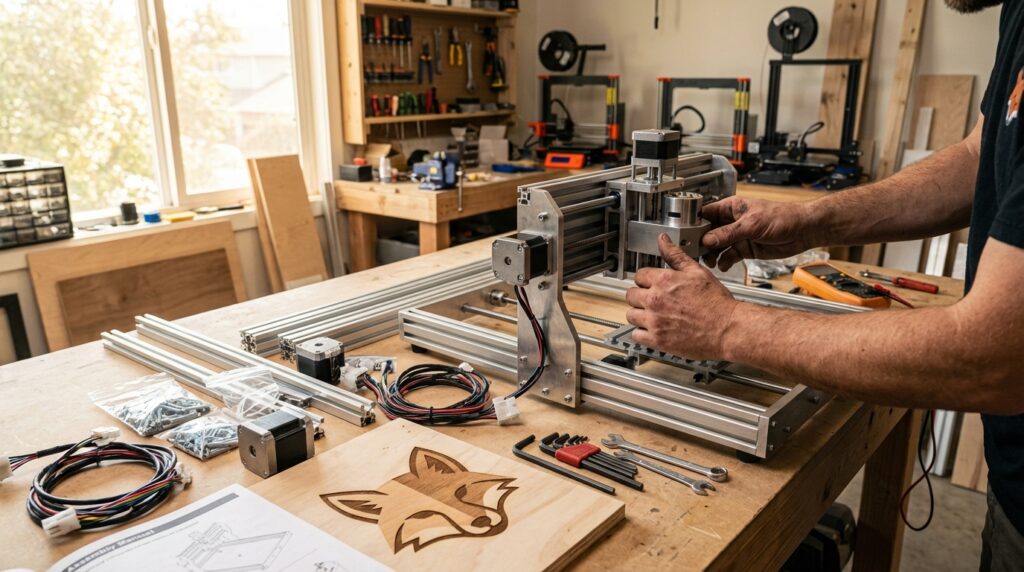
Mistakes and unexpected outcomes often unlock ideas we never planned. This is the heart of honoring errors and creativity — a simple shift in mindset that turns blunders into breakthroughs.
As Brian Eno reminds us, “Honor thy error as a hidden intention.” Keep that line in mind as you solder, prototype, or write prompts. When a circuit behaves oddly, or a prompt yields a bizarre response, something new is asking to be explored.
This guide takes a reflective and inspiring approach to DIY electronics, creative prompts, and productivity tips. You’ll find practical ways to capture serendipity in workshops and workflows. Expect exercises that reframe mistakes as data, quick methods to prototype surprising results, and productivity habits that preserve creative momentum when plans fail.
If you build with curiosity instead of perfection, errors stop being setbacks. They become signposts pointing toward fresh ideas. Read on to learn how small accidents can shape better projects, richer prompts, and more resilient creative routines.
Brian Eno’s Oblique Strategies started as a deck of cards that offer short, often cryptic prompts to break creative deadlocks. One of the most famous cards reads, “Honor thy error as a hidden intention.” That line is not a call to ignore craft. It is an invitation to treat unplanned outcomes as material. In practice, it shifts the question from “What went wrong?” to “What can this reveal?” This reframing turns the mistake into a deliberate input for iteration.
Treating a mistake as intention is a practical technique for makers. In electronics, a miswired prototype can suggest alternative signal paths or component behaviors worth exploring. In creative prompting, an odd or ugly result can reveal a direction you wouldn’t have tried on purpose. The phrase “mistake as intention” becomes a method: document the anomaly, isolate what changed, and re-run with that difference amplified or varied.
Real-world stories underscore the point. A podcast that embraced an accidental extra audio track did so because the team wasn’t editing on a computer. Rather than erase the error, they kept it and, over time, the show honored that mistake for more than 350 episodes. The first episode itself was recorded on a Roland VS-880 — limited tools sometimes force you to listen, which can reveal serendipitous moments you’d otherwise delete.
Use Oblique Strategies like a low-friction experiment. When you encounter a glitch, ask: could this be a hidden intention? Then design one small variation to test that possibility. Over time, this practice builds a habit of curiosity that surfaces novel solutions and richer creative outcomes.
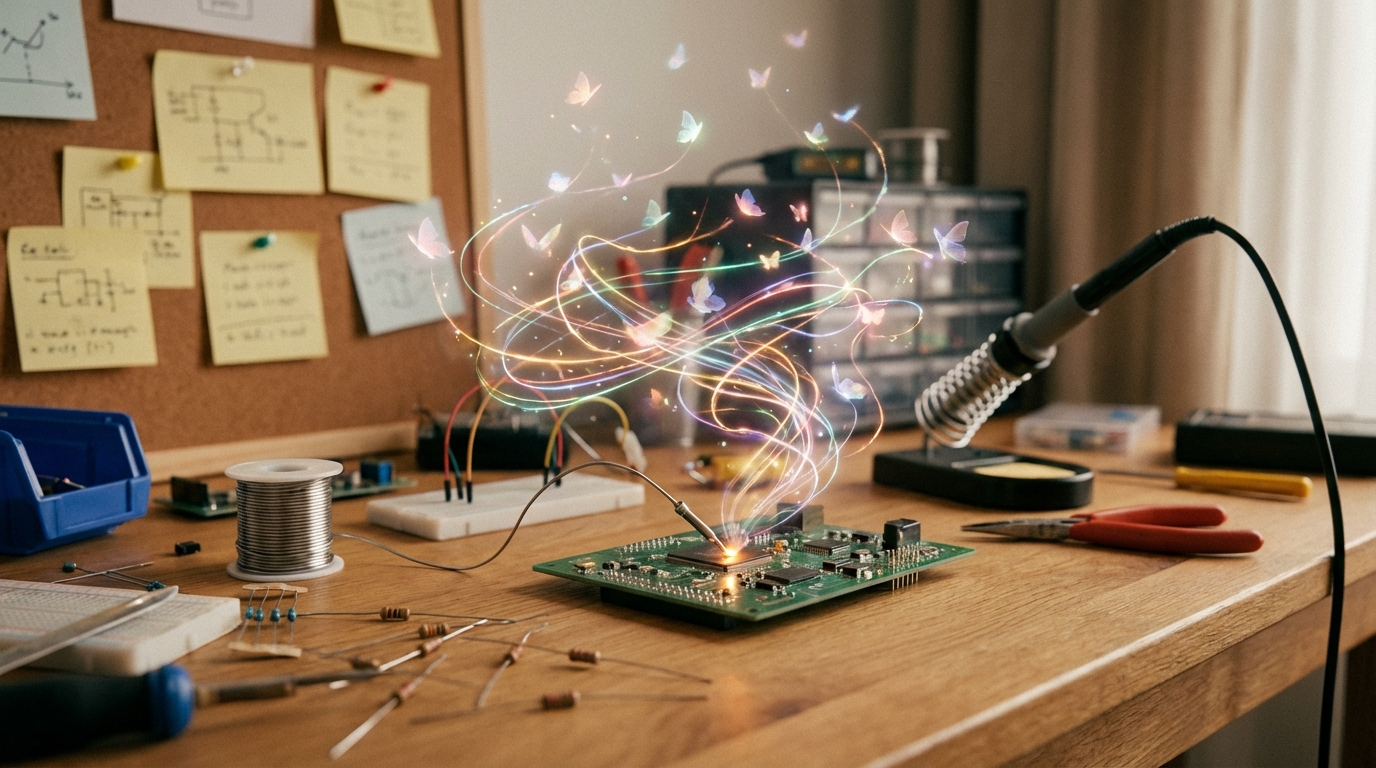
A warm, inviting DIY electronics workbench with a soldering iron, spool of wire, resistors, breadboard, and sticky notes. A small soldering mistake on a circuit board emits a tiny glowing bead of light that unfurls into soft, colorful light trails and butterfly-like particles rising above the board, suggesting a happy accident and serendipitous discovery in the maker workspace.
A simple recording error can seed a lasting ritual. During the first episodes of a now-beloved show, the team recorded on a Roland VS-880 and discovered an unexpected extra audio track when they replayed the session. They did not erase it. As one member later said, “Had we been editing on the computer, we would have noticed the extra audio and erased it with a swift click of the mouse, but because we had to go back and listen to it, we invented a new tradition.” That choice to preserve the anomaly became a podcast tradition honored for more than 350 episodes.
This music production story offers a clear lesson for creative workflows. When you avoid reflexively deleting mistakes, you create room for serendipity. The act of listening back, rather than instantly correcting, surfaces ideas that raw, polished edits often remove. For makers and prompt-writers, this means keeping a record of odd outputs and rerunning them as deliberate experiments.
Practical productivity tips that build on that habit:
- Keep raw versions: store unedited takes and prototype states in an “errors” folder for later review.
- Schedule listening sessions: block short review periods to inspect anomalies without pressure to fix them immediately.
- Create an “error log”: note what happened, the conditions, and one hypothesis to test next.
- Use constraint-driven iteration: deliberately introduce small limitations that mimic accidental outcomes and test the results.
- Time-box experiments: set short trials to amplify an unexpected result and decide quickly whether to develop it further.
Treating mistakes as research data transforms distractions into direction. Over time these small practices make creative workflows more resilient, surprising, and productive.
| Strategy Name | Description | Benefits | Example Use Cases |
|---|---|---|---|
| Oblique Strategies / Random Prompting | Use short, unexpected prompts or cards (a la Brian Eno) to break patterns and force new directions. | Breaks fixation; surfaces unusual ideas; fast to run. | Prompt-writing sessions; early-stage circuit ideation; solo brainstorming. |
| Mistake Log & Reframe | Record anomalies and treat them as deliberate inputs to analyze and iterate. | Preserves serendipity; creates testable hypotheses; builds institutional memory. | Prototype debugging; generative output review; sprint retros. |
| Constraint-driven Accidents | Impose tight limits or unusual constraints to mimic accidental outcomes. | Encourages creative trade-offs; leads to novel combinations; keeps scope small. | Hackathons; limited-parts electronics; one-hour prompt challenges. |
| Noise Injection / Randomization | Add random parameters, inputs, or mutations to designs and prompts. | Expands search space; reveals emergent behavior; produces surprising results. | Generative art prompts; sensor fusion tests; parameter sweeps in prototypes. |
| Slow Listening / Playback Review | Delay editing and intentionally review raw recordings or prototype runs for surprises. | Uncovers usable mistakes; improves pattern recognition; encourages pausing over erasing. | Podcast production; audio sampling; iterative firmware testing. |
| Collage & Mashup | Combine unrelated artifacts, snippets, or circuit behaviors into one experiment. | Sparks new associations; high serendipity; rapid prototyping of hybrid ideas. | UI + hardware mashups; combining prompt outputs; cross-disciplinary workshops. |
Embracing small failures changes how makers work. When we practice honoring errors and creativity, we open more routes to discovery than painstaking perfection ever will. Brian Eno’s injunction to treat mistakes as hidden intentions, and the podcast story that turned an extra audio track into a ritual, show how accident-led choices can become durable creative assets.
This mindset has practical payoffs: it preserves unexpected variants for later experiments, fuels iteration with richer inputs, and reduces the fear that stops people from trying. For DIY electronics, a miswired circuit can hint at new signal paths. For prompt design, an odd response can seed an original direction. For teams, simple habits—keeping raw takes, logging anomalies, and scheduling review time—convert errors into repeatable learning.
LeisureQuest curates guides that encourage exploration, play, and lifelong learning. That mission aligns with honoring errors and creativity: both value curiosity, adaptable routines, and joy in tinkering. Whether you’re traveling with a sketchbook, launching hobby projects, or prioritizing wellness through creative practice, lean into serendipity. Visit LeisureQuest to find resources and inspiration: LeisureQuest.
Start small. Listen longer. Treat every surprise as data that might point to your next idea.
What does “honoring errors and creativity” look like in everyday maker and creative workflows?
It’s a practical habit of treating unexpected outcomes as useful data rather than failures. In practice you document anomalies, pause before erasing or fixing, and run one intentional variation that explores the difference. Over time these small experiments turn odd results into repeatable leads and new design directions.
How can I apply this mindset safely when working on DIY electronics projects?
Safety comes first: power down before inspecting faults, use current-limited bench supplies, and follow ESD precautions. After ensuring safety, capture the unexpected state with photos, notes, and a quick schematic. Try to reproduce the condition under controlled parameters. If the anomaly appears reproducible and non-hazardous, prototype small variations to probe the behavior further.
I use generative prompts and tools—how do I capture serendipity without being overwhelmed by noise?
Treat outputs like experimental samples. Save raw results, tag them with prompt settings or seeds, and set short riff sessions to remix promising variants. Use lightweight filters—one glance, one tag, one action (discard, archive, or iterate). Schedule periodic review sessions to spot patterns across saved outputs rather than chasing every anomaly in the moment.
When should a mistake be discarded instead of investigated?
Discard when it’s unsafe, non-reproducible, or clearly irrelevant to your goals. Use quick triage: (1) Is it hazardous? If yes, stop. (2) Can I reproduce it in <10 minutes? If no, archive notes and move on. (3) Does it align with current goals? If not, put it in a “maybe later” folder. Archiving keeps the option open without slowing current progress.
What small productivity habits help teams honor errors and creativity regularly?
Keep raw takes and prototype states; maintain a brief error log with hypotheses; time-box exploratory tests; run short playback or review rituals; and rotate a “serendipity card” or prompt in team sprints to encourage deliberate curiosity. These habits make serendipity manageable and actionable while improving creative workflows.