Introduction
AI in Gaming Development is no longer a speculative sidebar; it’s moving into core production pipelines, from procedural levels to voice and animation tools. At the same time, the industry is wrestling with new ethical, creative and legal questions. This article examines recent GDC takeaways and a heated controversy over AI-generated art that has left studios, creators and players on edge.
The promise is clear: faster iteration, smarter NPCs and new forms of player personalization. The risks are equally clear: diluted craftsmanship, unclear attribution, and damaged trust between studios and their communities. Many developers are cautious or openly resistant; others experiment behind closed doors. That tension, between technological capability and cultural cost, is the throughline here.
Read on for a critical look at what emerged at GDC, how the AI art debate is reshaping expectations for creators, and what responsible adoption could plausibly look like. This piece favors scrutiny over hype, and aims to clarify the trade-offs developers and players will face as AI tools proliferate.
GDC perspectives and industry resistance — AI in Gaming Development
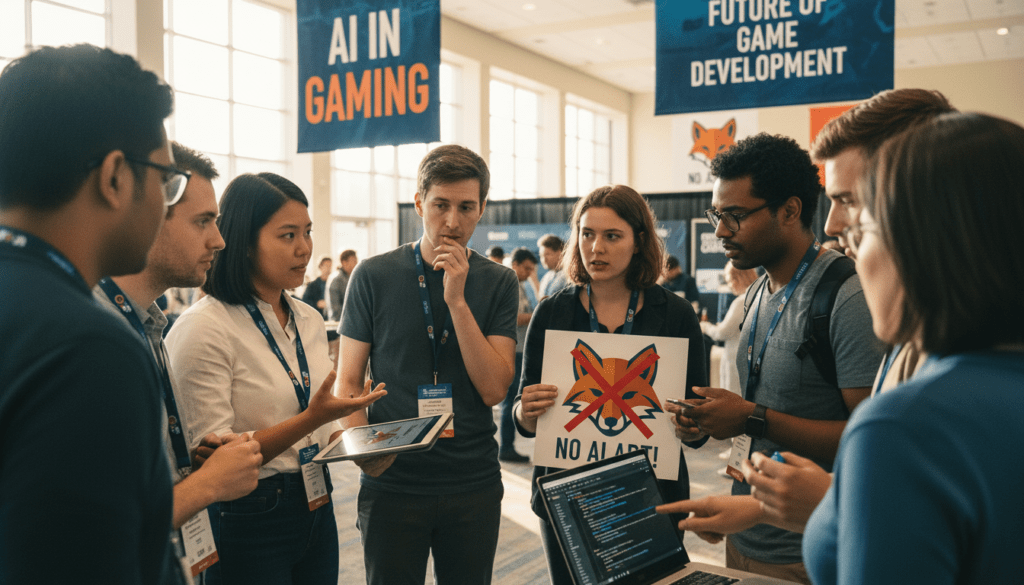
At this year’s GDC, the public posture from developers was unusually uniform: most speakers and panelists disavowed active use of AI tools in their released projects. That rejection wasn’t rhetorical. It reflected a wider unease about process, provenance and player trust.
Key signals from the conference and survey data:
- Nearly every developer at GDC stated they were not using generative tools in shipped assets or core design work.
- A clear majority of attendees now view AI as harmful: 52% of respondents said AI is negatively impacting the industry, up from 30% in 2025.
- Independent and small studios are doubling down on AI-free branding, citing craftsmanship and direct creator-to-player relationships.
Voices from creators captured the tone on the floor. Gabriel Paquette summed up a human-centered perspective: “I feel like the human mind is so beautiful.” That sentiment echoes throughout shows and indie booths.
Abby Howard voiced a practical aesthetic concern: “AI-made games don’t look or feel like human-made games.” Developers repeated that line of critique when discussing atmosphere, character work and narrative subtlety.
Why this matters:
- Reputation risk: Studios worry about community backlash when AI use is discovered.
- Talent pipeline: Teams fear over-reliance on generative tools will crowd out human apprenticeships.
- Market differentiation: Small teams see AI-free games as a selling point in a crowded market.
The GDC snapshot reveals not only resistance but a deliberate strategy: for many creators, abstaining from AI is a conscious design choice, not merely a temporary pause.
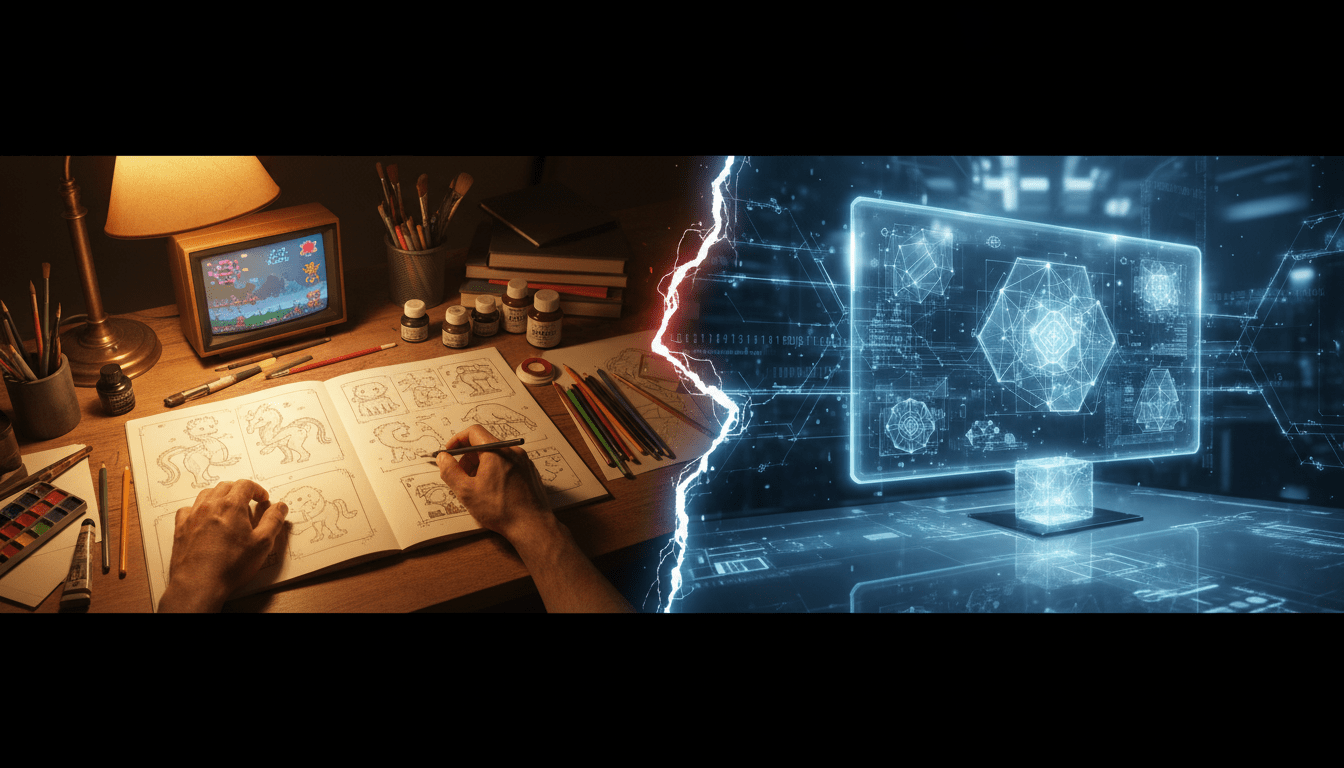
Visual: a split-scene showing traditional game craftsmanship (warm, tactile left) and cold, algorithmic AI generation (right), separated by a jagged divide.
AI in Gaming Development: Crimson Desert and a real-world breach
The most prominent example of fallout so far is Crimson Desert. Use of AI-generated assets was discovered in the game’s final release. The studio publicly acknowledged the issue and launched a review to replace any AI-created art. That sequence—discovery, acknowledgement, and remediation—is now a template for how studios must respond when AI-generated assets surface.
Immediate consequences for the developer included reputational damage, content audits, and the operational cost of replacing or remastering assets. Fans and creators demanded transparency about provenance. The situation illustrates how quickly AI art in games can escalate into a community and legal problem once detected.
Developer response checklist often included:
- Conduct a full asset audit and flag suspicious models, textures or concept work.
- Commit to replacing confirmed AI-generated assets where appropriate.
- Communicate with players about findings and next steps.
- Review contracts with contractors and asset vendors.
- Engage legal counsel to evaluate licensing and copyright exposure.
AI in Gaming Development: craftsmanship, legal risks and operational strain
Beyond one title, AI-generated assets raise structural challenges. Craftsmanship suffers when generative output replaces iterative human work. Distinct artistic voices can flatten into generic outputs. Small teams face particular strain: they rely on signature aesthetics to stand out.
Legal issues compound the creative ones. Questions remain about training-data provenance, derivative work, and copyright infringement. Contractual terms rarely anticipated generative pipelines, leaving gaps in accountability and vendor warranties.
Mitigation requires changes to pipelines and policy. Provenance tracking, tighter vendor clauses, mandatory disclosure and routine audits all help. Without those controls, AI in Gaming Development risks degrading craft, exposing studios to legal claims, and eroding player trust.
| Group | View on AI | Impact Perceived | Actions Taken |
|---|---|---|---|
| Large developers | Cautious; public disavow; maintain control. | Reputation risk; production audits; legal exposure. |
|
| Small indie developers | Emphasize AI-free craftsmanship; marketing differentiator. | Brand trust; distinct aesthetics preserved; competitive edge. |
|
| Players | Skeptical; demand authenticity and provenance. | Loss of trust; vocal backlash; refund or avoidance risk. |
|
| Industry analysts | Mixed: cautious with potential tooling gains. | Market disruption; policy and legal scrutiny; productivity shifts. |
|
CONCLUSION
AI in Gaming Development sits at an uneasy crossroads. The industry’s reaction is cautious and often critical: many creators insist on preserving human craft, players demand provenance, and studios face real legal and reputational risks. That skepticism does not mean an outright ban on progress. Instead, the debate centers on how, when, and under what safeguards generative tools should be used. Responsible adoption will require provenance tracking, clearer contracts, community transparency, and routine audits — measures that preserve artistic voice while addressing liability.
The long view is mixed but not terminal. AI may deliver productivity gains, smarter systems, and new creative affordances. Those benefits will matter only if developers, platforms, and policymakers collaborate to protect creators and maintain trust. Absent those guardrails, AI risks flattening distinct aesthetics and undermining apprenticeship paths.
About LeisureQuest
LeisureQuest exists to inspire people to explore, play, and keep learning. We cover gaming, tech, and culture with a skeptical eye toward hype and a focus on practical guidance. Learn more at LeisureQuest.
Frequently Asked Questions (FAQs)
What is the main concern about AI in game development?
The core issues are provenance of training data, copyright and attribution, and erosion of human craft. Players and creators worry generative outputs can replicate copyrighted work and flatten distinctive artistic styles.
How did the Crimson Desert case affect industry attitudes?
It prompted public audits, asset replacements, and heightened scrutiny across studios—showing that undisclosed AI use can create reputational and operational costs.
Are developers using AI despite public disavowals?
Some experimentation continues internally, but many teams publicly avoid AI; survey data in this piece showed 52% of respondents view AI negatively, which limits open adoption.
What practical steps can studios take to manage risk?
Require provenance tracking, add vendor/contract clauses, run routine asset audits, mandate disclosure of generative tools, and consult legal counsel. See industry guidelines such as IGSA’s Best Practices for Ethical Use of AI and IGDA resources.
Does AI have a place in game design?
Yes—when used as a tool under clear policies, oversight, and mentorship programs that protect apprenticeship, credit creators, and preserve artistic diversity.