UK travel destinations: From crowd sourced city walks to readers’ off beat getaways
Looking beyond postcard highlights reveals a rich seam of UK travel destinations for short, surprise packed breaks. This guide points to lesser known towns, coastal cove walks and curated city walks created by locals and readers. Expect compact itineraries, insider tips and transport smart routes ideal for a weekend or a long bank holiday.
We’ll visit sleepy villages with medieval lanes, coastal headlands that feel privately yours, and city neighbourhoods mapped by community knowledge rather than guidebook ticks.
Each suggestion prioritises accessibility and distinct experiences: cliff top sunsets, quiet museums, pub dinners off the tourist trail.
Whether you want an easy two day roam or a micro adventure stitched from crowd sourced walking routes, these short hidden gem getaways are designed to help you travel smarter around Britain.
Later sections give practical travel hacks, recommended short routes, and reader submitted detours across England, Scotland, Wales and Northern Ireland to inspire your next off beat break.
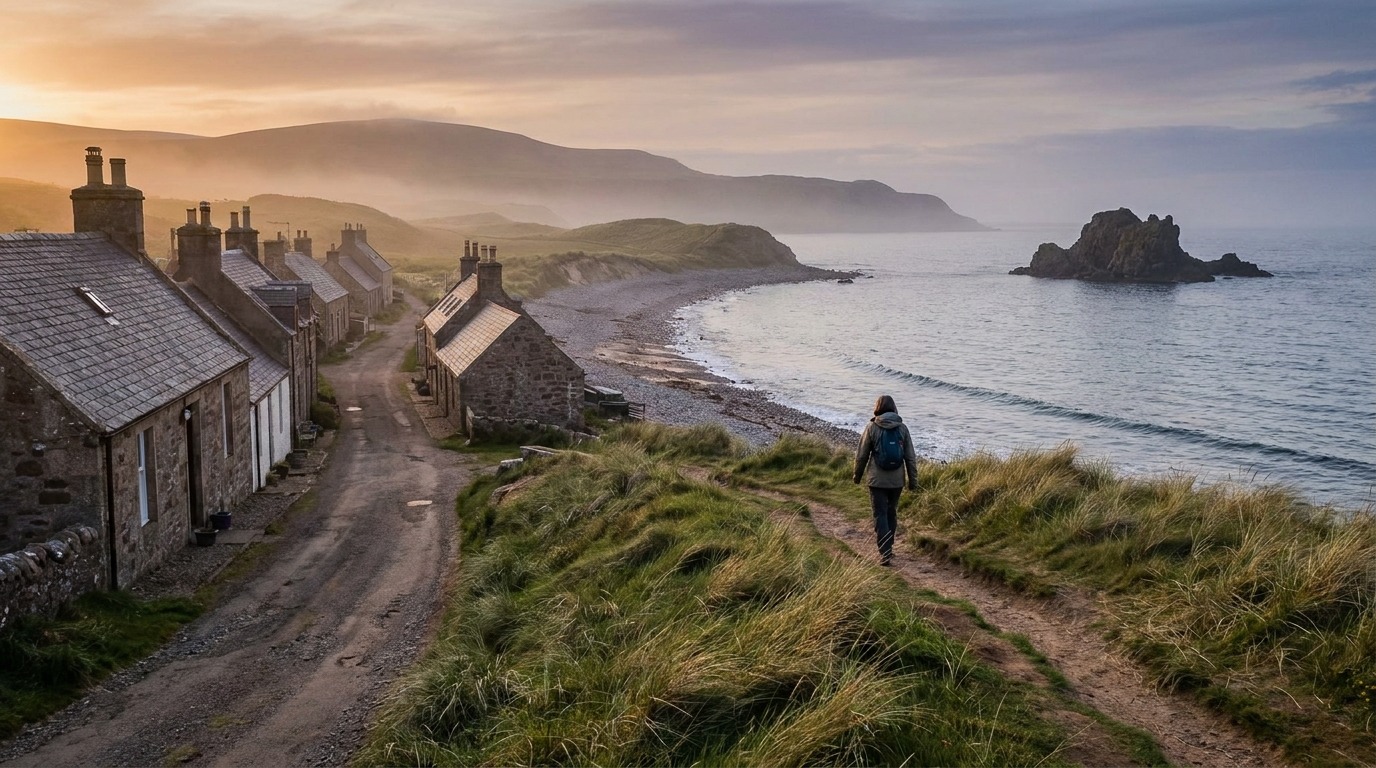
A tranquil, off-the-beaten-path coastal village path leading down to a small pebble beach, evoking peaceful exploration.
Crowd-sourced city-walks: discovering local secrets
Crowd-sourced city-walks turn local knowledge into ready-made routes. Residents, frequent visitors and small businesses share short walks that highlight quiet lanes, tiny museums and overlooked viewpoints. For short UK travel destinations these routes are gold: they reveal details guidebooks miss and point you to true local life.
In Wells, a crowd-made loop can thread medieval streets, the Bishop’s Palace precinct and low-traffic alleys where independent cafés hide. In North Berwick, community walks blend town streets with coastal paths, creating compact coast walks in UK that include secret cliff-top benches and sunrise spots with views of Bass Rock. Hebden Bridge’s crowd routes spotlight canal towpaths, independent bookshops and mural alleys away from the main drag.
Why use crowd-sourced walks?
- They surface niche tips such as family-run tearooms, little-known viewpoints and pop-up markets.
- They make short itineraries efficient for weekend breaks.
- They link transport nodes to local trails, making it easier to choose hotels and accommodations in UK that sit close to authentic routes.
Practical approach: download a community map or GPX file, carry a simple map, and leave time to wander. Crowd-sourced walks are less polished than commercial tours, but they reward curiosity with genuine, off-the-beaten-path discoveries.
| Destination | Key Attractions | Unique Features | Nearby accommodations or hotels |
|---|---|---|---|
| Wells Cathedral & Mendip Hills | Wells Cathedral, Bishop’s Palace, medieval lanes, Mendip Hills viewpoints | Compact medieval city centre ideal for short walks and village-access countryside | Boutique B&Bs, converted coaching inns, small hotels near the cathedral |
| Ardnamurchan peninsula | Sanna Bay, rugged headlands, Corrachadh Mòr (mainland Britain’s westerly point) | Remote, wind-sculpted coastline, machair grassland and excellent wildlife spotting | Croft cottages, seaside B&Bs, small guesthouses and campsites |
| East Lothian (North Berwick) | Bass Rock views, sandy beaches, coastal promenades | Short coastal walks close to Edinburgh, rich seabird colonies and quiet harbours | Seaside guesthouses, boutique hotels, holiday cottages |
| Northumberland coast | Dunstanburgh Castle, Bamburgh Castle, wide beaches, cycling routes | Castles overlooking empty sands, long coast walks and swim-friendly bays | Coastal B&Bs, castle-view hotels, self-catering cottages |
| Loch Èireasort | Lochside walks, remote bays, community hostelling at Ravenspoint | Community-owned accommodation and off-grid tranquillity | Ravenspoint community hostel, bunkhouses, riverside self-catering stays |
Readers’ off-beat trips and unique experiences
Readers’ reports show how small detours change a trip. “We found a charming alternative to touristy Bath,” wrote one reader after choosing a market town instead. These off-beat trips favour slow hours, local conversation and unexpected views.
Sanna Bay and its machair of wild grasses reward low-season visits with near-empty sands. Bass Rock draws birdwatchers with a dramatic seabird colony, best seen from quiet coastal benches at dawn. Lindisfarne’s tidal causeway and ruined priory create a timeless feel; timetable awareness turns a crossing into a memorable, solitary ritual.
In towns such as Wells, stray lanes reveal medieval architecture beyond the main square. A late-afternoon walk around the Bishop’s Palace grounds often feels private, with light-softened stone and calmer crowds. That intimacy is the hallmark of readers’ discoveries.
These trips offer immersive local culture. Readers mention family-run tearooms, seasonal seafood, community hostels and pop-up artisan markets. They say trading rigid itineraries for curiosity leads to memorable encounters.
Try this approach: travel off-peak, book small hotels or B&Bs close to town centres, ask locals for a recommended lane or bench, and allow extra time for unplanned stops. The payoff is quiet, authentic experiences that linger longer than a postcard snapshot.
Conclusion
Short, hidden-gem getaways make the most of limited free time. They pair easy logistics with immersive moments: quiet coastal walks, medieval lanes, local conversations and sunrise views. Crowd-sourced city-walks and readers’ off-beat trips show how small choices uncover memorable corners of Britain. Use compact itineraries, local maps and flexible travel times to turn a weekend into a genuine micro-adventure.
LeisureQuest curates these kinds of experiences, bringing vetted routes, reader tips and accommodation suggestions together in one place. Think of the site as a practical companion that helps you explore, play and keep learning through travel. Visit LeisureQuest to discover curated routes, seasonal ideas and community-sourced walks that fit single-day escapes or bank-holiday breaks.
Bookmark practical pages for transport links and hotels in UK to speed planning and reduce stress. Ready to plan your next off-the-beaten-path trip? Head to LeisureQuest to browse guides, save favourite routes and convert free time into an engaging quest.
Frequently Asked Questions (FAQs)
When is the best time to visit hidden‑gem UK travel destinations?
Shoulder seasons (late spring, May–June, and early autumn, September–October) usually offer the best balance of good weather, quieter sites and lower prices. Weekday visits reduce crowds further. Summer long weekends bring festivals and higher demand, while winter delivers solitude but shorter daylight and occasional seasonal closures. Check local event calendars to avoid busy dates and to time visits for seasonal highlights like seabird colonies or wildflowers.
How can I find reliable crowd‑sourced city‑walks?
Look for routes shared on local community pages, town Facebook groups, and user‑mapped platforms such as Komoot, AllTrails or Wikiloc. Compare multiple uploads, read recent comments for route changes, and verify elevation or accessibility notes. Visitor centres and local libraries often hold printed walk leaflets. Save route maps to your device for offline use and screenshot a key map as a paper backup.
What accommodation works best for short getaways?
Small B&Bs, family‑run guesthouses and boutique hotels give local character; community hostels or self‑catering cottages suit flexible, slower itineraries. Choose a central location if you plan walking routes from the door, or a seaside spot for coastal sunsets. Confirm practicalities such as parking, check‑in times and cancellation terms, and read recent guest reviews for up‑to‑date insights.
How do I plan safely for coastal crossings and tidal sites (eg, Lindisfarne or Sanna Bay)?
Use official tide timetables (harbour authorities or the UK Hydrographic Office) and national forecasts (Met Office) when planning. Allow ample buffer time, follow marked causeways and warning signs, and ask locals about tricky sections. If unsure, choose guided crossings or alternate routes. Wear sturdy footwear and carry a torch for early or late returns.
How can I travel responsibly to preserve these hidden gems?
Stick to designated paths, take litter home, and respect wildlife—especially during nesting seasons. Keep dogs on leads near colonies and avoid parking on verges. Support local businesses, use public transport where feasible, and consider small donations to conservation groups. Leave constructive reviews that highlight respectful behaviour to encourage others to follow suit.