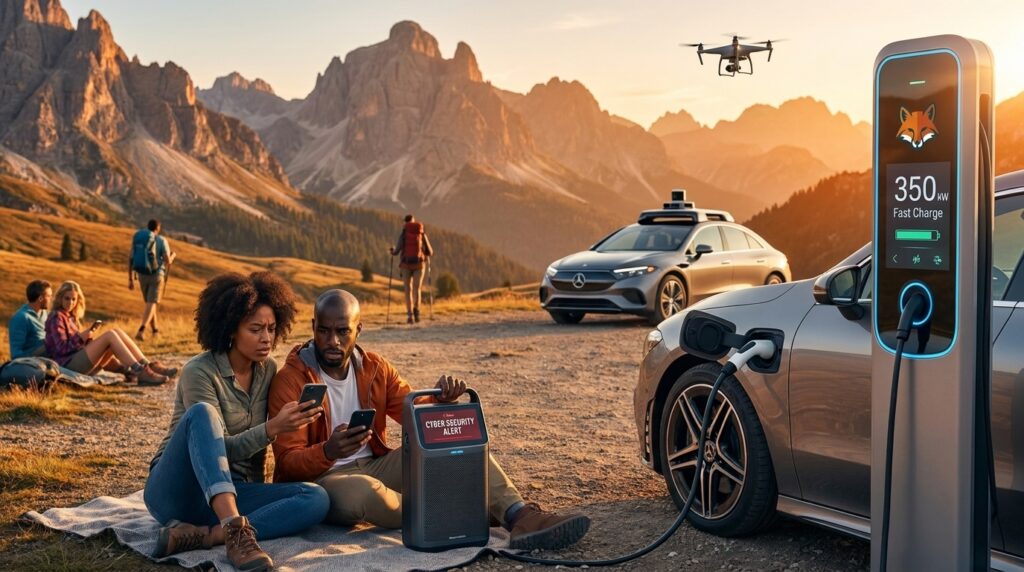
Electric Vehicles and Technology
Electric Vehicles and Technology are reshaping how we travel, but they can also introduce new failure modes that turn a weekend getaway into a techno-crisis.
Modern EVs combine complex battery systems, cloud connectivity, and advanced driver assistance. That fusion improves efficiency and convenience. It also creates new points of failure.
From charging networks that fail at peak times to software updates that alter vehicle behavior mid-trip, technology changes the risk profile of travel. Connectivity issues can strand drivers. Misconfigured autonomous features can confuse roadside decisions.
At the same time, innovations reduce those risks. Faster charging, improved range, smart route planning and enhanced diagnostics make trips more reliable. Vehicle software now predicts battery needs and suggests charging stops.
This article explores real incidents where technology made travel go wrong. It also highlights road-ready EVs that withstand the demands of weekend escapes. Expect practical takeaways about planning, in-vehicle tools, and resilience strategies for tech-forward travelers.

Image source: Stranded EV at Charging Station
Bluetooth speaker security incident in air travel
A notable Bluetooth speaker security incident forced United flight 236 to return to its departure airport after crew and security personnel flagged a discovered device name as a potential threat. The episode underlines how trivial consumer technology details can escalate into major operational responses when safety protocols encounter ambiguous signals.
Bluetooth devices periodically broadcast identifying information. Passenger speakers and headphones reveal their device name during discovery. If a name contains language that mimics threats, automated filters or human screeners can interpret it as a credible security concern.
Crew and ground teams follow conservative procedures when any potential threat is detected. That risk-averse posture prioritizes passenger safety, but it also increases the chance of significant travel disruption from benign causes.
Key facts about the Bluetooth speaker security incident:
- Flight: United flight 236 was turned back after a Bluetooth speaker name raised security concerns.
- Trigger mechanism: A discoverable device name contained a security-sensitive word that drew attention.
- Passenger reaction: Onboard remarks included, “This little joke is ruining it for everyone.”
- Outcome: Diversion and additional screening delayed the flight and inconvenienced passengers.
Operational and passenger impacts are both technical and human. On the technical side, visibility of device metadata and imperfect filtering create false-positive alerts. Organizationally, response protocols are designed for worst-case scenarios and therefore produce outsized operational costs when triggered.
Practical implications for travel reliability and passenger experience:
- False positives erode trust in automated detection and raise costs for carriers.
- Passengers face longer delays, stress, and potential missed connections.
- Airlines and regulators must balance detection sensitivity against the likelihood of benign triggers.
Small technology choices—like naming a Bluetooth speaker—can cascade into large travel failures. For tech-forward travelers, awareness and simple precautions reduce the chance of being part of the next incident.
| Feature | CLA 250 Plus | CLA 350 4Matic |
|---|---|---|
| Battery capacity | 85 kWh | Varies by trim; not specified in source |
| Charging speed (10–80%) | 22 minutes (manufacturer-stated fast-charging capability) | Varies by configuration; manufacturer data not provided |
| EPA range | 374 miles (CLA 250 Plus) | Not specified |
| Significant technology features | MB.OS0; MBUX software; optimized fast-charging architecture | MB.OS0; MBUX software; 4Matic AWD system; model-dependent tech |
Note: Values reflect available article facts; unspecified items depend on final trim and official Mercedes-Benz specifications.
Road-ready EV technology for weekend getaways
Weekend trips demand predictable range, minimal downtime, and low driver fatigue. Modern EVs deliver these through a mix of hardware and software improvements designed for practical travel use.
Electric Vehicles and Technology: systems that matter
- Integrated route planning: in-vehicle navigation now integrates live charger availability, charger power ratings, and estimated dwell time.
- Battery thermal management: preconditioning raises or lowers battery temperature before a charging stop to reduce charge time and preserve longevity.
- Fast-charging compatibility: support for high-power DC chargers shortens stops but requires charger availability planning.
- Plug and protocol support: universal standards (CCS, etc.) and adapter availability reduce interoperability friction.
Charging speeds and minimizing downtime
Faster charging reduces trip friction but is conditional on three factors: vehicle acceptance rate, charger output, and state-of-charge when arriving.
Operational practices that save time:
- Aim to arrive at chargers between 10% and 80% state-of-charge for optimal power acceptance.
- Use charging station reservation or queueing features where supported.
- Precondition the battery en route when the vehicle supports it.
Practical range management
Range planning should be conservative. Real-world range varies with load, speed, and environment. Use these tactics:
- Plan buffer segments rather than edge-of-range fills.
- Factor in accessory loads like heating or air conditioning.
- Monitor energy consumption trends during the drive and adjust speed.
Autonomous driving technology and driver relief
Advanced driver assistance systems lower fatigue on long legs. Relevant capabilities include:
- Adaptive cruise with lane-centering for highway stretches.
- Hands-on monitoring systems that prompt driver engagement when needed.
- Automated parking and low-speed maneuvers at destination points.
Limitations and safety notes:
- These systems reduce workload, not responsibility.
- Expect varying performance across road types and weather.
Resilience features for real-world trips
- Remote diagnostics and over-the-air updates fix software issues without a service visit.
- Vehicle-to-load or bi-directional charging can power campsite accessories and increase trip utility.
- Portable EV chargers provide an emergency top-up when public stations fail.
Taken together, these technologies shift weekend getaways from logistical gambles to manageable plans. The key is combining system capability with conservative planning and contingency tools.
CONCLUSION
Technology can both complicate and clarify travel. Incidents such as the Bluetooth speaker security event show how small consumer tech choices produce outsized operational impacts. At the same time, advances in electric drivetrains, fast charging, thermal management, connected navigation, and driver-assist systems are making weekend getaways more predictable and pleasurable.
Key takeaways:
- Expect software and connectivity to change how trips are planned and executed; prepare contingency plans.
- Prioritize EVs with robust charging acceptance, realistic EPA range, and active thermal management for shorter stops and fewer surprises.
- Use conservative range buffers, portable charging options, and up-to-date vehicle software to reduce risk.
LeisureQuest curates practical advice and inspiring ideas for better leisure time. Our mission is to inspire people to explore, play, and learn with high-quality recommendations and real-world guidance. For more hands-on tips, vehicle reviews, and trip planning resources, visit LeisureQuest at LeisureQuest and discover curated content to help make your next weekend escape both reliable and rewarding.
Frequently Asked Questions (FAQs)
How do Electric Vehicles and Technology affect weekend trip reliability?
Integrated vehicle systems—battery management, connected navigation, and OTA updates—change reliability profiles. They enable smarter route planning and diagnostics but introduce dependency on software and charging infrastructure. Plan backups and keep software current.
What is the safest way to plan EV range for a weekend getaway?
Use conservative buffers, plan chargers with margin, and factor in payload, speed, and weather. Rely on live charger availability in navigation and schedule stops that leave you with a healthy reserve rather than arriving at lowest charge.
How fast will my EV charge and what affects charging speed?
Charging speed depends on vehicle acceptance rate, charger power, state-of-charge, and battery temperature. For example, the Mercedes CLA 250 Plus can charge from 10% to 80% in about 22 minutes under ideal conditions.
Can small tech issues really disrupt travel, such as Bluetooth speaker security incidents?
Yes. Discoverable device metadata or ambiguous alerts can trigger conservative security responses. These incidents highlight the need for clear protocols and traveler awareness to avoid false positives.
Are autonomous driving features reliable for reducing driver fatigue on holiday trips?
Advanced driver assistance reduces workload on highways but requires driver supervision. Performance varies with road type and weather; treat systems as aids, not replacements for attentive driving.