Portable Translators for Travel and the Rise of City Drones
Pack light and think smart this summer: Portable Translators for Travel are no longer niche gadgets. They are practical companions that turn markets, cafes, and transit hubs into places of connection. Combine them with emerging city drones and you get a travel toolkit that expands how you navigate, photograph, and even communicate in unfamiliar cities.
This introduction will take you on a short tour of the portable translator technology and the rise of urban drone services. Expect vivid examples of real-world use: instant voice translation in crowded plazas, compact devices that fit in a pocket, and city drones delivering directions, safety updates, and aerial perspectives that enrich exploration. Whether you’re backpacking across Europe or exploring a coastal town closer to home, these tools save time, reduce friction, and open doors to authentic experiences.
Read on to learn which translators deserve space in your carry-on, how drones are reshaping city travel, and practical packing advice to make this summer smoother and more adventurous.

A minimal vector-style scene showing a compact handheld portable translator resting on a folded map beside a passport and earbuds, with a small quadcopter drone flying in the midground over a soft, sunlit city skyline. The palette uses gentle pastels and ample whitespace to serve as a clear visual break in the article.
Portable Translators for Travel: What They Are and Why They Matter
Portable Translators for Travel are compact electronic devices or wearable systems that convert spoken language in real time. Unlike smartphone apps tied to cellular service, many dedicated translators combine dedicated microphones, onboard processing, noise filtering, and optional global data plans to work reliably in crowded or offline situations.
Why they are becoming essential travel gear now
Advances in on-device AI and smaller hardware make accurate translation faster and more private. Travelers trade slow gestures and phrasebooks for near-instant voice exchanges. Portability means a device sits in your pocket or ear, ready when you need it—no fumbling for apps or fragile phone batteries.
How they enhance the travel experience
- Reduce friction: quick translations shorten interactions at transport hubs and shops.
- Improve safety: clear directions and warnings reduce miscommunication in emergencies.
- Boost cultural access: accurate phrasing helps with etiquette, menus, and local recommendations.
- Support business travel: clearer meetings and negotiations without a human interpreter.
Top models and what to look for
Pocket-dedicated translators excel for two-way voice and noisy environments. Look for these features:
- Dual-microphone noise reduction
- Two-way simultaneous translation
- Offline language packs
- Long battery life and quick charging
- Optional global data or eSIM for on-the-go connectivity
Representative options
- Pocketalk series: compact, two-way voice translation with built-in data options and strong noise cancellation. Ideal for travelers who want a device that “just works.”
- Langogo / similar AI translators: combine live translation with a mobile hotspot and transcription features for longer group interactions.
- Timekettle / earbud translators: discrete, true conversational translation using earbuds—best for one-on-one, natural-sounding exchanges.
- App-first alternatives (Google Translate, iTranslate): free or low-cost backups with strong offline packs; useful if you prefer a multi-purpose phone.
Choosing the right translator
Match features to your travel style. Prioritize offline performance for remote trips. Choose earbuds for social, hands-free conversations. For repeated urban use, devices with built-in data and robust noise filtering offer the most reliable experience.
| Model | Languages supported | Battery life (approx.) | Key features | Approx. price (USD) |
|---|---|---|---|---|
| Pocketalk S | 80+ languages (voice & text) | 7–8 hours | Two-way voice translation, dual-mic noise reduction, built-in data options, touchscreen | $150–$300 |
| Langogo Genesis | 100+ languages (voice & text) | 7–9 hours | AI-powered translation, built-in eSIM/hotspot, live transcription, noise filtering | $150–$250 |
| Timekettle WT2 Edge (earbuds) | 40+ conversational languages | 4–6 hours (earbuds); 20+ hours with charging case | True wireless earbuds for natural two-way conversations, low latency, hands-free modes | $129–$199 |
| Travis Touch Go | 100+ languages | 8–12 hours | Offline language packs, two-way translation, compact form factor, quick charging | $150–$250 |
| Google Translate (app) | 100+ languages | depends on phone | Free offline language packs, camera text translation, conversation mode | Free |
Note: Features and prices are approximate. Check current specs and regional availability before buying.
City Drones in Travel Tech: Urban Drones, Delivery, and Safer Exploration
City drones are moving from novelty to practical layer in urban travel tech. Small autonomous or remotely piloted quadcopters now serve tourists, local operators, and public safety teams. Their presence changes how visitors discover a place, receive services, and stay safe while exploring dense downtowns or coastal promenades.
How city drones enhance the travel experience
- Urban exploration: drones offer aerial previews of neighborhoods, rooftop cafés, and viewpoints. Short guided flights or curated aerial clips help travelers decide where to go next.
- Delivery and convenience: pilot programs use drones for fast, contactless delivery of essentials, snacks, and small gear to popular tourist spots. This reduces wait times and lets travelers keep moving.
- Safety and navigation: drones assist emergency responders with traffic snapshots, crowd monitoring, and locating lost hikers at city edges. For travelers, that means faster incident response and better real-time route information.
- Content and memories: lightweight drones enable creative, high-angle photography and short video content that traditional cameras cannot easily capture.
Examples in current use
- Medical and retail delivery pilots in cities and near-tourist hubs show practical last-mile drone logistics.
- Local tourism operators partner with drone pilots to sell brief aerial tours or video packages.
- Public-safety units deploy drones for search, crowd control, and incident assessment during large events.
Future possibilities worth watching
Expect integrated drone wayfinding that syncs with travel apps, on-demand aerial guides for hidden neighborhoods, and expanded regulated delivery corridors. As airspace rules evolve, drones could become a routine on-demand service for travelers—providing quick deliveries, safer navigation, and fresh perspectives on familiar city streets.
Conclusion: Pack Curiosity — Portable Translators and City Drones for Summer
This summer, travel tech should make your trips easier and more adventurous. Portable Translators for Travel put language fluency in your pocket. City drones add new vantage points, faster deliveries, and improved safety. Together, they turn ordinary travel moments into smoother, richer experiences.
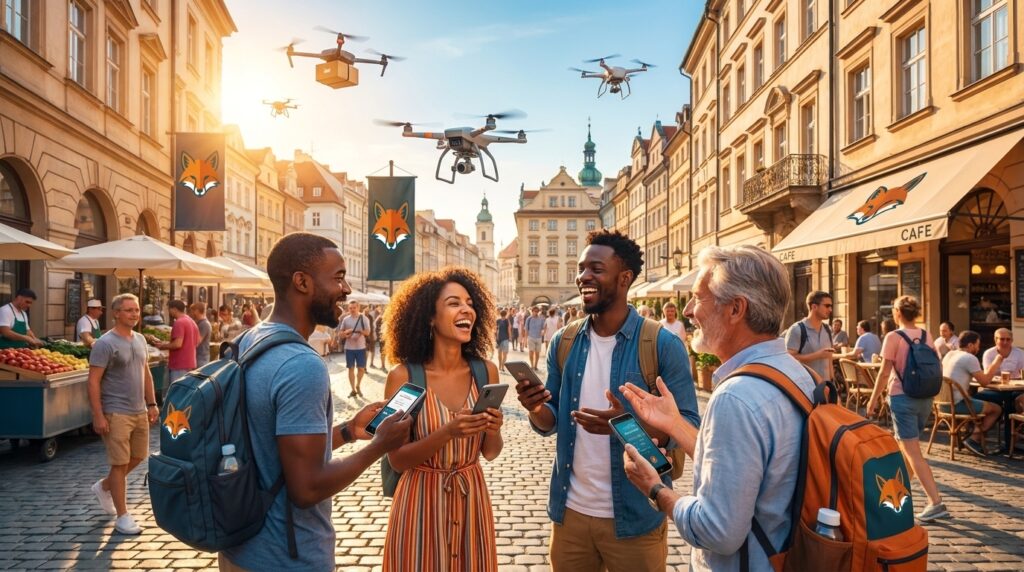
Think of a pocket translator bridging conversations in a busy market. Picture a small drone guiding you to a hidden rooftop café or delivering a water bottle on a hot afternoon. These tools reduce friction and expand the ways you discover a place.
LeisureQuest exists to make those discoveries better. Our mission is to be a curated guide to quality leisure time—highlighting gear, services, and experiences that genuinely improve your free time. We evaluate practical tech, test real-world use, and surface options that save time and boost enjoyment.
Keep exploring new travel possibilities with LeisureQuest’s expert insights. Try a dedicated translator for richer local interactions. Consider responsible drone services where available for navigation or content. Stay curious, travel thoughtfully, and let smart gear sharpen your adventures.
Learn more and follow our guides at LeisureQuest.
Frequently Asked Questions (FAQs)
What technical specs should I compare when choosing a portable translator?
Look beyond language counts. Prioritize real-time latency (<500 ms is ideal for natural conversation), dual- or multi-microphone arrays for noise suppression, support for offline language packs, and firmware update frequency. Battery life matters: aim for 6+ hours of active conversation or a charging case that doubles runtime. If you’ll use group transcription, check speaker-separation and hotspot/eSIM features.
How private and secure are these devices?
Many modern translators offer on-device processing for core functions, reducing cloud uploads—this improves privacy. If a device uses built-in data/eSIM or cloud models, check the vendor’s data retention policy and encryption standards. Use strong Bluetooth pairing and update firmware regularly to patch vulnerabilities.
What are realistic cost considerations (device + ongoing fees)?
Initial device prices range ~$100–$300. Add recurring costs: built-in data/eSIM plans, optional cloud transcription fees, and replacement earbuds or cases. Factor warranty, customer support quality, and resale value. For light use, a phone app with offline packs can be a cheaper alternative.
What recent drone regulation changes should travelers know about?
In the U.S., the FAA’s Remote ID requirement is actively enforced—drones must broadcast ID or operate in FAA-Recognized Identification Areas (FRIAs) (see FAA Remote ID). In Europe, EASA’s U-space framework and first U-space service provider certifications are enabling regulated BVLOS and commercial corridor services (see EASA U-space updates).
What emerging translator features are worth watching?
On-device large-language models and live-translation integrations (e.g., Apple’s Live Translation announcements) are improving privacy and fluency. New earbuds support two-way call translation and low-latency streaming (see Timekettle W4 Pro). Expect better voice naturalness, contextual corrections, and tighter OS-level integrations over the next 12–24 months.