
Introduction
Future of Xbox and Microsoft Gaming Leadership Shakeup is now the central question for developers, players, and investors. Microsoft’s gaming division just entered a new era after Phil Spencer’s retirement and Asha Sharma’s appointment as his successor. Those moves, and Sarah Bond’s exit, raise immediate strategic questions for Xbox’s platform strategy, Game Pass ambitions, and studio portfolio.
This introduction examines what the leadership change could mean. It does not assume quick answers. Instead, it frames the risks and decision points Microsoft faces. Asha Sharma arrives without a public track record in AAA game businesses. That gap matters for relationships with studios, platform partners, and player-facing initiatives.
Key issues include Game Pass growth targets, how Microsoft monetizes its acquisitions, and the balance between console hardware and cloud or mobile play. Investors and industry partners will watch resource allocation, platform openness, and licensing choices. Execution risk is high during leadership transitions. Small policy shifts or a change in priorities could ripple across the console ecosystem.
The sections that follow will analyze strategic options, near-term signals to watch, and scenarios for Xbox’s competitive path.
Impact of Leadership Shakeup on Xbox Strategy
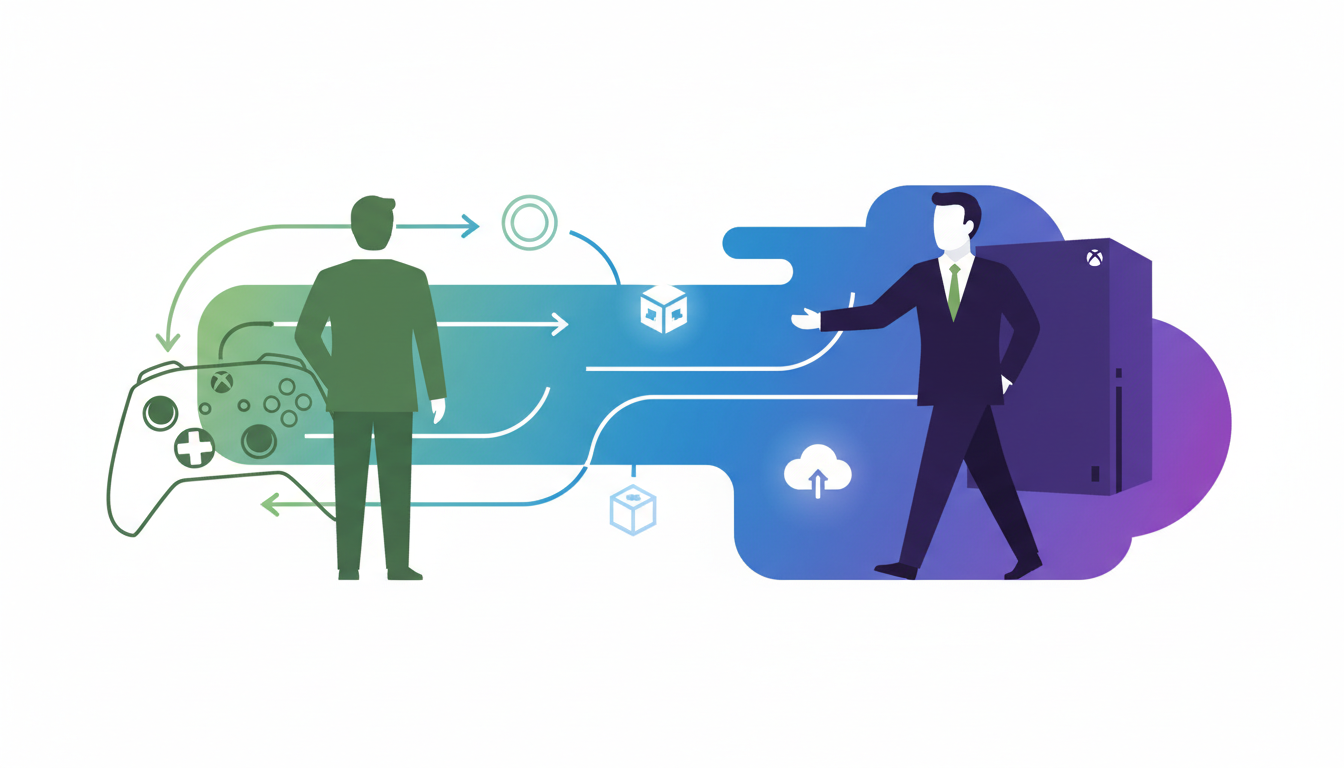
Asha Sharma’s appointment brings a different skillset to Microsoft Gaming. Her CoreAI background suggests a tilt toward cloud, AI-driven services, and platform engineering. That can accelerate Xbox cloud gaming and personalization features. It also raises pragmatic questions about managing AAA studios, franchise stewardship, and player trust.
Game Pass sits at the center of strategic decisions. Microsoft aims for 100 million subscribers by 2030 while reporting roughly 34 million today. Closing that gap requires sustained investment in exclusive content, better monetization, and international expansion. Microsoft has spent billions on acquisitions; returns hinge on retention and cross-play licensing decisions. Bringing Halo to PlayStation showed one path; more such deals could ease growth pressure.
Cloud and mobile ambitions align with Sharma’s profile. AI could improve streaming efficiency and in-game experiences. Yet infrastructure costs, device fragmentation, and carrier partnerships remain constraints. Hardware choices for Xbox consoles still matter for the core audience.
Internal culture and partner relationships are fragile during transitions. As one industry insider put it, “This whole strategy failed, and now we’re going to try a new one.” Another warned, “You need distance from this audience.” Near-term indicators to watch include Game Pass pricing moves, cross-platform licensing, and investment cadence across studios.
Quick comparison: Game Pass vs. Steam Deck vs. Candy Crush
| Service / Product | Current users / subscribers | Platform focus | Content strategy | Unique selling points | Future growth plans |
|---|---|---|---|---|---|
| Xbox Game Pass | ~34 million subscribers (latest reported) | Console, PC, cloud, mobile | Curated subscription library combining first‑party exclusives, third‑party partnerships, and DLC | Large cross‑device library, first‑party franchises (Halo, Minecraft), integrated cloud streaming | Target 100M subscribers by 2030; focus on pricing, licensing deals, and expanding cloud/mobile reach |
| Steam Deck (Valve) | Estimated ~4 million devices sold | Handheld PC gaming (SteamOS/PC) | Access to Steam’s open PC catalog; emphasis on compatibility and indie + AAA titles | Portability of full Steam library; strong PC mod and indie ecosystem | Hardware revisions, supply improvements, tighter Steam cloud integration |
| Candy Crush (King / mobile) | ~170–176 million monthly active users | Mobile (casual) | Live‑ops and microtransaction driven: constant content updates, events, seasonal monetization | Massive casual audience, high retention in short sessions, robust monetization via IAP | Continued live‑ops, regional expansion, and retention-focused monetization tactics |
This snapshot highlights different competitive moats: subscription breadth and exclusives for Game Pass, device portability and openness for Steam Deck, and scale plus monetization for Candy Crush. Use these contrasts when considering Xbox strategy under new leadership.
Future of Xbox and Microsoft Gaming Leadership Shakeup: Console Ecosystem and Industry Trends
The console ecosystem is at an inflection point where platform strategy, developer incentives, and emerging technology converge. Microsoft’s major studio acquisitions and platform investments give Xbox multiple levers: exclusive content, subscription distribution, and cross‑device services. The question is how those levers will be calibrated against mounting infrastructure costs and a fragmented device market.
One plausible path is deeper ecosystem unification: tighter integration of first‑party franchises into a subscription and cloud stack that emphasizes retention over one‑time sales. That increases lock‑in but raises antitrust and partner‑trust challenges. A second path prioritizes openness, using selective licensing and cross‑platform deals to expand addressable markets while monetizing IP across consoles, PC, and mobile. A third, hybrid approach blends exclusives with broad platform reach, using AI and cloud to personalize experiences and reduce content delivery costs.
AI in gaming can reshape development pipelines, QA, and player engagement, making titles cheaper to iterate and more responsive. Streaming games and cloud gaming trends pressure hardware margins but open new distribution channels—especially in regions where console adoption lags.
For the Xbox console ecosystem, the critical tradeoffs will be between maintaining a premium hardware identity and pivoting to cloud‑first experiences. Signals to watch include first‑party release cadence, studio autonomy and leadership hires, cloud region expansion, and any structural changes to licensing and partner agreements. Strategic clarity will determine whether Xbox remains a hardware anchor or becomes a cloud‑centric platform orchestrator.
Conclusion
The Future of Xbox and Microsoft Gaming Leadership Shakeup presents both risk and opportunity. Leadership change creates uncertainty for developers, partners, and players. It also opens space for strategic recalibration.
Asha Sharma’s background in AI and cloud points Microsoft toward platform and service innovation. That could make games more accessible across devices. At the same time, stewardship of major studios and flagship franchises remains essential. Microsoft must balance subscription growth, first‑party value, and partner trust.
For the industry, the shift signals renewed emphasis on cloud gaming, AI-assisted development, and cross‑platform monetization. Regulators and platform partners will watch licensing and competitive behavior closely. Consumers should expect gradual changes: more cloud options, evolving release windows, and experiments with monetization.
Hopeful scenarios are realistic. With clear priorities, Xbox can use its acquisitions and engineering strength to expand reach. Poor execution could fragment relationships and slow growth. The near term will reveal whether Microsoft doubles down on hardware identity or accelerates a cloud‑first approach.
For readers seeking context and inspiration on how to spend their leisure time amid these shifts, LeisureQuest acts as a curated guide to quality leisure. Visit LeisureQuest to explore recommendations that help you play, learn, and discover.
Frequently Asked Questions (FAQs)
What happened in the recent Microsoft Gaming leadership shakeup?
Phil Spencer retired and Asha Sharma was named his successor; Sarah Bond is also leaving. The change shifts talent mix toward AI and cloud expertise and raises strategic questions for Xbox, studios, and partners.
How will this affect Game Pass and subscriber targets?
The 100 million-by-2030 target faces execution risk. To scale, Microsoft needs fresh exclusives, smarter monetization, and geographic expansion. Expect experiments in pricing, licensing, and cross-platform deals.
Will first-party exclusives remain Xbox-only?
Not necessarily. Microsoft could pursue selective licensing to grow reach while protecting flagship franchises. Prior deals like Halo on PlayStation show the company may balance exclusivity with market expansion.
Does this signal a move to cloud, mobile, or AI-first gaming?
Leadership with a CoreAI background increases emphasis on cloud, streaming, and AI-driven features. Infrastructure costs and device fragmentation will shape how fast that transition happens.
What should players and developers watch next?
Look for changes in Game Pass pricing, cross-platform release windows, studio reorganizations, leadership hires, and cloud-region expansion. Those are the clearest near-term indicators.