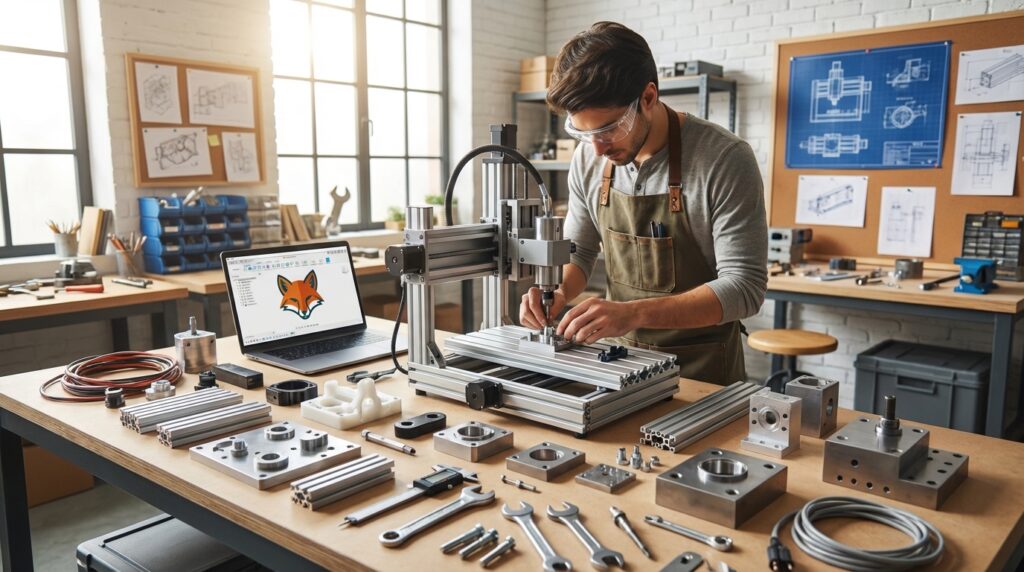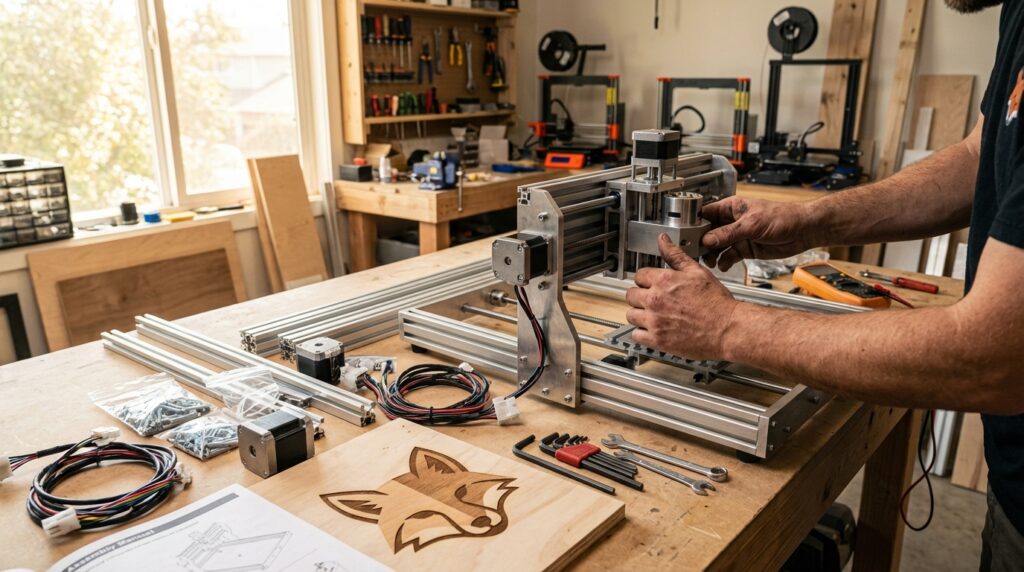
Shariff DMC2 Mini CNC Mill review: A candid maker’s primer
Shariff DMC2 Mini CNC Mill review begins with a clear promise. It speaks to makers who like mechanical detail and real results. Because the DMC2 arrives as a high-spec desktop mill, it rewards careful builders. However it also exposes beginners to a steep learning curve. You will feel the thrill of assembly and the payoff of tight tolerances. At the same time expect tram work, facing passes, and controller tuning.
This article covers the essentials you need to decide. It provides hands-on notes and technical tests. Therefore you can judge value and effort accurately.
- Features and specs such as work area, spindle, motors, cooling, and lubrication
- Assembly versus assembled options, cost, and typical build time
- Practical performance tests including initial cuts, accuracy checks, and trouble spots
Read on for a technical, candid evaluation that balances praise with warnings. The tone stays practical and precise. As a result advanced hobbyists will find useful setup tips. Meanwhile curious beginners will learn what skills they should acquire. Ultimately the DMC2 is rewarding, if you accept time and attention.
Shariff DMC2 Mini CNC Mill review: Features and specifications
The Shariff DMC2 Mini packs desktop-class hardware into a maker-friendly footprint. The machine targets tinkerers who value precision and control. Below are the core features and specs that matter.
- Work area: 12″×7″×5½” work envelope. This fits small parts and fixtures while keeping the footprint compact.
- Internal Z height: 6½ inches. Therefore you can machine taller stock and fixturing setups.
- Motors: 36V closed-loop NEMA 23 motors with feedback. Closed-loop prevents missed steps, so you get consistent positioning under load.
- Spindle: 2.2 kW spindle rated to 24,000 RPM. As a result it balances torque and high-speed capability for both metals and plastics.
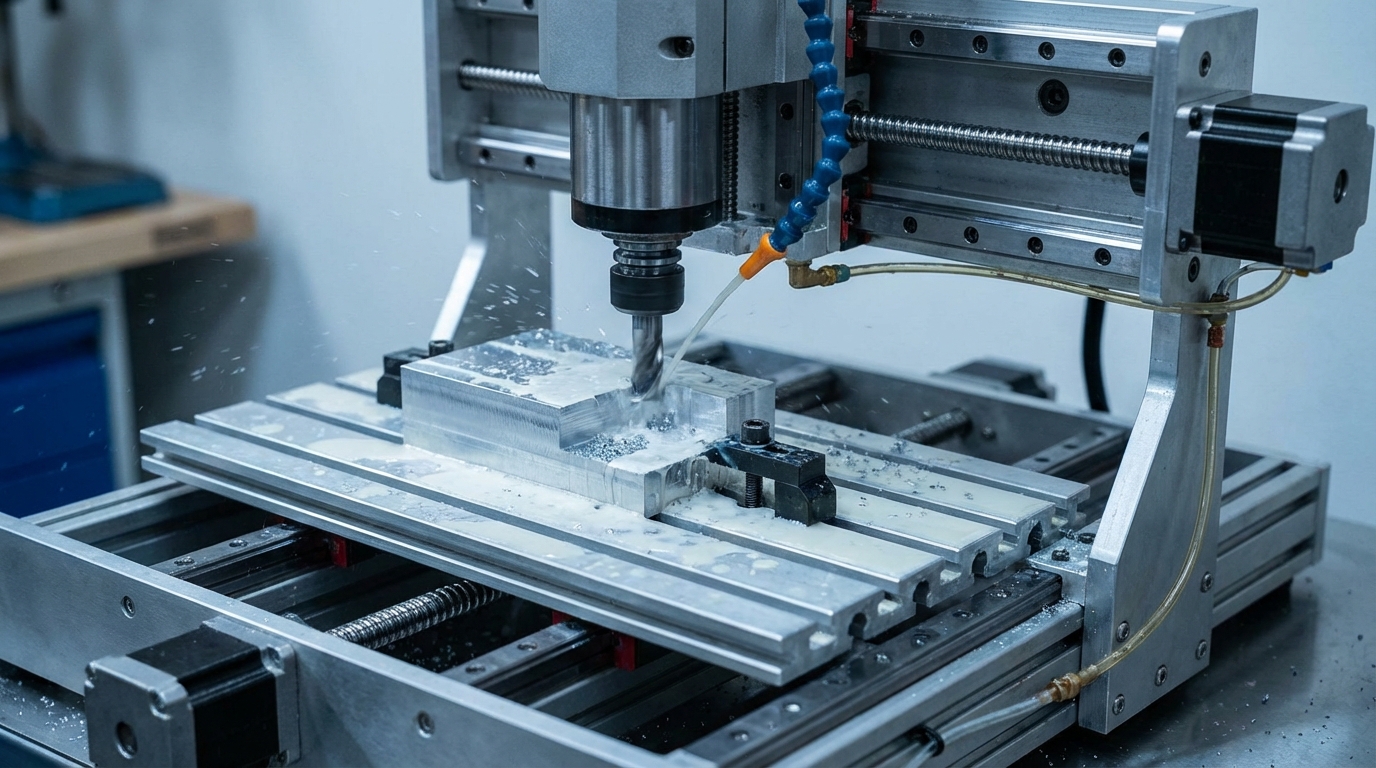
- Cooling: Flood cooling system. This supports extended cutting and helps control temperatures during heavy cuts.
- Lubrication: Dedicated lubrication system for linear rails and ball screws. Because the system lubricates bearings automatically, it reduces wear and maintenance.
- Control chassis: Runs on Mach3 by default, and the controller can be swapped for modern controllers. See Mach3 details at Mach3 Details.
Technical notes for builders and makers
- The closed-loop motors require proper tuning and encoder wiring.
- Because the bed may be unlevel along X, expect tram and facing passes during setup.
- Spindle selection matters; refer to spindle guides at Spindle Guides.
Overall the DMC2 Mini combines robust hardware with servicing features that appeal to advanced hobbyists. However careful setup and testing are essential for precision results.
DIY Kit versus Assembled: Shariff DMC2 Mini CNC Mill review
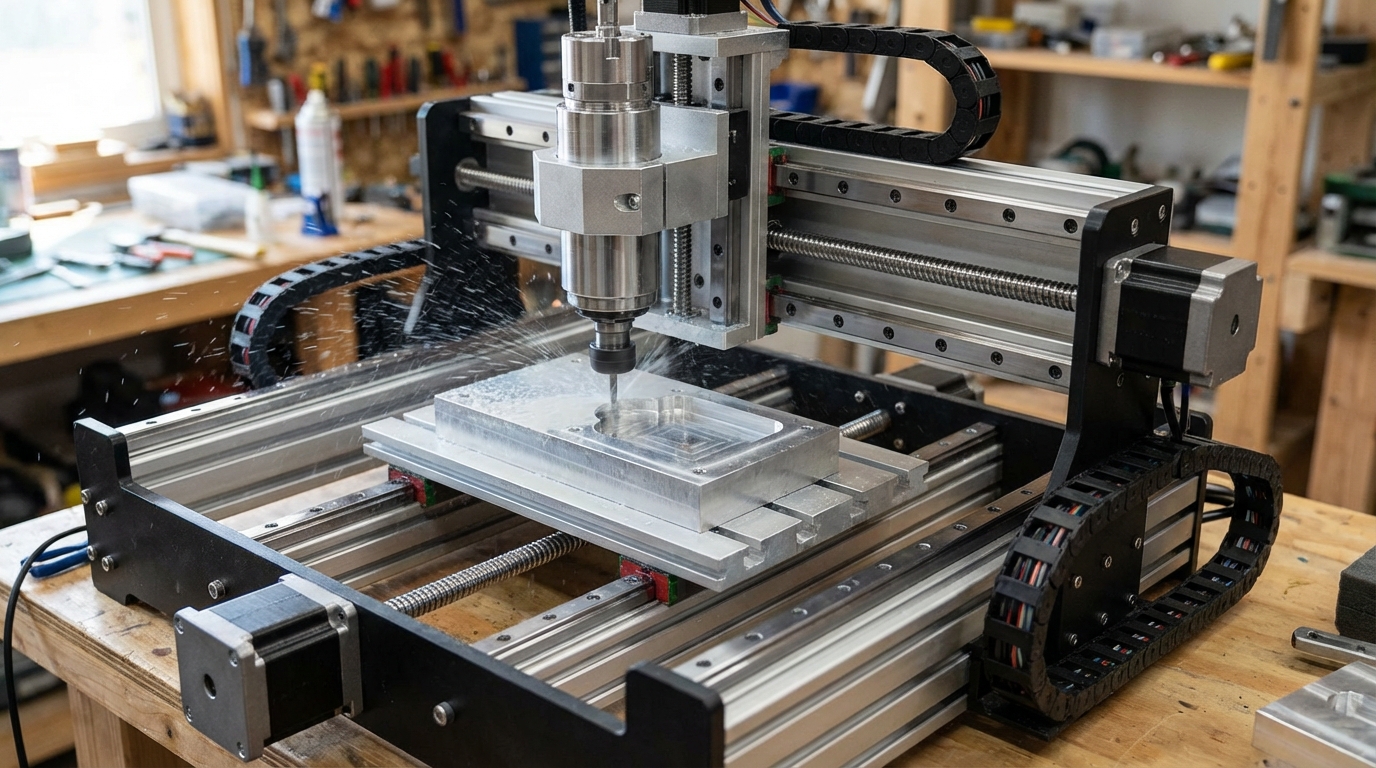
Buying the DMC2 Mini means choosing between two clear paths. The DIY kit costs $2,700 and the assembled machine lists at $4,500. “The $2,700 DIY kit is almost $2,000 cheaper than the assembled mill, so that’s the maker move.” Therefore hobbyists must weigh savings against time and skill.
Key differences at a glance
- Price and value: Kit $2,700 versus assembled $4,500. As a result you save money but invest more labor.
- Assembly time: Expect over 40 hours. Because the kit is detailed, the build can stretch longer for first-time builders.
- Learning curve: Kit builds teach mechanical systems. As a result builders learn tram, facing, lubrication routing, and encoder wiring.
- Customization: Kits allow controller swaps and tweaks. Conversely assembled units arrive tuned but are less hands-on.
Practical considerations for makers
- Documentation: The kit ships with 270 plus pages of instructions. However some steps assume mechanical familiarity.
- Controls and software: The DMC2 commonly runs Mach3. You can upgrade the controller to modern options like Mach4 for better support and controller compatibility Mach3.
- Spindle and tooling: Choose cutters and feeds carefully to avoid breaks. For spindle selection and usage tips see CNC Spindle Mill.
Recommendation
If you want hands-on learning and a lower price, choose the kit. However if you need fast setup and immediate production, the assembled mill makes more sense. Either way expect a steep but rewarding learning curve.
Quick specification comparison
| Feature | Specification | Notes |
|---|---|---|
| Work area | 12″×7″×5½” | Compact desktop footprint; fits small fixtures |
| Internal Z height | 6.5 inches | Allows taller stock and fixturing |
| Motors | 36V closed-loop NEMA 23 | Encoders for feedback; reduces missed steps |
| Spindle | 2.2 kW, up to 24,000 RPM | Balances torque and high-speed cutting |
| Cooling | Flood cooling system | Supports extended metal cuts and chip evacuation |
| Lubrication | Automatic lubrication for linear rails and ball screws | Reduces wear; requires routing during assembly |
| Controller | Mach3 by default; swappable | Mach4 is newer; controller upgrades possible |
| Price (kit) | $2,700 | DIY kit price; about $2,000 less than assembled |
| Price (assembled) | $4,500 | Factory assembled and tuned option |
| Assembly time | Over 40 hours | Build time varies; 270+ pages of instructions |
| Claimed accuracy | < 0.01 mm | Requires careful setup, tram, and facing passes |
| Accessories and notes | Flood pump, oil pump, tooling | Some pumps may have stiff springs; spring swap fixes resistance issues |
Technical specifications at a glance
| Feature | Specification | Notes |
|---|---|---|
| Work area | 12″×7″×5½” | Compact desktop footprint for small fixtures and parts |
| Internal Z height | 6.5 inches | Allows machining taller stock and stacked fixturing |
| Motors | 36V closed-loop NEMA 23 | Encoders provide feedback and prevent missed steps |
| Spindle | 2.2 kW, up to 24,000 RPM | Good balance of torque and high RPM for aluminum and plastics |
| Cooling | Flood cooling system | Helps chip evacuation and temperature control during cuts |
| Lubrication | Automatic lubrication for rails and ball screws | Reduces wear; requires routing and pump verification during build |
| Controller | Mach3 by default; swappable | Controller upgradeable to Mach4 or modern motion controllers |
| Price (kit) | $2,700 | DIY kit; roughly $1,800 to $2,000 cheaper than assembled |
| Price (assembled) | $4,500 | Factory assembled and tuned; faster time to production |
| Assembly time | Over 40 hours | Build time varies; documentation is extensive (270+ pages) |
| Claimed accuracy | < 0.01 mm | Achievable with careful tram, facing, and calibration |
| Special notes | Flood pump and oil pump may need inspection | Some pumps have stiff springs; spring swap can fix high resistance |
CONCLUSION
This Shariff DMC2 Mini CNC Mill review shows a compact, capable desktop mill built for makers who pursue precision. It pairs a 12″×7″×5½” work envelope with closed-loop NEMA 23 motors and a 2.2 kW, 24,000 RPM spindle. Because of these parts, the machine can produce tight tolerances when tuned correctly.
However setup demands attention and time. The kit typically requires more than 40 hours of assembly and 270+ pages of documentation. You must tram the bed, perform facing passes, route lubrication, and verify pump operation. As a result beginners should expect troubleshooting and spare tooling.
The DIY kit offers strong value at $2,700. Conversely the assembled option costs $4,500 and reduces initial work. Therefore choose the kit if you want a deep learning experience and cost savings. Choose the assembled route for faster production readiness and less setup.
LeisureQuest helps makers discover hobbies and build practical skills. Visit LeisureQuest for guides, project ideas, and community support. Meanwhile use the DMC2 to experiment, learn CAM workflows, and refine your machining practice.
Ultimately the DMC2 rewards patience and curiosity. So explore boldly, tinker safely, and keep learning through hands-on projects.
Frequently Asked Questions (FAQs)
How difficult is assembling the DMC2 Mini kit?
Assembly is intensive but highly instructive. The kit ships with 270 plus pages of instructions. Expect more than 40 hours of build time. You route lubrication lines, wire encoders, and set motor gains. Therefore basic mechanical and electrical skills help. Also plan for tram, facing passes, and troubleshooting.
Is the DIY kit a good value compared to the assembled mill?
The kit costs $2,700 versus $4,500 assembled. “The $2,700 DIY kit is almost $2,000 cheaper than the assembled mill, so that’s the maker move.” As a result you save money and gain deep systems knowledge. However you trade time and immediate production readiness.
What software and controller options are supported?
The DMC2 commonly runs Mach3 out of the box. You can swap the controller for modern motion systems. Mach4 offers newer support and features. See Mach3 and Mach4. For spindle and CAM best practices see CNC Spindle Best Practices.
What accuracy and cutting performance should I expect?
Shariff claims sub 0.01 millimeter accuracy. In practice you need careful tram, facing, and calibration to approach that level. Tooling, feeds, and spindle setup strongly affect results. Therefore validate accuracy with incremental test cuts before production.
Is the Shariff DMC2 Mini CNC Mill review machine suitable for beginners?
Not exactly. It is not a beginner plug-and-play machine. However committed beginners can succeed by studying guides, joining maker communities, and allowing room for trial and error. With patience, you will develop reliable machining skills.
Shariff DMC2 Mini CNC Mill review: Features and specifications
Shariff DMC2 Mini CNC Mill review — mechanical highlights
The DMC2 Mini combines compact size with industrial sensibilities. It targets makers who want control and repeatability. Because the machine uses robust components, it scales from prototyping to small production runs.
Work envelope and Z clearance
- Work area 12″×7″×5½”. This footprint fits most desktop projects and small fixtures.
- Internal Z height 6.5 inches. Therefore you can machine thicker stock and taller jigs without compromises.
Drive system and motors
- Motors 36V closed-loop NEMA 23. Closed-loop encoders prevent missed steps and improve positional accuracy.
- Because the system reports encoder feedback, you can tune accelerations aggressively without losing steps.
Spindle and cutting capacity
- Spindle 2.2 kW rated to 24,000 RPM. This spindle balances torque and high RPM for aluminum and plastics.
- Choose cutters, feeds, and speeds carefully. For spindle selection and setup guidance see CNC Cookbook.
Cooling and lubrication
- Flood cooling system for chip control and thermal stability during heavy cuts.
- Automatic lubrication for linear rails and ball screws reduces wear. However you must route lines and verify pump operation during assembly.
Control chassis and software
- Ships to run with Mach3 by default. Because Mach3 remains common, you can use legacy G-code workflows. See Mach3 details at Mach Support.
- The controller is swappable, so you can upgrade to Mach4 or modern motion controllers later.
Why these features matter
Short travel, high Z clearance, closed-loop drives, and a powerful spindle let makers machine precise parts quickly. As a result the DMC2 Mini rewards careful setup, calibration, and tooling choices. Therefore expect hands-on work during initial commissioning, but also strong capability once tuned.
DIY Kit versus Assembled: Shariff DMC2 Mini CNC Mill review
Deciding between the kit and the assembled DMC2 Mini comes down to money, time, and tolerance for troubleshooting. The kit lists at $2,700. The factory-assembled machine lists at $4,500. “The $2,700 DIY kit is almost $2,000 cheaper than the assembled mill, so that’s the maker move.” You save cash, yet you trade hours and sweat.
Quick comparison
- Price difference: kit $2,700; assembled $4,500. Therefore you save roughly $1,800.
- Assembly time: expect over 40 hours of build work. The kit includes 270+ pages of instructions.
- Learning curve: kit teaches tram, facing, lubrication routing, encoder wiring, and motion tuning.
- Customization: kit owners can swap controllers, tune drives, and modify coolant plumbing. Assembled units arrive tuned.
- Documentation quality: generally thorough but occasionally assumes mechanical knowledge.
- Controller compatibility: ships with Mach3 by default. You can upgrade to Mach4 or other modern controllers.
Practical notes and risks
The kit is DIY in every sense. Builders may encounter stiff oil pump springs, a bed that needs facing passes, and initial tooling failures. Therefore plan for spare cutters and debugging time.
Because the machine uses closed-loop NEMA 23 motors and a 2.2 kW spindle, you get industrial capability. However you must validate encoder wiring and tune motor gains.
Recommendation
Choose the kit if you want to learn mechanically and save money. Choose the assembled option if you need a faster path to production. Either choice requires attention, calibration, and patience.