Maker Faire Caserta: A Playground for Beginner Makers
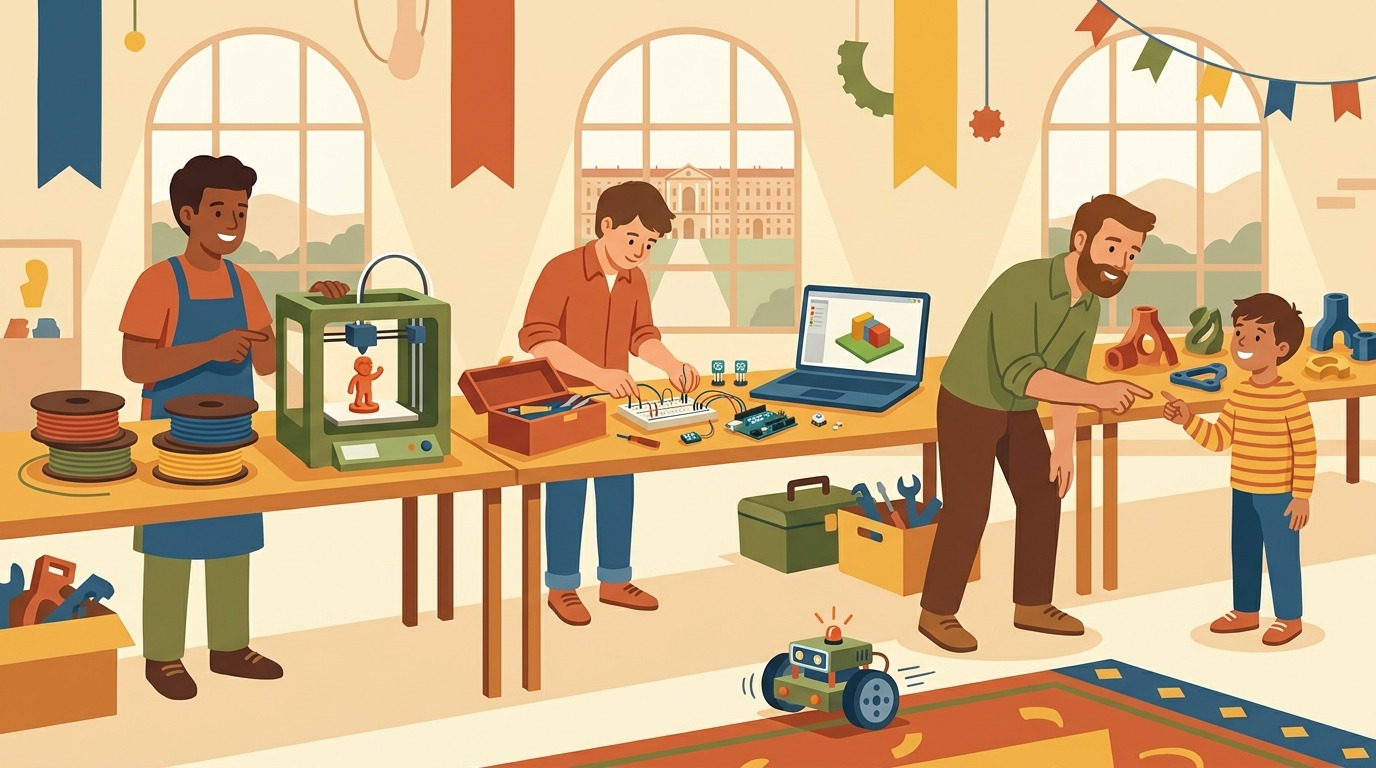
Step into the sunlit halls of Maker Faire Caserta, where the air hums with printers, fans and chatter. From bright spools of filament to tiny blinking Arduinos, the event bursts with beginner-friendly projects and DIY kits. Stations show first 3D-printed figurines, simple Arduino medication reminders, and looping drone demos. Local makers explain wiring, slicing files, and quick hacks with patient smiles. Italian craftsmanship meets digital tools — raw creativity shaped by filament, code and curiosity.
Whether you are trying your first solder joint or unpacking a ready-made kit, this festival makes learning feel playful. Workshops fill with hands-on guides, and makerspaces from Maddaloni and Caserta share tools and tips. Children and adults build geodesic domes, program sensors, and test tiny robots. The scene blends tradition and Industry 4.0: blacksmith techniques beside IoT sensors, regional design sensibilities beside open-source code.
This article invites you to dive into that world. You will find beginner projects, practical kits, local resources and simple step-by-step starts. Follow along for projects you can make at home or in a local fablab.
3D Printing Projects at Maker Faire Caserta
3D printing is a cornerstone of the Maker Faire Caserta showcase. It turns digital designs into tangible objects by laying down material layer by layer. Most beginner stations use FDM printers with PLA filament; some exhibits add resin or recycled materials to demonstrate different finishes and sustainability options.
Beginner 3D Projects at Maker Faire Caserta
At a basic level, 3D printing involves three steps: model (CAD), prepare (slicing), and print (calibration and extrusion). Learning each step introduces digital craftsmanship: parametric modelling, versioning, and iterative testing. Local makers treat design as both craft and engineering, blending Made in Italy aesthetics with Industry 4.0 thinking.
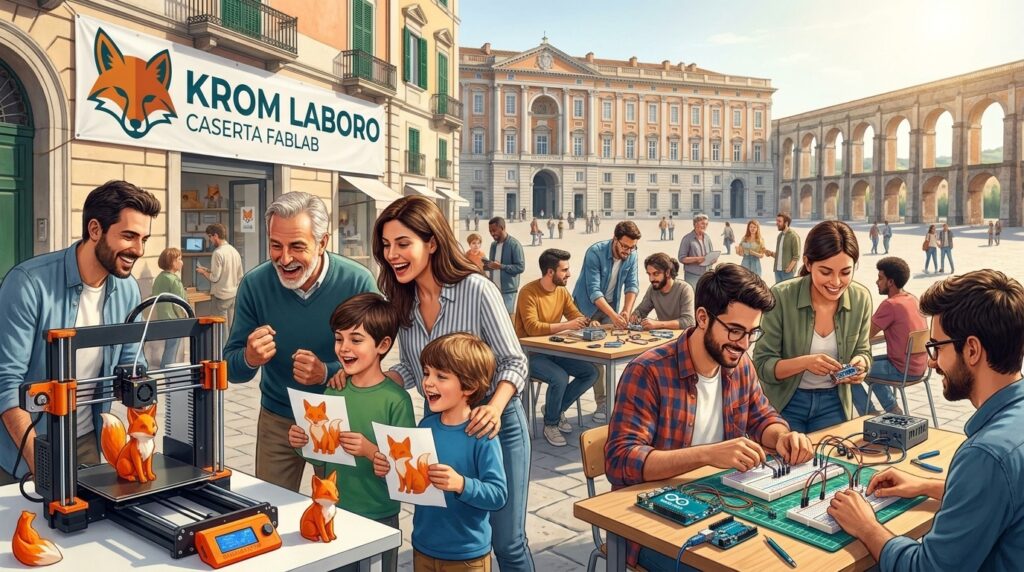
Local fablabs such as Krom Laboro Caserta FabLab and community makerspaces offer guided prints and short workshops. These sessions emphasize safe handling, proper bed-leveling, and simple slicer settings so newcomers get functional results fast.
Project ideas showcased and ideal for beginners:
- Phone stand and cable organizer — quick prints to learn tolerances.
- Enclosures for Arduino or ESP32 sensor kits — pairs with IoT demos.
- Geodesic dome connector hubs — modular pieces assembled into larger structures.
- Cosplay robot parts and wearable props — teach scaling and hollowing.
- Plant sensor housings for environmental monitoring — ties to sustainability.
- Replacement knobs and hardware for household items — practical, low-waste.
Why these projects work: they teach file preparation, support removal, infill choices, and post-processing. They also illustrate how 3D printing supports sustainability—through repair parts, recycled filament, and designs that reduce material use.
If you visit Maker Faire Caserta, seek demos on slicing strategies and PLA alternatives. Hands-on printing accelerates the learning curve and connects hobbyists with local robotics labs and makers committed to eco-sustainable solutions.
Arduino and Microcontroller DIY Builds at Maker Faire Caserta
Microcontrollers power many hands-on exhibits at Maker Faire Caserta. Beginners encounter three common families: Arduino (Uno, Nano), ESP8266, and ESP32. Each suits different goals — simple I/O and shields, low-cost Wi‑Fi, or more processing power with Bluetooth and multiple ADCs. Makers demonstrate how choice affects battery life, connectivity, and project scope.
Microcontrollers at Maker Faire Caserta: health aids and environmental sensors
Workshop tables often show practical builds rather than abstract demos. A medication reminder prototype, for example, pairs a microcontroller with a Real-Time Clock, single-button input, a buzzer or vibrating motor, and an LED to guide nontechnical users. Environmental sensor stations use modules like BME280 or DHT22 plus an ESP32 to stream data to a phone or local dashboard.
Programming options vary: Arduino IDE for quick sketches, MicroPython on ESP boards for fast iteration, and PlatformIO when projects scale. Makers walk beginners through wiring diagrams, debounce logic for buttons, power considerations, and simple error handling.
Simple starter projects:
- Single-button medication reminder with RTC and buzzer.
- Temperature/humidity logger using BME280 and SD card.
- Wi‑Fi-enabled plant moisture alert with ESP8266.
- LED notification strip controlled by Arduino for visual alerts.
- Small robot chassis with motor driver and obstacle sensor.
- Indoor air quality monitor using MQ-series sensors.
Benefits for beginners:
- Rapid feedback loop: code, upload, test.
- Low-cost components and large community support.
- Clear upgrade paths from Arduino to ESP32 features.
- Practical, real-world applications (health, home, environment).
Local resources and next steps:
- Krom Laboro Caserta FabLab: hands-on tutoring and tool access.
- Robotics laboratories in Caserta and Maddaloni: mentorship and kits.
- School clubs and makerspaces offering recurring workshops.
- Online repositories and sample code shared at Maker Faire Caserta events.
These microcontroller builds are ideal first projects: small, cheap, and immediately useful. Try a starter kit, then iterate with Wi‑Fi or Bluetooth when you’re ready.
Local Maker Resources at Maker Faire Caserta
The table below compares key local resources you can connect with through the Maker Faire Caserta ecosystem in Italy. It highlights project focus, location, and special programs that support beginner makers and community-driven digital craftsmanship.
| Resource name | Type of projects supported | Location | Special features / programs |
|---|---|---|---|
| Krom Laboro Caserta FabLab | Arduino builds, 3D printing, IoT prototyping, sustainability projects | Caserta | Rapid prototyping workshops, CNC and laser access, beginner courses, community exhibitions, Maker Faire Caserta participation, Made in Italy design mentorship |
| Local high schools (robotics labs) | Student robotics, Arduino/ESP projects, competition builds | Caserta province (various) | Curriculum-integrated labs, mentor-led club activities, school competitions, pathways to regional robotics laboratories and Maker Faire Caserta showcases |
| Maddaloni Makerspace | 3D printing, electronics, cosplay fabrication, small-scale woodworking | Maddaloni | Weekend workshops, tool library, collaborative builds, fusion workshops with traditional crafts and Industry 4.0 demos |
| Blacksmith workshops (traditional artisans) | Metalwork for props, structural hardware, artistic fabrication | Caserta region | Apprenticeships, hands-on forging workshops, hybrid maker sessions combining forging with digital design, support for local restoration projects (Made in Italy heritage) |
| Robotics laboratories (municipal / university) | Advanced robotics, drone testing, sensor integration, control systems | Caserta & nearby universities | Testing rigs, research mentorship, project incubators, partnership programs with Maker Faire Caserta for public demos |
| Community makerspaces & FabLabs | Mixed projects: 3D printing, Arduino/ESP32, environmental sensors, repair & reuse | Caserta area | Tool sharing, recycled filament initiatives, environmental monitoring projects, regular beginner-oriented meetups and open hours |
CONCLUSION
Maker Faire Caserta is more than an exhibition. It is an open invitation to tinker, learn, and join a community where digital craftsmanship meets Italian creativity. Beginner makers leave with more than finished projects; they gain confidence, new skills, and connections to local fablabs and robotics groups.
The event highlights accessible paths into 3D printing, Arduino and ESP-based electronics, and eco-minded builds. Workshops and makerspaces in Caserta and Maddaloni make it easy to turn curiosity into hands-on results. Whether you try a simple medication reminder, print a cosplay prop, or assemble an environmental sensor, the Maker Faire Caserta ecosystem supports practical learning and playful experimentation.
If you want a curated starting point, LeisureQuest shapes free time into purposeful exploration. Their guides and activity suggestions help hobbyists pick projects that match skill level, interests, and community resources. Visit LeisureQuest for ideas and local inspiration: LeisureQuest.
Join Maker Faire Caserta or a nearby makerspace. Start small, iterate often, and celebrate each successful prototype. Creativity grows in public — bring your questions, your curiosity, and a willingness to make.
Frequently Asked Questions (FAQs)
How can I participate or exhibit at Maker Faire Caserta?
Check the event’s official call for makers and deadlines. Prepare a short project summary, one-page risk assessment, and a demo plan that fits a small table or booth. Many organizers offer an online application form and guidance for shipping or on-site setup. If you are new, apply as a demo or workshop host rather than a full exhibit to get mentoring from volunteers.
What beginner projects work well at Maker Faire Caserta?
Choose compact, interactive projects that demonstrate one clear concept. Good examples: single-button medication reminders, a Wi‑Fi plant monitor, a small 3D-printed assembly, or a simple robot that avoids obstacles. Bring spare parts and a short handout or QR code with build notes so visitors can replicate the project at home.
Where do I find local resources and makerspaces in the Caserta area?
Attend open hours and introductory nights at local fablabs and makerspaces. Contact Krom Laboro Caserta FabLab, Maddaloni community spaces, and school robotics clubs to ask about workshops, tool access, and mentorship. Look for municipal cultural centers, university labs, and regional Facebook or Telegram groups that post meetups and shared projects.
What safety and preparation tips should first-time attendees follow?
Wear closed-toe shoes and keep long hair tied back near machinery. Ask for supervised soldering or power demonstrations. For resin printing, ensure proper ventilation and nitrile gloves. Respect exhibit boundaries, follow volunteer instructions, and carry a basic repair kit (spare cables, jumper wires, tape).
How do I keep learning after the event?
Start with a small kit and document each step. Join recurring workshops, follow local makers on social channels, and contribute code or design files to open repositories. Enter local challenges or school club projects to get feedback and steady progress.