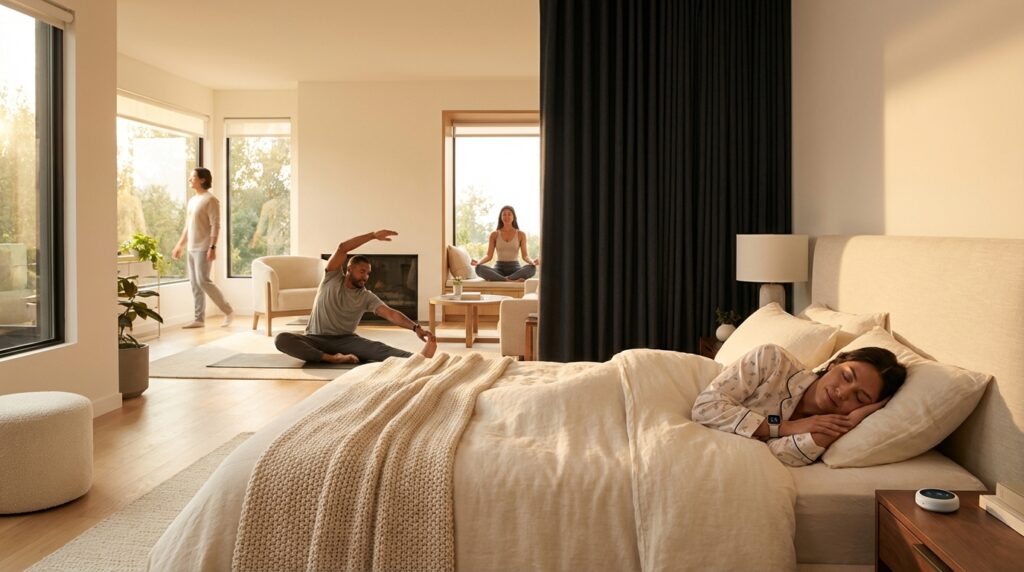
Sleep Hygiene and Routine
is the foundation of daily wellness and balance. Good sleep promotes mood, focus, recovery, and long term health. However, modern life makes consistent rest hard for many people. This guide shows practical sleep routines and wearable fitness hacks to recharge and find balance. You will learn simple bedtime rituals, light and caffeine strategies, and movement plans that improve sleep quality. You will also see how sleep tracking from wearables reveals your sleep stages, highlights patterns, and helps customize workouts and recovery so you sleep smarter. Therefore this introduction invites you to try small changes and use practical tech to reclaim energy and balance.
We cover sleep environment tips like bedroom darkness, cool temperature, and reduced noise. We also explain how to schedule workouts and charge devices to avoid sleep disruption. By combining routine habits with targeted wearable insights, you can shorten time to deep sleep and wake up restored. Start small and stay consistent.
Core concepts of Sleep Hygiene and Routine
What Sleep Hygiene and Routine means
Sleep Hygiene and Routine refers to daily habits that support consistent sleep. Good sleep hygiene improves sleep quality, mood, and recovery. Therefore a steady sleep schedule and a calm sleep environment matter. As a result you feel more energized and balanced.
Key elements of good sleep hygiene
- Sleep schedule: Go to bed and wake at similar times each day to regulate your circadian rhythm.
- Bedroom darkness and light exposure: Remove bright lights and block streetlight. Also dim screens an hour before bed.
- Sleep environment: Keep the room cool, quiet, and clutter free to reduce awakenings.
- Caffeine and alcohol: Avoid caffeine late in the day and limit alcohol near bedtime because both disrupt sleep stages.
- Exercise: Move regularly, but avoid intense workouts close to bedtime; morning and afternoon exercise often help sleep.
Practical tips to build a sleep routine
- Start with a consistent wake time, even on weekends, because stability reinforces sleep timing.
- Create a wind down ritual such as light stretching, reading, or a warm shower.
- Control light exposure by using blackout curtains and blue light filters on devices.
- Track patterns with wearables and sleep tracking to identify what helps your sleep stages and duration.
For evidence based guidance and broader recommendations, see the Sleep Foundation and the Centers for Disease Control and Prevention.
Follow these core concepts and you will build a stronger sleep routine and healthier sleep habits.

Wearable fitness hacks to improve sleep quality
Wearables offer objective sleep tracking that supports better Sleep Hygiene and Routine. Many devices measure sleep stages, heart rate, and movement. As a result you can spot patterns and make targeted changes.
How sleep tracking reveals sleep stages
Wearables estimate light sleep, deep sleep, and REM sleep using motion and heart rate. However, no consumer device matches a clinical sleep study. Therefore use wearable data as a guide, not a diagnosis. For more on device limits and strengths, see this overview from Harvard Health: Harvard Health Overview.
Use sleep data to customize workouts and recovery
- Adjust workout intensity when your sleep tracking shows low deep sleep. For example, choose a recovery run or mobility session.
- Schedule high intensity training after nights with strong sleep stages, because recovery will likely improve.
- Track fitness tracking trends over weeks to prevent overtraining and chronic fatigue.
Battery and charging tips to keep overnight tracking reliable
- Charge your device during a shower or while getting ready in the evening. That prevents gaps in overnight data.
- If battery life is short, charge for 20 to 30 minutes before bed to record the night.
- Consider a secondary short charge after morning workouts if the device allows.
Best apps and setup advice
Many workout apps let you pair indoor workout or outdoor race route data with sleep metrics. Use apps that sync sleep tracking across platforms. Also compare device sleep reports with how you feel. If results seem off, consult trusted resources like the Sleep Foundation: Sleep Foundation.
These wearable fitness hacks help you tune routines and sleep habits. As a result you will improve sleep quality and daily balance.
| Device | Sleep tracking accuracy | Battery life | Additional health features | Ease of use | Price range |
|---|---|---|---|---|---|
| Apple Watch | Good for sleep duration and heart-rate based sleep stage estimates; less accurate than clinical studies | 18 to 36 hours depending on model; daily charging usually required | ECG, SpO2, activity and workout tracking, fall detection | Seamless iOS integration and intuitive interface | $199 to $799 |
| Fitbit (Sense, Versa) | Generally reliable sleep stage and sleep score estimates for many users | Typically 5 to 7 days | SpO2, continuous heart rate, guided breathing, Fitbit Premium insights | Easy setup across iOS and Android | $79 to $249 |
| Garmin (Forerunner, Venu) | Strong movement and heart-rate sensing; good for athletes and long term trends | 5 to 14 days depending on model and usage | Advanced training metrics, HRV, Body Battery, respiration tracking | Feature rich; slightly steeper learning curve | $149 to $699 |
| Oura Ring | Very good sleep staging, temperature and readiness metrics; high user trust in sleep insights | About 4 to 7 days per charge | Sleep score, readiness, body temperature, HRV trends | Minimalist design; comfortable and discreet | $299 to $399 plus optional subscription |
Conclusion
Good sleep hygiene and routine anchor daily wellness and lifelong balance. Because sleep affects mood, cognition, and recovery, consistent habits matter. Wearable fitness hacks add actionable data, so you can track sleep stages, adjust workouts, and protect recovery. As a result, small changes lead to better sleep quality and more energy for leisure and work.
LeisureQuest serves as a curated guide to quality leisure time and balanced living. Its mission is to inspire people to explore, play, and keep learning. Visit LeisureQuest at LeisureQuest to find curated ideas that pair wellness tips with meaningful activities. Also explore guides that connect sleep health with outdoor play, mindful hobbies, and fitness routines.
Start with one habit this week and use wearables to measure progress. Therefore tweak your schedule, light exposure, or workout timing based on tracked sleep. Finally, explore more wellness and leisure tips on LeisureQuest and keep experimenting until balance feels right.
Frequently Asked Questions (FAQs)
What is Sleep Hygiene and Routine and why does it matter?
Sleep Hygiene and Routine are daily behaviors that support regular sleep. Good routines stabilize your circadian rhythm, improve sleep quality, and boost mood. As a result you recover better from workouts and stress. Therefore building consistent bed and wake times is a simple, high-impact step.
Can wearable sleep tracking gadgets improve my sleep?
Yes. Wearables provide objective sleep tracking and fitness tracking data. They estimate sleep stages and heart rate, so you spot trends over weeks. However, they do not replace clinical testing. Use device data as a guide and combine it with sleep environment changes.
How should I change my workouts based on sleep data?
If your sleep tracking shows low deep sleep, lower workout intensity the next day. For example, choose mobility work or an easy indoor workout. Conversely, schedule harder sessions after nights with strong sleep stages. Also monitor long term fitness tracking trends to avoid overtraining.
What practical habits quickly improve sleep quality?
Start with bedroom darkness and consistent sleep schedule. Next, limit caffeine late in the day and reduce alcohol before bedtime. In addition, dim screens and control light exposure in the evening. Finally, keep the room cool and quiet to reduce awakenings.
How do I keep wearable tracking reliable overnight?
Charge devices earlier in the evening or during a short routine. For many watches, a 20 to 30 minute charge before bed covers the night. Also update apps and sync data regularly. As a result you will build dependable sleep records to guide routines.