Smart Bird Feeders: A New Era of Backyard Birding
Imagine stepping onto your back deck at dawn. A steady parade of cardinals, finches and orioles approaches a sleek device that knows their names. Smart Bird Feeders combine motion-activated cameras, species-recognition AI and smartphone alerts. They turn casual backyard visits into immersive leisure tech experiences.
These feeders do more than dispense seed. They learn local patterns, capture slow-motion flights and send crisp photos to your phone. Use them during a quiet afternoon to add intention to downtime. Or bring them along on a weekend cabin stay to wake up to live feathered shows.
This introduction previews gear that improves trips and downtime. Later sections will compare top models and practical tips. For now, picture a warm cup in hand and a small screen lighting up with a rare visitor. That moment captures why smart bird feeders are a revolutionary addition to modern outdoor gear. They make nature feel closer, easier to study, and more rewarding to enjoy.
Smart Bird Feeders: Enhancing Outdoor Experience
Smart Bird Feeders are compact hubs that pair traditional feeding with modern sensors and software. Installed on a porch, hung from a tree, or mounted on a pole, they elevate backyard birding into an interactive hobby. Picture a neat device quietly recording a goldfinch’s arrival and sending a crisp image to your phone seconds later.
How Smart Bird Feeders Work
Most units combine a feeder tray, a camera, and an internet-connected processor. Motion sensors wake the camera when birds approach. The device captures short video or stills. Those images are analyzed either on-device or in the cloud. Machine learning models match wing shapes, beak profiles, and plumage patterns to known species.
Smart Bird Feeders: Key Features
- Bird identification AI: Trained classifiers suggest species and confidence scores. This turns guesses into learning moments.
- Motion-activated cameras: Triggered recording saves storage and battery. Some record high-frame-rate clips for flight detail.
- Species recognition and tagging: Automatic labels let you build a sighting history and share with friends or citizen-science platforms.
- App notifications and live view: Get real-time alerts, browse galleries, and replay rare visits.
- Power and connectivity options: Choices include battery, USB, or solar with Wi-Fi or cellular pairing.
Smart Bird Feeders in Action: Aura Smart Bird Feeder and Birdbuddy Pro
The Aura Smart Bird Feeder by Coolfly emphasizes sleek hardware and a friendly app. Its design fits suburban yards while keeping cameras angled for close portraits. Birdbuddy Pro focuses on image quality and a curated identification feed that helps beginners learn species quickly. Both models show how hardware and software combine to make birding effortless and engaging.
These devices add depth to downtime. They reward quiet observation, nudge you toward new identification skills, and create small, repeated moments of wonder in everyday outdoor spaces.

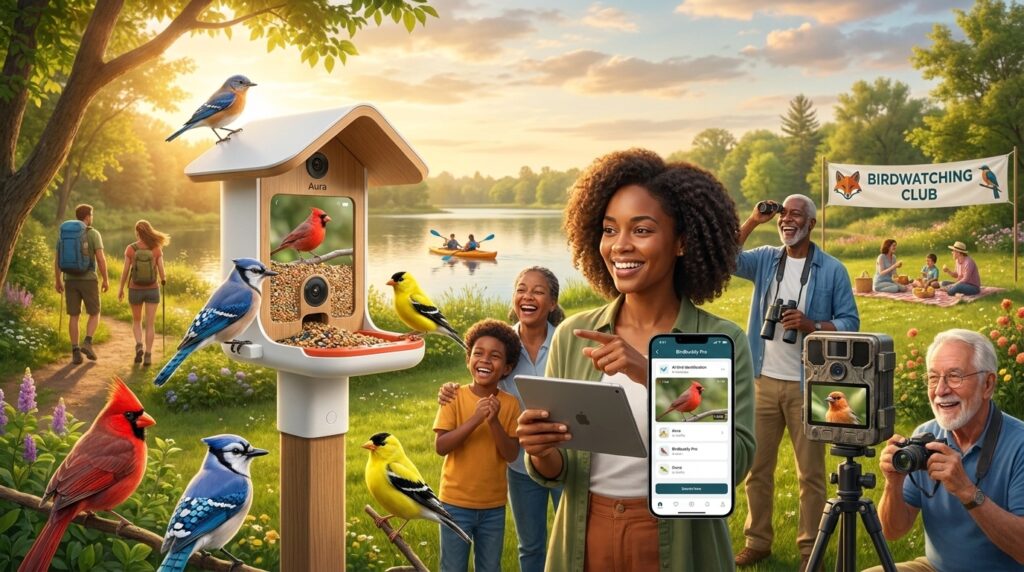
A smart bird feeder hangs from a post amid trees at golden hour, with songbirds nearby.
| Product | AI Bird Identification | Motion Detection | Price Range (USD) | User-friendliness | Warranty |
|---|---|---|---|---|---|
| Aura Smart Bird Feeder (Coolfly) | Yes (on-device and cloud-assisted) | Yes | $160–$260 | Easy — guided app setup | 12 months |
| Birdbuddy Pro | Yes (cloud AI with confidence scores) | Yes — high-sensitivity sensor | $200–$350 | Beginner-friendly; curated ID feed | 12 months |
| Bird Buddy (Original) | Yes (basic species suggestions) | Yes | $120–$180 | Very easy — plug-and-play | 12 months |
| FeederCam Solar (third-party models) | Varies by model | Yes — solar or battery options | $80–$180 | Moderate — some assembly required | Varies — check vendor |
Note: Price ranges and warranty terms are approximate and change over time. Confirm specifications with manufacturers before purchase.
Benefits and Use Cases of Smart Bird Feeders
Smart Bird Feeders for Enhanced Bird Watching
Smart bird feeders make casual observation feel deliberate. Instead of waiting at a window, you get timely alerts when interesting visitors arrive. That means more sightings during short breaks, relaxed afternoons, or while traveling. Imagine a weekend cabin stay where your phone buzzes with a photo of a rare warbler — you don’t have to be on-site to enjoy the moment.
Smart Bird Feeders for Species Identification and Learning
These devices accelerate learning. Sightings are logged automatically, with suggested IDs and confidence scores. Over weeks, your personal gallery becomes a field guide tailored to your yard. This is useful for novices learning local species and for experienced watchers tracking migrant shifts.
Smart Bird Feeders and Smart Home Integration
Integrating smart bird feeders with home systems adds convenience and safety. Link alerts to smart displays, or trigger porch lighting when motion is detected. Use IFTTT or voice assistants to pause camera recordings or silence notifications during sleep. Integration helps automate care and reduces false alerts.
Smart Bird Feeders for Trips and Remote Monitoring
Take a feeder’s peace of mind on longer trips. Remote live views and cloud galleries let you check the yard from anywhere. Set schedules and feeding levels remotely, and receive battery or connectivity alerts before problems escalate.
Smart Bird Feeders for Community Science and Sharing
Share verified sightings with local groups or national databases. Exportable logs simplify contributions to citizen science projects. Sharing also builds community — neighbors swap photos and tips directly from app galleries.
Smart Bird Feeders for Accessibility and Education
Automated IDs and clear imagery make birding more accessible. Teachers, families, and older adults can use feeders as low-barrier nature lessons. Short clips and labeled photos create repeatable, screen-friendly learning moments.
These practical uses show how smart bird feeders deepen enjoyment, simplify monitoring, and extend birding beyond the backyard.
CONCLUSION
Smart bird feeders turn ordinary yards into active, day-long nature experiences. They increase sightings with motion alerts, simplify species identification with AI, and preserve moments with crisp photos and video. Remote access and smart-home integration let you monitor feeders from anywhere. Automated logging and easy sharing make learning social and useful for citizen science. For families and educators, these devices offer low-barrier, repeatable lessons about wildlife.
Beyond utility, smart bird feeders change downtime into mindful play. A quick notification can brighten a morning, and a curated gallery builds a new hobby without steep learning curves. Models like the Aura Smart Bird Feeder and Birdbuddy Pro show how design and software combine to make birding accessible and engaging.
LeisureQuest is a curated guide to help you explore and enjoy leisure tech and outdoor gadgets. Visit LeisureQuest for more reviews, setup tips, and gadget ideas. Explore guides, compare models, and find inspiration for playing, learning, and getting outside.
Frequently Asked Questions (FAQs) — Smart Bird Feeders (Expanded)
How do I troubleshoot connectivity and pairing problems?
Common fixes: confirm your feeder is within strong 2.4 GHz Wi‑Fi range (many devices don’t support 5 GHz), reboot the feeder and your router, and temporarily disable mobile hotspot/firewall settings during setup. If pairing fails, try using your phone as a temporary hotspot for initial configuration. For device-specific guides see Bird Buddy’s product pages here or Aura’s support/product page here.
My camera isn’t triggering or images are blurry — what should I check?
Clean the lens with a microfiber cloth, remove obstructions (ivy, seed dust), and ensure the motion-sensor isn’t aimed at heat sources. Adjust sensitivity/schedule in the app and test at different distances. Verify firmware is up to date and battery/solar panels are charged.
The AI gives incorrect identifications — can I correct them?
Yes. Many apps allow manual-tagging to improve future suggestions. Pay attention to confidence scores and add corrected labels to your gallery to help the model learn.
What are the privacy risks and how do I protect my footage?
Some models process images in the cloud and may retain photos. Read product privacy policies, disable cloud storage or sharing if available, regularly delete unwanted footage, and enable strong account passwords and two-factor authentication. For vendor privacy details, consult the manufacturer pages above.
Maintenance tips to keep a feeder reliable?
Clean trays every 1–2 weeks, wipe lenses, check seals for water intrusion, keep seed dry, inspect solar panels, and charge batteries seasonally. Update firmware and apps to get bug fixes and recognition improvements. For step-by-step setup and troubleshooting videos, the manufacturer pair/tutorial videos are helpful (example pairing tutorial: here).