
Introduction — Creatine Supplements and Practical Wellness
Creatine Supplements are one of the simplest, most researched ways to boost short-burst exercise performance and daily energy. If you want better strength in the gym or steadier energy for busy days, this supplement deserves attention.
At its core, creatine helps regenerate ATP, the cell’s rapid-energy currency. That quick energy makes a difference for sprints, heavy lifts, and other high-intensity efforts. The body makes creatine naturally in the liver, kidneys, and pancreas, and stores most of it in skeletal muscle.
A common, evidence-backed dose is 3 to 5 grams per day. Some people start with a short “loading” phase to raise muscle stores faster, then switch to a 3–5 g daily maintenance dose. Creatine monohydrate is the standard form most studies use.
This introduction primes practical next steps. Later sections dive into the clear benefits, usage timing, safety considerations, and how creatine fits into broader wellness routines. We’ll also cover at-home testing options, simple sleep strategies, and other accessible health practices to help you get measurable results without overcomplication.
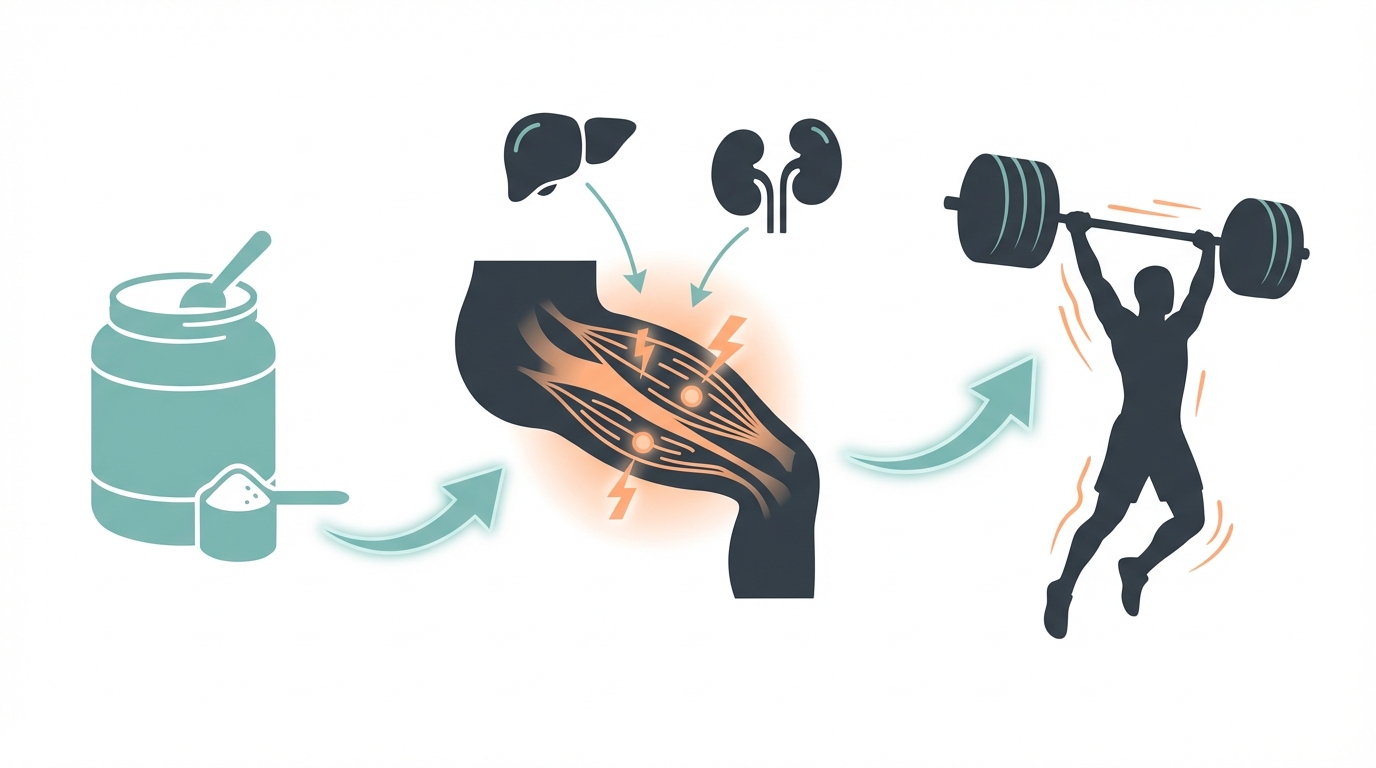
Figure: A simple visual showing a supplement jar flowing to muscle, natural production icons, and an athlete performing high-intensity exercise.
Creatine Supplements — Exercise Performance Benefits
Creatine supplements consistently improve short-duration, high-intensity performance. They boost repeated sprint ability, maximal power output, and short rest-interval work capacity. This makes creatine particularly useful for sprinters, weightlifters, and athletes who rely on explosive efforts.
Multiple systematic reviews and meta-analyses report meaningful gains in strength and power when creatine is combined with resistance training (see meta-analyses summarized on PubMed). For a clear overview, consult these reviews on strength and power outcomes: PubMed Review 1 and PubMed Review 2.
Creatine Supplements — Muscle Strength Preservation and Training Response
Creatine does not directly build muscle tissue on its own. Instead, it increases available rapid energy, enabling higher training quality. That improved training stimulus helps preserve and increase strength over time when paired with resistance work.
Long-term training studies show greater gains in lean mass and measurable strength versus placebo. Meta-analytic data support these effects across age groups and training levels (examples: PubMed Study).
Creatine Supplements and Brain Health
Emerging research links creatine to cognitive resilience, particularly under stress or sleep loss. Creatine supports cellular energy systems beyond muscle, which may help memory and processing speed in some populations. Early trials and narrative reviews suggest potential benefits for aging brains and recovery after trauma; more targeted clinical trials are ongoing (see ISSN position and narrative reviews for context: JISSN Review).
Safety of Creatine Supplements — Research-Based Evidence
Large reviews and position stands conclude creatine monohydrate has a strong safety profile for healthy adults. Adverse events are generally mild and infrequent. Long-term use studies and reviews report no consistent evidence of kidney or liver damage in healthy users when taken at recommended doses (see ISSN position stand: JISSN Safety Review).
Practical note: creatine monohydrate is the most-studied form. When choosing a product, prefer third-party tested creatine monohydrate and follow standard dosing guidelines. Later sections will explain timing, loading strategies, and how creatine fits into a broader wellness plan with sleep and at-home testing considerations.
Quick Comparison of Popular Creatine Supplements
| Brand | Product name | Form of creatine | Typical price range (USD) | Notable features |
|---|---|---|---|---|
| Thorne | Thorne Creatine | Creatine monohydrate (micronized) | $25–$45 | Single-ingredient formula, marketed for purity, good mixability |
| Onnit | Onnit Creatine Unflavored | Creatine monohydrate | $20–$35 | Unflavored for easy mixing, athlete-focused branding, simple ingredient list |
| Nutricost | Nutricost Creatine Monohydrate | Creatine monohydrate | $10–$20 | Budget-friendly, bulk sizes available, straightforward powder |
At-Home Testing and Simple Sleep/Health Strategies
At-home health testing has made actionable care easier to access. Kits from companies like Dame and Everlywell let people screen privately and quickly for common STIs and other conditions.
Why use at-home testing
- Convenience: test at a time and place that fits your schedule.
- Privacy: discreet packaging and results delivered to you.
- Early detection: testing reduces time to treatment compared with waiting for clinic access.
Accuracy and practical use
- Many at-home STI kits match clinical test accuracy when instructions are followed precisely. Proper sample collection is the main determinant of reliability.
- Buy tests from reputable companies and look for clear instructions and third-party lab processing.
- Follow sampling windows and storage guidance on the kit. Some tests require refrigeration or same-day shipping.
What to do with a positive result
- Treat a positive result as the start of a care conversation, not the end. Reach out to a clinician or local sexual health service to confirm diagnosis and discuss treatment.
- Ask about partner notification and follow-up testing. Many services will help arrange confirmatory tests or prescriptions.
- Keep documentation of your test and results for medical records.
Simple sleep strategies to support supplements and recovery
- Keep a regular sleep-wake schedule, even on weekends. Consistency stabilizes circadian rhythms.
- Aim for 7–9 hours of uninterrupted sleep most nights.
- Create a 30–60 minute wind-down routine: low light, reduced screens, calming activity.
- Time caffeine to finish at least 6–8 hours before bedtime.
- Use morning daylight exposure and daytime activity to reinforce sleep signals.
Everyday health habits that amplify supplement benefits
- Prioritize resistance training two to four times per week to translate supplement gains into strength and function.
- Maintain steady protein intake across the day to support recovery and lean mass.
- Stay hydrated and favor whole foods over processed options.
- Schedule routine check-ins with a clinician for bloodwork or targeted tests when starting new supplements.
Putting it together
Combine regular at-home testing (when appropriate), consistent sleep habits, sensible training, and medical follow-up. These simple practices increase the chance that supplements like creatine contribute to real, measurable improvements in health and performance.
Conclusion — Practical Wellness with Creatine Supplements and Simple Habits
You don’t need complicated protocols to make progress. Focus on small, consistent steps: a researched supplement like Creatine Supplements paired with regular resistance work, periodic at-home testing when relevant, and steady sleep habits. These elements multiply each other over weeks and months.
At-home testing offers privacy and faster detection; follow up with a clinician if results are positive. Simple sleep strategies—consistent bedtimes, light management, and daily movement—boost recovery and cognitive clarity.
LeisureQuest curates practical tools and trustworthy product suggestions so your leisure time becomes purposeful and restorative. Explore guides, product roundups, and routines that help you play, train, and rest smarter.
Start small. Track what changes. Iterate based on results and medical advice. Enjoy the process—better performance and health are built through gradual, repeatable habits.
Visit LeisureQuest for curated resources and next steps: LeisureQuest.
Keep exploring, keep playing, and keep learning.
Frequently Asked Questions (FAQs)
What are Creatine Supplements and how do they work?
Creatine supplements supply creatine to muscles, supporting rapid ATP regeneration. That short-burst energy helps during sprints, heavy lifts, and other high-intensity efforts. The body produces creatine naturally, but supplementation raises muscle creatine stores for better performance.
How much creatine should I take?
A common maintenance dose is 3 to 5 grams per day. Some use a short loading phase (about 20 g/day divided over 4 doses for 4–7 days) to saturate stores faster, then continue with 3–5 g daily. Creatine monohydrate is the most-studied form.
Are creatine supplements safe long term?
Research shows creatine monohydrate has a strong safety profile in healthy adults when used at recommended doses. If you have kidney or liver disease, consult a clinician before starting.
How reliable are at-home STI and health tests?
Many reputable at-home kits match clinical accuracy when instructions are followed and labs process samples. Use tests from known providers, follow collection and shipping guidance, and treat positive results as a prompt to seek clinical confirmation and treatment.
What simple habits complement supplements and testing?
Prioritize consistent sleep (7–9 hours), regular resistance training, adequate protein and hydration, and routine medical check-ins. These habits improve recovery and make supplement benefits more likely.