
Brain-Computer Interface Technology
Brain-Computer Interface Technology is moving from science fiction toward practical tools that support mental health and everyday wellbeing. Innovations in consumer BCIs and medical implants promise new ways to monitor mood, reduce symptoms, and strengthen the brain’s capacity to adapt. This field blends sensors, software, and neuroscience into headsets and compact implants that can read, stimulate, and train neural circuits.
Companies such as Motif Neurotech and Neurable are already translating lab breakthroughs into real products—Motif with implantable approaches aimed at depression and Neurable by enabling third-party hardware to harness neural input. For users, that means less guesswork about mental states and more personalized, non-pharmaceutical options for stress management, focus, and recovery.
Risks and ethical questions remain, but the dominant narrative is optimistic: modest, evidence-driven devices could make mental-health care more accessible and responsive. This article breaks down how current consumer BCIs work, what brain implants are starting to do in clinical settings, and which design trends will shape the next generation of mental-health gadgets.
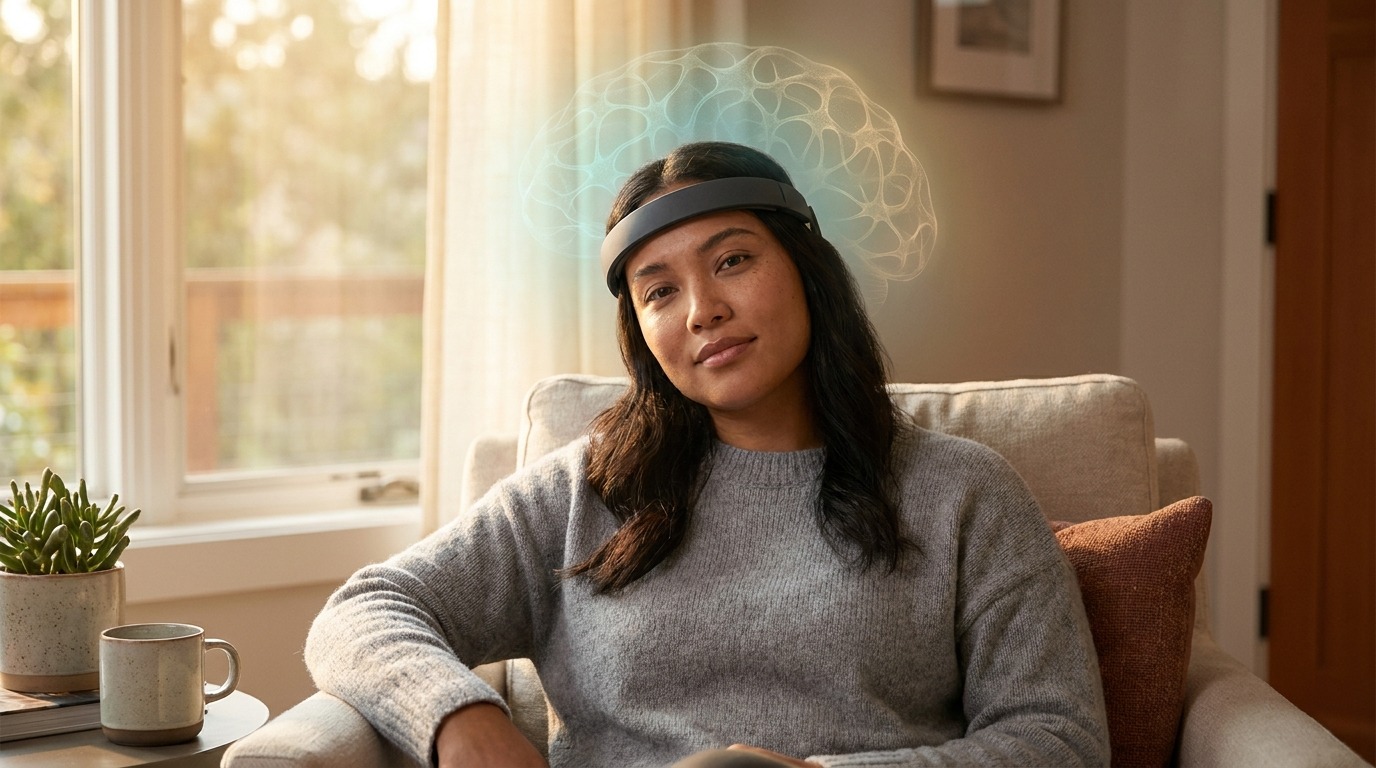
Consumer Brain-Computer Interface Technology: headsets and noninvasive wearables
Consumer BCIs typically arrive as headsets, bands, or earbuds that read electrical brain signals. Most use EEG sensors placed against the scalp. Those sensors detect tiny voltage changes from neural activity. Onboard firmware and cloud software then filter noise, extract patterns, and map those patterns to states such as attention, relaxation, or stress.
Today’s devices range from simple meditation bands to multifunction neural headsets built for wellness and gaming. Some companies integrate EEG into premium headphones and gaming gear so users can measure focus while listening or playing. Neurable’s platform is an example: its tech has been tested with consumer headphones and is being licensed to third-party hardware makers. That licensing model could accelerate a wider flood of accessible neural gadgets.
How these consumer BCIs help mental health
- Passive monitoring: continuous or session-based tracking of stress, sleep, and attention.
- Guided training: neurofeedback programs teach users to change brain states through cues and rewards.
- Behavioral nudges: apps translate neural metrics into prompts for breathwork, breaks, or sleep hygiene.
These noninvasive approaches do not replace therapy. They extend self-awareness and provide tools for daily wellness and cognitive training.
Brain-Computer Interface Technology: blueberry-sized implants and clinical devices
A different class of BCI lives under the skull. Motif Neurotech’s blueberry-sized brain implant is a small, implanted device designed to treat depression. The company received FDA approval to begin human studies. The implant can be placed during a short outpatient procedure that lasts about 20 minutes.
How implants work
Implants record neural signals directly from brain tissue or nearby structures. They can also deliver targeted stimulation. Direct access lets algorithms modulate specific networks more precisely than surface EEG. That precision is particularly useful in clinical applications such as depression treatment.
Neuroplasticity and therapeutic promise
Experts describe a key benefit as inducing helpful neuroplasticity. As Jacob Robinson puts it: “We think we can drive neuroplasticity that creates stronger connectivity within the central executive network for patients with depression, so that they can get out of bed in the morning, call their friends, go to the gym.” Targeted stimulation combined with behavioral therapy may strengthen underactive circuits over time.
Clinical implants aim for durable symptom reduction. Consumer devices focus on self-management and performance. Both paths contribute to mental health tools that are increasingly personalized, measurable, and evidence-driven.
Risks and realistic expectations
Implants carry surgical and regulatory considerations. Noninvasive BCIs face limits in signal fidelity and interpretation. Both require robust data protection and ethical guardrails. Still, the combined progress in brain implants and consumer BCIs points to new, complementary options for mental health and wellbeing.
| Device name | Manufacturer | Application | Invasiveness | FDA approval status | Procedure duration | Key benefits |
|---|---|---|---|---|---|---|
| Neurable-powered headphones | Neurable (licensed to partners) | Focus and attention tracking; hands-free control; wellness apps | Noninvasive (EEG) | Not FDA-cleared for clinical treatment | N/A (wearable) | Real-time neural input; accelerates hardware adoption through licensing |
| Generic consumer neural headset | Various consumer BCI makers | Meditation, neurofeedback, stress and sleep tracking | Noninvasive (scalp EEG) | Typically not FDA-cleared | N/A (wearable) | Accessible neurofeedback; self-monitoring; behavioral nudges |
| Motif blueberry-sized implant | Motif Neurotech | Depression treatment; targeted neuromodulation | Invasive (sub-cranial implant) | FDA-approved human study | ~20-minute outpatient procedure | Precise recording and stimulation; potential to drive neuroplasticity and durable symptom reduction |
Emerging Brain-Computer Interface Technology ecosystem: how partnerships scale innovation
A fast-developing ecosystem is forming around Brain-Computer Interface Technology, driven by platform makers, audio and gaming hardware brands, app developers, and clinical partners. Instead of a single company building end-to-end devices, licensing and partnerships are letting specialists combine strengths. That model can speed adoption and diversify product types—from earbuds that track stress to gaming headsets that measure attention.
Neurable’s licensing strategy is a clear catalyst. By offering core neural processing as a platform, Neurable enables manufacturers to embed EEG and neural controls into existing products. As one executive put it: “There’s a whole landscape of technology that touches your head that’s yet to be embedded with our platform.” That approach shifts BCI from niche headsets to everyday consumer hardware.
Key hardware partners and roles
- Master & Dynamic, HP, HyperX, and similar brands bring industrial design, audio engineering, and distribution channels. Their involvement lowers the barrier for mainstream users to try neuro-enabled headsets.
- Consumer audio and gaming brands accelerate reliable sensor placement and ergonomics. Better fit means cleaner EEG signals and more consistent brain health metrics.
- Third-party accessory makers and startups extend form factors—earbuds, sleep bands, and hybrid headsets—so BCIs appear in contexts people already trust.
What this ecosystem enables
- Rapid product diversification: licensing lets dozens of new models appear quickly. Users get choices across price, style, and use case.
- App and service growth: SDKs and APIs let developers build guided neurofeedback, sleep coaching, and gaming performance tools on top of a shared neural platform.
- Cross-domain innovation: gaming companies add attention metrics to improve match-making and training; wellness apps integrate EEG-derived stress scores into personalized programs.
Data ethics, safety, and user anxiety
Partnerships bring scale, but they also demand stronger governance. Companies in this space are increasingly focused on data protection, transparent consent, and clear clinical boundaries. As one company emphasized: “There’s always going to be some anxiety. We’ve been very careful when it comes to that transition. We’re protecting the data, being as ethical as possible.”
Trust-building practices to look for
- Local-first processing: sensitive signals processed on-device to reduce cloud exposure.
- Granular consent: users choose which metrics are stored or shared.
- Clinical pathways: clear labeling when a product is for wellness vs. clinical treatment.
- Independent validation: third-party studies that verify claims about neuroplasticity, sleep, or mood improvements.
Why the ecosystem matters for wellbeing
An open partnership model multiplies use cases. It brings brain metrics into products people already use, making mental-health signals easier to capture and act on. It also spreads the responsibility for safety across makers, clinicians, and regulators. That shared effort increases the chances the field delivers useful, trustworthy tools for stress reduction, focus, recovery, and long-term brain health.
Brain-Computer Interface Technology
Brain-Computer Interface Technology is poised to reshape how we manage mental health, optimize gaming performance, and support everyday wellbeing. From wearable neural headsets that help users track stress and focus, to implantable systems that aim for durable clinical benefit, these tools promise more personalized, data-driven paths to recovery, resilience, and peak performance.
The emerging ecosystem of platforms, hardware partners, and apps lowers barriers and accelerates innovation while reinforcing the need for strong data ethics and clinical standards. With careful validation, transparent consent, and on-device protections, BCI products can earn user trust and reduce anxiety about adoption.
At LeisureQuest, our mission is to help readers explore and engage with technology and leisure for a balanced lifestyle. We curate practical reviews, explainers, and buying guides so you can find trustworthy devices and services that fit your goals.
The future is not about replacing human care; it’s about augmenting it. With evidence-led development and shared responsibility, BCIs can become everyday tools for healthier, more focused lives.
Frequently Asked Questions (FAQs)
What is Brain-Computer Interface Technology and how is it used?
BCIs translate brain signals into digital inputs. Consumer devices use EEG headsets for monitoring, neurofeedback, and hands-free control. Implants record and sometimes stimulate brain circuits for clinical treatment.
Are BCIs safe?
Noninvasive headsets pose low physical risk but vary in accuracy and privacy practices. Implants carry surgical risks and are studied under FDA oversight. Look for clear consent, local processing, and strong data protections.
Can BCIs treat depression?
Clinical implants like Motif Neurotech’s blueberry-sized device are in FDA-approved human studies for depression. Early work aims to drive neuroplasticity, but implants are clinical treatments, not consumer solutions.
When will BCI gadgets be widely available?
Consumer BCIs already exist; licensing and partnerships (for example Neurable with audio and gaming brands) should broaden product choices in the next few years.
How do I evaluate BCI products for wellbeing?
Check independent validation, clinical claims, data-privacy practices, ergonomics, and whether the product is intended for wellness or clinical use.