Introduction
A sudden storm, a long blackout, or an overnight evacuation can strip life down to essentials. Disaster preparedness and emergency kit essentials are not just items on a shelf; they are anchors for calm when everything else is chaotic. Preparing a kit and a plan reduces panic, protects routines, and preserves your emotional wellbeing.
Athletes and everyday trainers understand balance. Overtraining erodes resilience. The same principle applies to readiness. If your physical training leaves you exhausted or injured, your capacity to respond to an emergency falls. Conversely, balanced training strengthens problem-solving, steadies nerves, and speeds recovery after shocks.
This article cuts through checklists and hype. It focuses on essentials that matter in the first 72 hours. Think water, light, warmth, communications, and medicines — but also plans for pets, digital backups, and rest strategies. The goal is twofold: preserve safety, and protect mental health so you can make clear choices under pressure.
Read on for a practical, no-nonsense approach to building a kit and a routine that supports both steady training and real-world readiness.
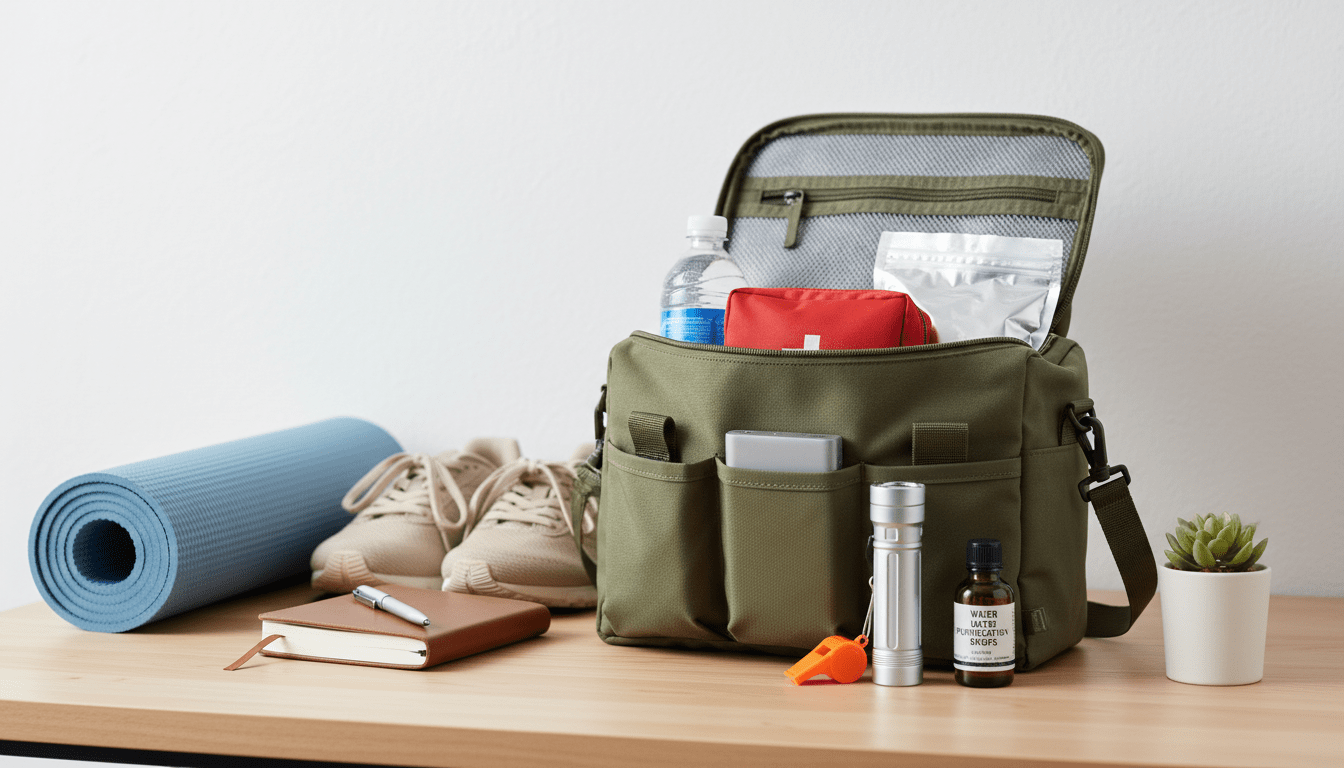
A calm, simple composition showing an open, well-organized emergency kit bag on a wooden tabletop. Inside and around the bag are clear essentials: a sealed water bottle, compact first-aid kit, a compact flashlight, a small power bank, vacuum-sealed emergency food pouch, water purification drops, and a whistle. Beside the kit are symbols of emotional wellbeing and training: a rolled yoga mat, a pair of neutral-colored running shoes, a closed journal with a pen, and a small potted succulent. Soft natural lighting with a muted, soothing color palette (soft blues, greens, and warm neutrals). Clean, minimal background with gentle depth of field. The scene evokes calm readiness and everyday practicality.
Disaster preparedness and emergency kit essentials
Preparing a compact, reliable kit reduces confusion and protects emotional balance when disasters strike. Aim for a practical three-day framework but scale it to your household size and health needs. Follow FEMA’s basic guidance: prioritize water, nourishment, and the ability to stay warm and communicate.
Food and water
Keep at least three days of nonperishable food and one gallon of water per person per day. Ready-to-eat options like Mountain House emergency food kits are compact and long-lasting. Use a Katadyn BeFree water bottle or Aquamira water treatment drops for emergency purification when bottled supplies run low.
First-aid and medicines
Stock a well-organized first-aid kit tailored to chronic conditions and common injuries. Include prescription medications (two-week supply if possible), blister care for runners, pain relievers, and wound supplies.
Portable light sources and power
Carry multiple light sources: headlamp and compact flashlight with spare batteries. For charging, reliable power banks like Jackery units extend phone and device life. Keep an off-grid charging plan for prolonged outages.
Digital document backups
Store critical documents on a SanDisk Extreme Pro USB and encrypted cloud backups. Scan IDs, insurance, and medical info; save emergency contacts and a simple family plan you can access offline.
Quick kit checklist
- 3 days of water and Mountain House meals
- Katadyn BeFree bottle + Aquamira drops
- Complete first-aid kit and extra prescriptions
- Headlamp, flashlight, spare batteries
- Jackery power bank(s)
- SanDisk Extreme Pro USB with encrypted files
- Whistle, local maps, emergency cash
This list focuses on reliability and mental calm. A compact, tested kit supports clear decisions under stress and helps maintain training balance and emotional wellbeing.
Quick comparison: emergency kit essentials
| Item | Primary use | Recommended brands / models | Notes |
|---|---|---|---|
| Water purification | Make tap or natural water safe | Katadyn BeFree water bottle; Aquamira water treatment drops | Katadyn for filtering particulates; Aquamira for lightweight chemical treatment |
| Emergency food | Short-term nutrition, calories | Mountain House emergency food kits | Choose calorie-dense, shelf-stable pouches, rotate every 3-5 years |
| Power banks | Charge phones and small devices | Jackery power banks | Pick capacity >=20,000 mAh for multi-day charging |
| First-aid supplies | Treat injuries and manage prescriptions | Prebuilt kit + custom meds | Include blister care for runners and extra prescription supply |
| Portable light sources | Illumination for safety and tasks | Durable headlamp + compact flashlight | Bring spare batteries and consider lantern for shared spaces |
| Digital backups | Access IDs, medical info, plans offline | SanDisk Extreme Pro USB; encrypted cloud backup | Keep one encrypted USB offline and cloud copies for redundancy |
| Shelter & warmth | Protection from elements | Emergency mylar blankets; compact sleeping bag | Prioritize waterproof layers and insulation for your climate |
| Communication & alerts | Receive warnings and contact others | NOAA weather radio; charged phone | Learn local alert tones; keep a paper list of contacts |
| Multi-tool & utilities | Repairs, opening cans, small tasks | Quality multi-tool and duct tape | Small investments add large capability in the field |
Ensure FEMA guidance shapes your overall plan, and test equipment regularly.
Emotional wellbeing and training balance: preparedness as practice
Disaster preparedness and emergency kit essentials support more than survival. They protect mental space, reduce decision fatigue, and make shocks less destabilizing.
Integrate preparedness into training routines
Treat kit checks and simple drills like active recovery. Pack a small emergency kit during long runs or outdoor sessions to practice using first-aid kits, portable light sources, and power banks. Rehearsal turns abstract anxiety into manageable tasks.
“Management of risk requires responsibility and attentiveness from the individual using a training plan.” Apply that to both workouts and readiness: prioritize rest days, taper before key events, and keep injury-care supplies accessible. These habits lower chronic stress and preserve cognitive bandwidth during an emergency.
Build emotional resilience deliberately
Use short daily rituals—breathwork, a five-minute checklist, or journaling—to anchor stability. “Sometimes growth doesn’t look like becoming more—it looks like leaving behind what no longer fits.” Let go of excess gear or training obligations that raise risk without benefit.
Preparedness reduces unknowns. When you know where your water, emergency kit, and SanDisk backups live, you worry less. That calmer baseline improves recovery, decision-making, and the ability to help others. Small, consistent habits create a buffer between disruption and emotional overwhelm.
Conclusion
Disaster preparedness and emergency kit essentials anchor not only safety but the emotional space that makes play and training restorative. LeisureQuest’s mission is to inspire exploration, play, and learning; preparedness lets those pursuits continue with confidence.
When your emergency kit, first-aid kits, portable light sources, power banks, and digital backups are organized and tested, you reduce worry and preserve the mental energy needed for balanced training and joyful downtime. Small, deliberate steps—inventorying supplies, updating prescriptions, and rehearsing family plans—turn readiness into routine rather than burden. This practical baseline protects recovery from setbacks and helps you respond clearly when events occur.
LeisureQuest encourages building preparedness into quality leisure: a well-prepared home supports uninterrupted adventures. Start today—create or update your kit, review checklists, and store critical documents both physically and on secure drives. Visit LeisureQuest to learn how preparedness complements exploration and keeps play safe and sustainable. Begin assembling yours this week.
Frequently Asked Questions (FAQs) — Disaster preparedness and emergency kit essentials
What should a basic emergency kit include?
A basic emergency kit should cover the first 72 hours: water (one gallon per person per day), nonperishable food, a complete first-aid kit, portable light sources, a reliable power bank, prescription meds, whistle, local maps, and critical documents.
How often should I check and update my emergency kit?
Inspect kits every six months. Replace expired food, rotate batteries, refresh prescription supplies, verify power bank charge, and update digital backups. Run a short family drill after major updates.
Will preparedness improve emotional wellbeing and training balance?
Yes. Disaster preparedness and emergency kit essentials reduce uncertainty, lower acute stress, and free cognitive bandwidth for recovery and disciplined training. Preparedness builds confidence and faster, calmer decision-making under pressure.
How can I practice using first-aid kits and portable light sources without panic?
Schedule brief, low-pressure drills: treat a simulated blister, change batteries, use headlamp in dim light. Practice during long runs or outdoor drills to normalize simple emergency tasks.
What’s the best way to protect digital documents and ensure power during outages?
Keep encrypted copies on a SanDisk Extreme Pro USB and in an encrypted cloud. Maintain charged Jackery power banks, store printed IDs and insurance in a waterproof pouch, and test restore procedures occasionally.