Instax Cameras and Printers Lineup
Instax Cameras and Printers Lineup remains a compelling bridge between analog immediacy and modern imaging tech. Fujifilm’s instant-print ecosystem blends chemical film, optical design, and digital convenience into handheld devices that reward both beginners and seasoned photographers.
These systems sell more than prints. They deliver tactile moments, predictable color science, and distinct film grain. Models range from purposefully simple point-and-shoots to hybrid devices with app connectivity and manual controls. That breadth makes choosing the right Instax product a technical decision as much as a lifestyle one.
This article takes a focused, consumer-first approach. We’ll compare form factors, film formats, print quality, and control options. Technical details are explained plainly, with buying advice based on real-world use.
We’ll break down Mini, Square, and Wide formats, evaluate compact printers, and highlight models with manual exposure, app integration, or hybrid capture. Expect practical buying tips, workflow suggestions, and scenarios where instant prints outperform digital-only workflows.
Whether you want instant souvenirs or a creative analog layer for digital work, this Instax Cameras and Printers Lineup guide shows what matters.
Instax Cameras and Printers Lineup — Technical Snapshot
This section breaks down the technical character of Fujifilm’s instant ecosystem. Focus is on hardware class, film format, control surface, and connectivity. The goal is to map each model to specific user needs: handheld hybrid capture, pocket printers for smartphones, beginner-friendly point-and-shoots, and cameras with manual controls.
Key models in the Instax Cameras and Printers Lineup
| Model | Type | Film format | Standout technical features |
|---|---|---|---|
| Instax Mini Evo | Hybrid camera/printer | Instax Mini | Internal sensor and buffer for capture-before-print; app pairing for control and image transfer; multiple lens/filter simulations |
| Instax Mini Link 3 | Smartphone printer | Instax Mini | Mobile-first pairing; on-demand prints from phone; compact design for casual users |
| Instax Mini 13 | Point-and-shoot camera | Instax Mini | Fully automatic exposure; simplified user interface for quick snapshots |
| Instax Mini 99 | Advanced mini camera | Instax Mini | Manual focus and exposure controls; selectable shutter/diaphragm behaviors for creative framing |
Technical highlights by model
-
Instax Mini Evo
- Hybrid workflow: captures digitally before committing to a print. This reduces wasted film and enables selective printing.
- App ecosystem: access to framing aids, exposure tweaks, and print triggers from a paired phone.
-
Instax Mini Link 3
- Designed as a smartphone companion. Prints directly from camera roll and apps.
- Optimized for speed and portability rather than in-depth image editing on device.
-
Instax Mini 13
- Minimal controls to keep the user focused on composition.
- Ideal for fast event shoots where convenience trumps manual tuning.
-
Instax Mini 99
- Adds tactile control not typical in the mini class. Manual focus and exposure broaden creative uses.
- Better suited to photographers who want craft-level adjustments in an instant format.
Film types and format notes
- Instax Mini film is the standard across these models. It offers fast, wallet-sized prints and predictable color response.
- For larger output, consider Instax Wide printers and cameras; they trade compactness for bigger image area.
This technical overview helps match each Instax product to a use case. Later sections dive into print quality, cost per print, and workflow integration.
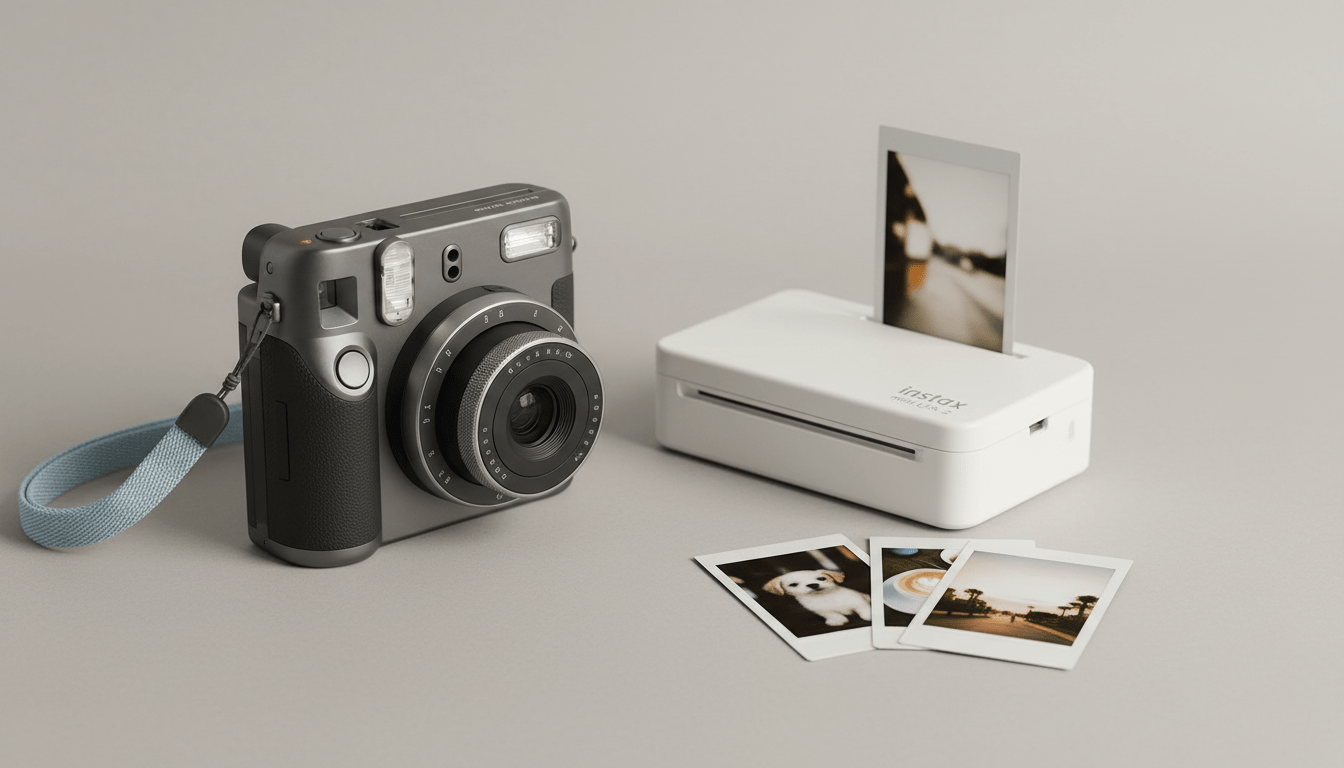
A clean, neutral-styled studio photograph showing an Instax Mini camera on the left and a compact Instax Mini printer on the right with a fresh print halfway ejected. A small stack of Instax Mini prints sits nearby to suggest workflow and scale.
Instax Cameras and Printers Lineup — Film Formats and Costs
The three Instax film formats trade size, cost, and intent. Use the table to compare image area, per-print cost, and typical use cases to match hardware to workflow.
| Film format | Image area (mm / in) | Approx cost per print | Typical use cases / target users |
|---|---|---|---|
| Instax Mini | 62 × 46 mm (2.4 × 1.8 in) | $0.60–$0.70 | Pocket prints, parties, journaling, stickers, on-the-go casual use |
| Instax Square | 62 × 62 mm (2.4 × 2.4 in) | ~$1.00 | Creative projects, portraits, social-media-friendly framing, art prints |
| Instax Wide | 99 × 62 mm (3.9 × 2.4 in) | $1.00–$1.20 | Group photos, landscapes, events, display prints |
Selection tips:
- Pick Mini for low-cost everyday prints and maximal portability.
- Choose Square when composition and crop flexibility matter.
- Go Wide for larger scenes and when you need more negative space for cropping.
Unique Features and User Experience
Fujifilm pushes instant photography beyond novelty with hardware and software choices that shape how you shoot, edit, and print. The result is an experience that combines tactile film effects with modern camera controls and digital convenience.
Manual controls on the Instax Mini 99 give photographers precise exposure and focus options rarely found in the mini class. That tactile control matters when ambient light is tricky. It enables intentional depth-of-field, selective sharpness, and consistent exposures across a series of frames.
App connectivity, most visible on the Mini Evo, alters workflow. Capture-before-print removes wasted film. Remote shutter, live preview, and on-phone framing let you stage shots from odd angles. Simple edits and filter simulations in the companion app translate into predictable prints.
The Mini Evo Cinema’s ability to record short clips adds motion to the instant workflow. Recordings can be reviewed, trimmed, and used to pick printable stills. That hybrid approach makes storytelling more flexible than single-frame instant systems.
Film effects remain central. Fujifilm’s chemistry and color science produce signature tones and grain. Users can exploit these effects deliberately — for portraits, moody scenes, or high-contrast motifs — without complex post-processing.
Practical benefits in everyday use:
- Reduced film waste via digital buffering and selective printing.
- Consistent output through exposure control and app previews.
- Creative layering by combining video clips and printable stills.
Compared with many instant print cameras, Fujifilm’s lineup blends craft-level camera controls, repeatable film effects, and app-driven workflows. That mix gives consumers technical control and accessible creative results.
The Instax Cameras and Printers Lineup distills why instant photography remains rewarding: immediate, tactile prints combined with accessible creative control. Across compact Mini models, the manual-feel Mini 99, and hybrid devices like the Mini Evo and Mini Evo Cinema, Fujifilm offers choices that match different leisure habits and technical needs.
For consumers, the appeal is practical and emotional. These cameras produce shareable souvenirs without a screen-first workflow. Hybrid capture and app previews reduce wasted film. Manual controls and film effects let users craft distinctive looks without heavy editing.
As a curated guide to quality leisure time, LeisureQuest highlights how instant cameras fit travel, journaling, and relaxed creativity. Treat an Instax system as a tool for slowing down, capturing moments deliberately, and building physical keepsakes.
Ready to explore gear recommendations and lifestyle ideas? Visit LeisureQuest for more inspiration on travel, hobbies, and wellness: LeisureQuest.
Frequently Asked Questions (FAQs)
What Instax film formats are available and how do they differ?
Instax Mini (62 × 46 mm) — pocket-sized, lowest cost; Instax Square (62 × 62 mm) — balanced square crop for portraits and projects; Instax Wide (99 × 62 mm) — largest area for groups and landscapes. Official film overview: Fujifilm Instax Film Overview.
How much does an Instax print cost?
Typical ranges: Mini $0.60–$0.70, Square ≈ $1.00, Wide $1.00–$1.20. Prices vary by pack size and region — check retailers and official product pages.
Which Instax camera is best for beginners?
For simple point-and-shoot ease, entry models like the Instax Mini 13 work well. If you prefer phone-first printing, the Instax Mini Link 3 companion printer is a reliable option: Instax Mini Link 3.
Which models offer hybrid workflows or manual control?
Hybrid capture and selective printing: Instax Mini Evo — Instax Mini Evo. Adds short video capture: Instax Mini Evo Cinema — Instax Mini Evo Cinema. Reviews: TechRadar (Mini Evo); Digital Camera World (Mini Evo Cinema).
Which Instax printer should I buy?
Pocket prints: Mini Link 3 (link above). Larger prints: look for Instax Wide Link or wide-format printers on Fujifilm’s site.