Smart Home Security Innovation
These systems combine ambient intelligence with unobtrusive hardware. Wi‑Fi motion sensing reads subtle disruptions in wireless signals. AI sensing filters patterns and learns what matters in a home. Together they cut noise and preserve privacy while improving safety.
In this article we explore how slow travel pairs with modern security tools to protect downtime, not disrupt it. Expect practical examples, technology trends, and simple setup tips. The tone is forward-looking: we focus on innovations that support rest and balance, not surveillance for its own sake.
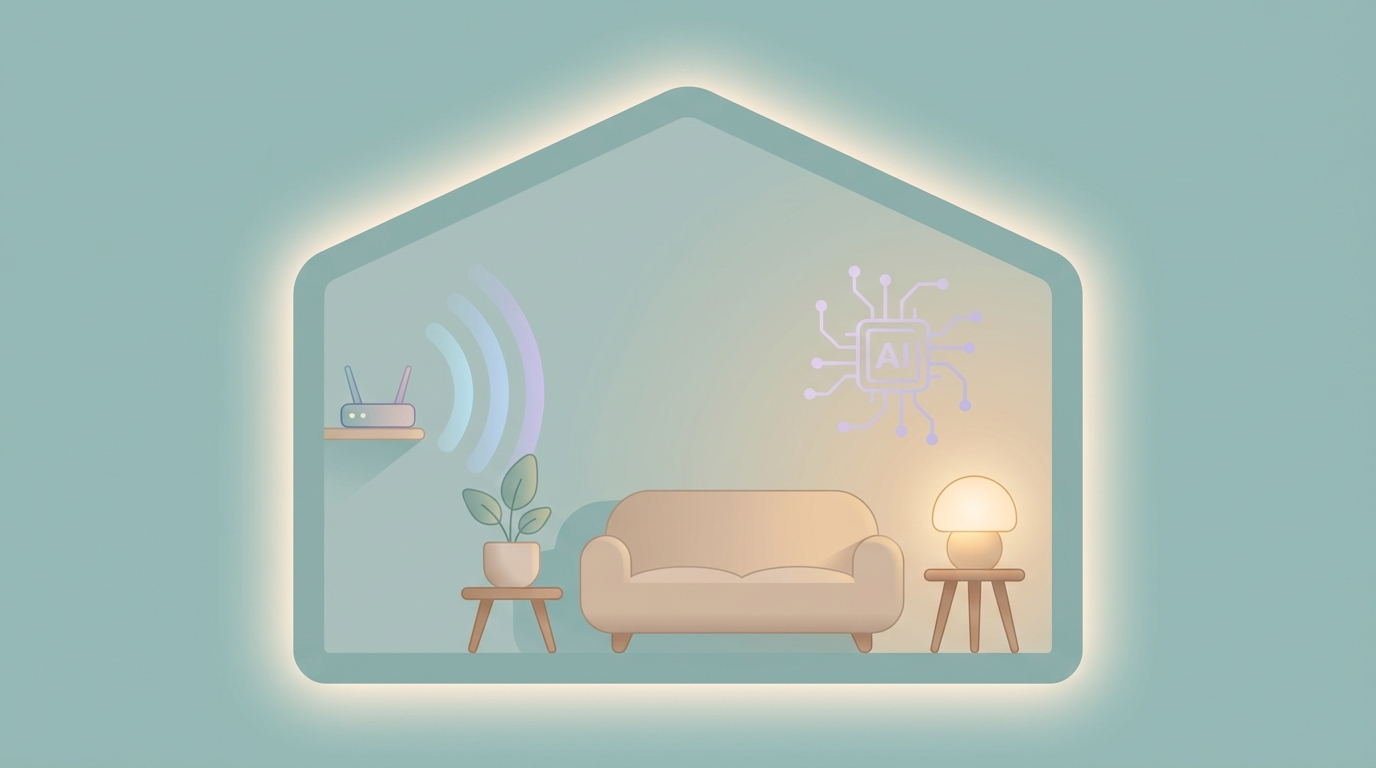
A calm, modern living room at dusk rendered in soft pastel tones (muted teal, warm beige, gentle lavender). A cozy sofa, a small houseplant, and a warm lamp set a peaceful scene. Semi-transparent, unobtrusive Wi-Fi waves radiate from a small router-style device. An abstract, minimal AI chip icon made of soft lines and dots floats near the router to suggest intelligence. A faint halo outlines the home silhouette to convey safety and balance. The style is minimal and soothing, with rounded shapes and soft shadows.
Slow Travel and Wellness: Deeper Rest Through Intentional Pace
Slow travel reduces rushed itineraries and encourages longer stays. That change in rhythm promotes mindfulness, lowers stress hormones, and stabilizes sleep patterns. Travelers who slow down report fewer sleep interruptions and a clearer sense of routine.
A home’s role changes when you adopt slow travel. You need fewer reactive alarms and more predictable comfort. Quiet transitions, consistent light cycles, and reliable security create an environment that supports restorative rest.
Smart Home Security Innovation Supporting Sleep and Balance
Modern security systems do more than detect threats. When designed for slow travel, they minimize nighttime disturbances and preserve peace of mind. Features that matter include scheduled do-not-disturb modes, context-aware alerts, and presence-based automation that prevents unnecessary notifications.
These systems can work with lighting and climate controls to reinforce circadian cues. For example, gentle pre-sleep dimming and cooler temperatures are triggered on predictable sleep schedules. Eliminating false alarms reduces cortisol spikes caused by sudden alerts.
Ambient Intelligence and Everyday Mindfulness
Ambient intelligence learns routines without constant input. It lets the house adapt quietly: locks engage at set times, exterior lights simulate occupancy while you rest, and non-urgent notifications are batched for daylight hours. That hands-off reliability reduces cognitive load and helps maintain the reflective state slow travel encourages.
In short, aligning home behavior with slow-travel rhythms turns security from an interruption into a support. The result is sustained rest, lower stress, and a home that preserves the calm you seek while traveling slowly.
| Technology | Description | Benefits | Example applications |
|---|---|---|---|
| Wi‑Fi motion sensing (Origin Wireless) | Detects presence and motion by analyzing disturbances in home Wi‑Fi/RF signals. Works without cameras. | Reduces false alarms, preserves visual privacy, detects occupancy through walls. | Linksys Aware, SpaceSense, Hex Home; integration into ADT platforms for occupancy-aware alerts. |
| AI sensing | Machine‑learning models that classify events from sensors (RF, video, audio) and learn routines. | Context‑aware alerts, false alarm reduction, predictive detection, adaptive sensitivity. | Video analytics for people/vehicle detection; sensor fusion in smart security hubs. |
| Hybrid ambient intelligence (integrated systems) | Fuses RF, cameras, door/window sensors, and home automation to respond intelligently. | Coordinated automations, scheduled do-not-disturb, improved sleep-friendly modes, privacy controls. | ADT and partner solutions that combine presence sensing with automation and notification management. |
Smart Home Security Innovation — ADT, Origin Wireless, Wi‑Fi Motion Sensing and AI Sensing
ADT’s purchase of Origin Wireless for $170 million marks a clear industry pivot. Major security providers are investing in RF‑based sensing to add presence awareness without cameras. Origin Wireless’s algorithms analyze wireless RF signals to infer presence and movement. That capability is now a strategic asset for products and platforms that aim to be quieter, smarter, and more privacy‑respecting.
The technology’s commercial history matters. It powered the discontinued Linksys Aware service, and the same approach continues in SpaceSense and Hex Home. Those products show how RF sensing moves from proof‑of‑concept to practical deployments. For vendors, the value is twofold: fewer false alarms and new data that enhances ambient intelligence.
Practical implications include more reliable occupancy detection, improved notification relevance, and smoother automation. Homes can lock down or simulate occupancy while avoiding camera use. Systems can suppress non‑urgent alerts during rest hours, helping people sleep and maintain low stress while traveling slowly or staying long term.
Privacy and data architecture are central to adoption. Edge processing and on‑device AI reduce the need to send raw RF or video streams to the cloud. That approach preserves privacy and shortens response times. ADT’s move signals broader integration: professional monitoring, subscription models, and partner ecosystems will likely bundle RF sensing into managed services.
Looking ahead, expect tighter sensor fusion and smarter edge models. RF sensing combined with AI and classic sensors (door, glassbreak, cameras) will lower false positives further. For wellness‑focused households, this means security systems that support rest and balance rather than disrupt it—an important shift in smart home security innovation.
Smart Home Security Innovation
Smart Home Security Innovation is reshaping how we protect downtime and support life balance. By combining Wi‑Fi motion sensing, AI sensing, and ambient intelligence, modern systems reduce false alarms, preserve privacy, and keep homes responsive without intrusive monitoring. That quieter, context‑aware approach helps maintain uninterrupted sleep and lower stress — essential for slow travel and mindful living.
When your home senses presence and prioritizes meaningful alerts, it becomes a partner in rest. Automated do‑not‑disturb modes, occupancy simulation, and edge processing let travelers and long‑term residents relax without constant checking. The net effect is a more predictable environment, better sleep quality, and fewer cognitive distractions.
For curated ideas that pair leisure, wellness, and technology, visit LeisureQuest. LeisureQuest highlights activities and smart-home innovations that enhance quality of life and inspire exploration and learning.
Frequently Asked Questions (FAQs)
How can smart home security tools support better rest during slow travel?
Use presence-aware automations, scheduled do‑not‑disturb, and occupancy simulation together with circadian‑aware lighting to reduce nighttime interruptions. Tunable lighting and automated dimming are associated with improved sleep timing and sleep efficiency (see CEDIA’s overview of circadian lighting for smart homes: CEDIA Overview). Reliable occupancy sensing also lets systems suppress non‑urgent alerts while you rest.
Can I set up useful security without permanent installation in rentals?
Yes. Plug‑and‑play hubs, smart plugs, bulbs, and wireless sensors provide temporary occupancy simulation and automation. Wi‑Fi based occupancy research shows high detection accuracy in real environments, supporting reliable non‑camera presence sensing with commodity hardware: Occupancy Research.
What features should slow travelers prioritize when choosing a system?
Prioritize presence/occupancy detection, scheduled do‑not‑disturb, remote app control, and clear privacy settings. The trend of major providers acquiring RF/AI sensing tech (e.g., ADT’s Origin AI acquisition) underscores industry focus on quieter, context‑aware alerts: AI Sensing Acquisition.
How do I know these technologies protect privacy?
Look for edge/on‑device processing and vendor transparency about data retention. On‑device AI reduces data transmission and exposure—see Google’s Private AI Compute discussion on privacy benefits of local processing: Google AI Compute.
How quickly can I expect improvements in sleep and stress?
Many users report fewer interruptions within days after tuning alerts; measurable sleep improvements can emerge over weeks when lighting and routines are consistent. Track sleep metrics (wearables or phone apps) to evaluate progress.
How do I configure temporary devices so landlords aren’t affected?
Ensure devices can be easily removed and do not require permanent installation. Using battery-operated or plug-in devices can help maintain the property’s original state.
What are best practices for data retention and sharing with monitoring services?
Implement minimal data retention policies and ensure clear agreements with monitoring services about data handling and sharing practices.
Can house sitters or property managers access automation safely and temporarily?
Yes, access can be granted temporarily through user accounts or guest access features, ensuring control over what they can manage.
Which devices are easiest to move between rentals (battery life, pairing, hubs)?
Devices that are battery-operated and connect via Wi-Fi or Bluetooth tend to be the easiest to move. Look for devices with long battery life and simple pairing processes.
How does sensor fusion (RF + door/window + camera) change notification settings and privacy?
Sensor fusion improves the accuracy of notifications and can help reduce false alarms, making the system more reliable while maintaining user privacy by minimizing unnecessary data collection.